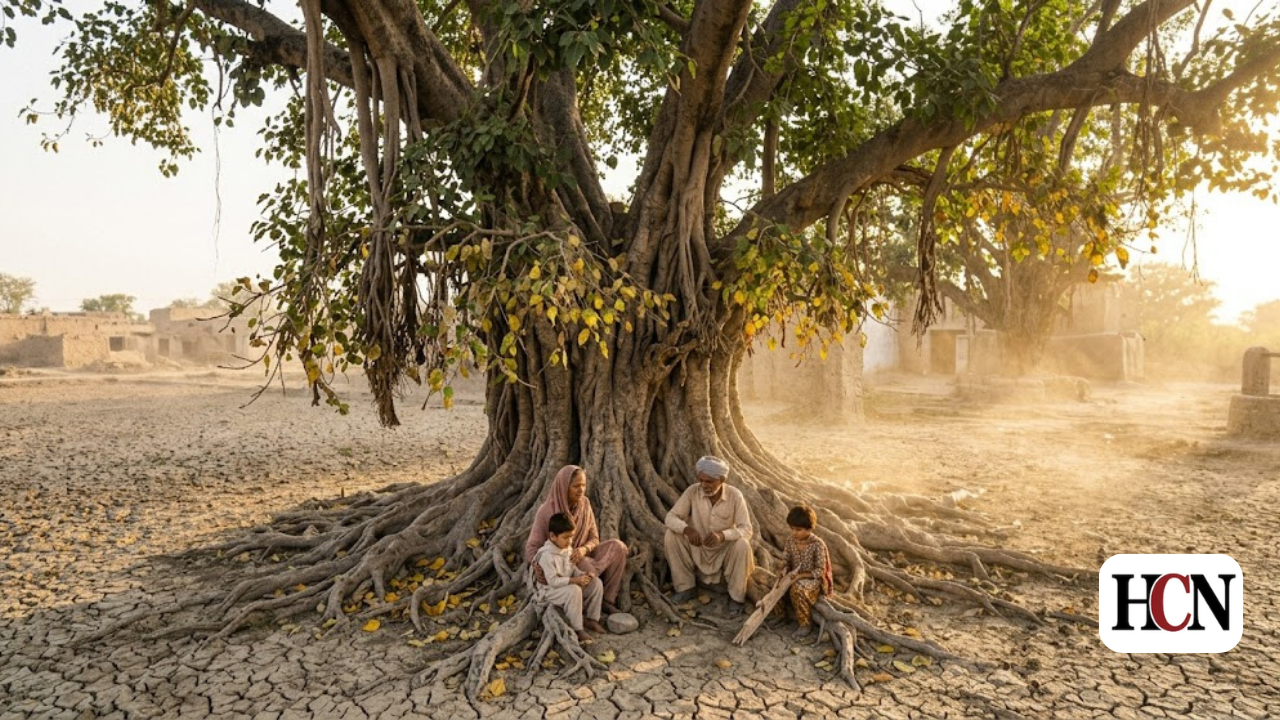
The tree that sheltered five generations does not complain. It has never complained, not once in over a hundred years of standing in the same spot at the edge of the village. But if you look closely this season, you can see it – leaves curling at the edges before their time, branches that once reached wide and confident now drooping toward the cracked earth beneath them. The tree that sheltered five generations is thirsty, and for the first time in living memory, no one is quite sure how to help it.
This is not just the story of a tree. It is the story of what happens when the world around something ancient changes faster than that thing can adapt – and what it costs a community when the one constant in their lives begins, quietly, to disappear.
A Tree That Watched Everything Change
Nobody alive today remembers the tree being planted. The oldest man in the village, well into his eighties, says his grandfather spoke of playing in its shade as a boy, which would put the tree’s age somewhere close to a century and a half. Five generations have been born, married, and buried within sight of its branches. It has outlived wars, droughts, migrations, and more governments than anyone can count.
For most of that time, the tree simply gave. It gave shade to farmers resting after long mornings in the fields. It gave a meeting place for elders to settle disputes and arrange marriages. It gave children a place to climb, hide, and dream. It gave birds a home, and it gave the whole village something even more valuable – the quiet certainty that no matter what changed beyond the horizon, this one thing would still be standing tomorrow. That certainty is now cracking, branch by branch.
The Slow Arrival of a Different Climate
Twenty years ago, the rains here came on a schedule you could almost set a calendar by. Farmers planted according to it. Livestock grazed according to it. The tree, with roots that reach deep into the water table, thrived on that predictability without anyone ever having to think about it.
That predictability is gone. Meteorological data from the wider region shows what farmers here already knew from experience — rainy seasons arriving later, lasting shorter, and delivering less water overall, while the dry months stretch longer and hotter each year. Groundwater levels that once replenished naturally during monsoon season are dropping faster than they can recover. Wells that used to run all year now run dry by early summer.
For a tree with roots a century and a half deep into the earth, drawing water that has always been there, this shift is catastrophic in slow motion. The banyan cannot uproot itself and move to a wetter climate. It cannot adapt its biology within a single human lifetime. It can only stand, and wait, and hope that enough water remains within reach of its roots to survive one more dry season.
What the Village Is Losing, Piece by Piece
It would be easy to write this as a story only about a tree, but the tree’s decline mirrors something bigger happening across the village.
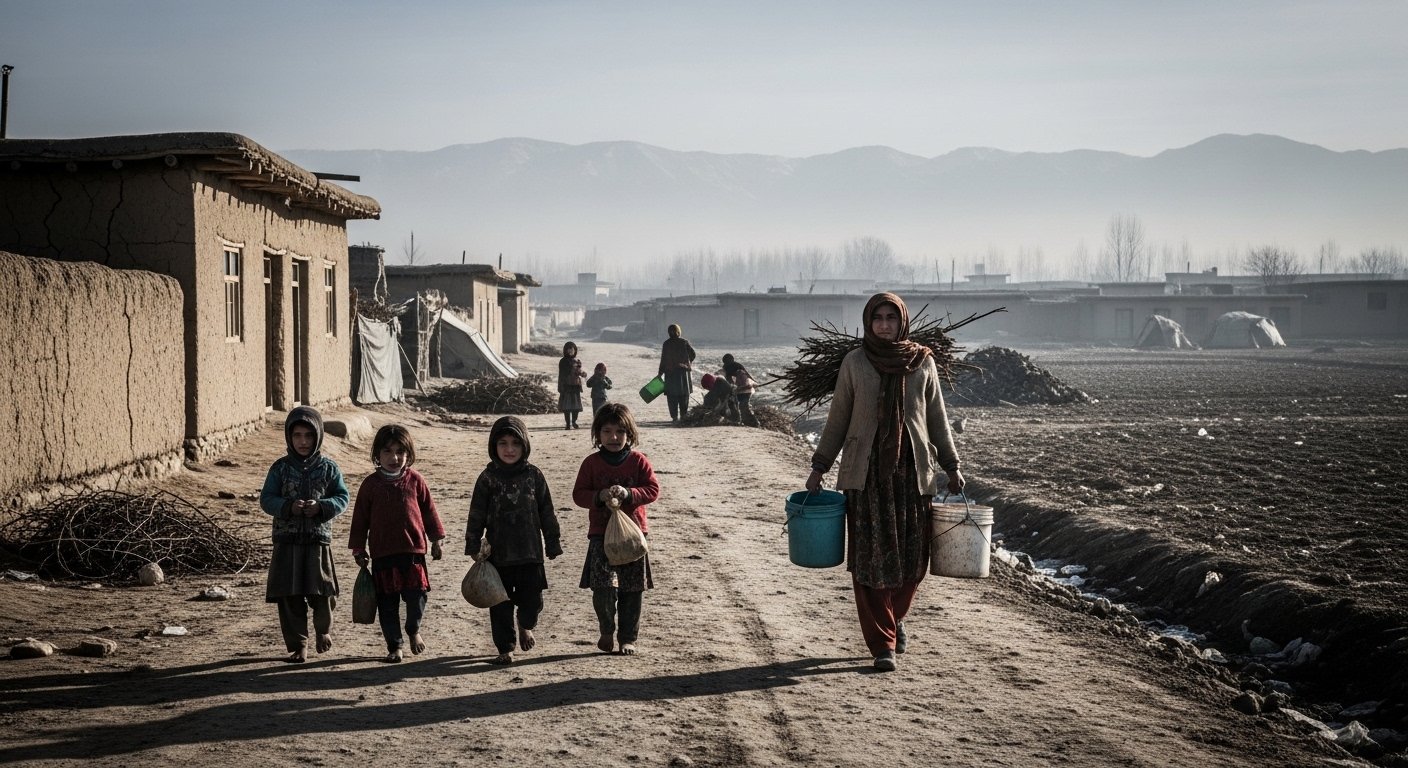
The wells that feed the tree’s roots are the same wells families depend on for drinking water. As they run dry earlier each year, women and children walk farther and farther to fetch what water remains, sometimes two or three hours each way. Crop yields have fallen as irregular rains make planting a gamble rather than a routine. Younger families, unable to depend on the land the way their parents once did, have started leaving for cities – not out of ambition, but out of necessity.
An elderly farmer who has spent his whole life beneath the tree’s canopy put it simply: the tree used to tell them when to plant, when rain was coming, when the season was turning. Now, he says, even the tree seems confused by what the sky is doing.
There is real grief in watching something that has always been permanent begin to falter. The tree was never just wood and leaves to this community – it was a living record of continuity, proof that some things endure no matter how much the world outside changes. Watching it struggle feels, to many here, like watching a piece of their own history grow fragile.
A Community Trying to Save What Raised Them
And yet, this is not simply a story of decline. Faced with the possibility of losing the tree, the village has started doing something it has never had to do before: actively trying to save it.
A handful of families have begun digging small water-catchment trenches around the tree’s base, designed to capture and hold what little rain does fall long enough for it to soak into the soil rather than run off. Others have organized a rotating schedule to carry buckets of water from the nearest working well during the driest weeks, a labor-intensive gesture that costs them time they can barely spare, but one they insist on making anyway. A local schoolteacher has started bringing students to the tree not just to play, but to learn – teaching them why the tree is struggling, and what a warming, drying climate means for their own futures.
None of this guarantees the tree will survive. Climate patterns that took decades to shift will not reverse in a season, and a century-old root system can only be helped so much by buckets carried by hand. But the effort itself says something important. A community that could have simply mourned a tree slipping away chose instead to fight for it, inch by inch, bucket by bucket.
The Tree as a Warning, and a Mirror
Scientists studying climate impacts on rural communities have increasingly pointed to old trees like this one as early indicators of environmental stress – living instruments that register changes in rainfall and groundwater long before those changes show up in official data or news headlines. In that sense, this single struggling banyan is not an isolated story. It is a small, local version of something happening in villages, forests, and farmlands across the world, wherever old ecosystems built for one climate are being asked to survive in another.
But the tree is also something more personal than a data point. It is a mirror held up to a community, and in some ways, to all of us. It asks a quiet but unavoidable question: what do we do when the things we assumed would always be there start showing signs that they might not be? Do we notice in time? Do we act, even when the odds are uncertain? Or do we only recognize what we had once it is gone?
Still Standing, For Now
As the dry season stretches on, the tree remains upright, its leaves thinner than they once were, its shade a little less complete than the generations before remember it. Children still gather beneath it in the late afternoon, unaware or unbothered by how fragile that shade has become. Elders still sit at its base in the evenings, the way they always have, watching the sky for rain that comes less often than it used to.
Nobody here knows exactly how this story ends – whether the buckets and trenches will be enough, whether the rains will return to something closer to normal, or whether one day the shade the village has always taken for granted will simply not be there anymore. What they do know is that they are not ready to stop trying.
Because sometimes, the most powerful form of hope is not believing everything will be fine. It is choosing to fight for something anyway, even when you cannot promise the outcome – one bucket of water, one trench, one more season, at a time.