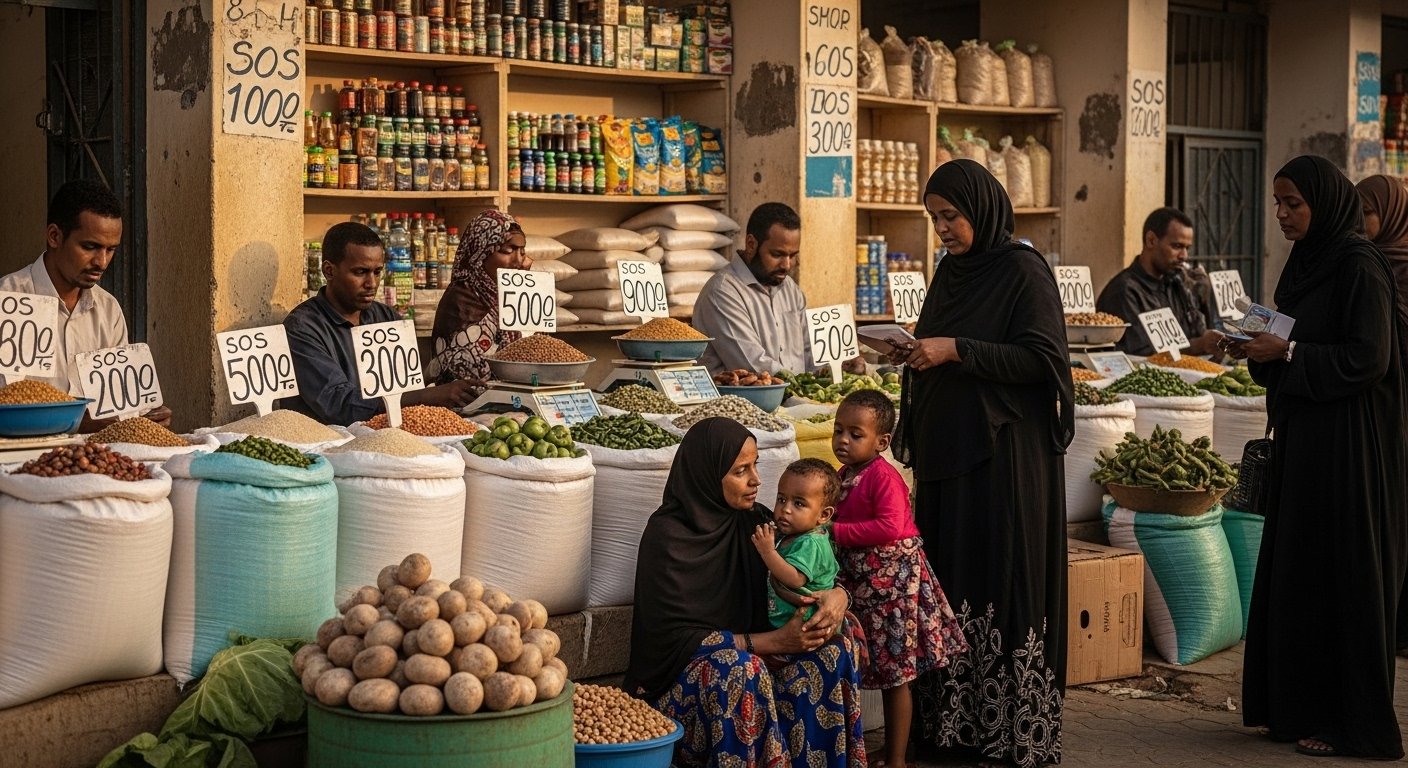
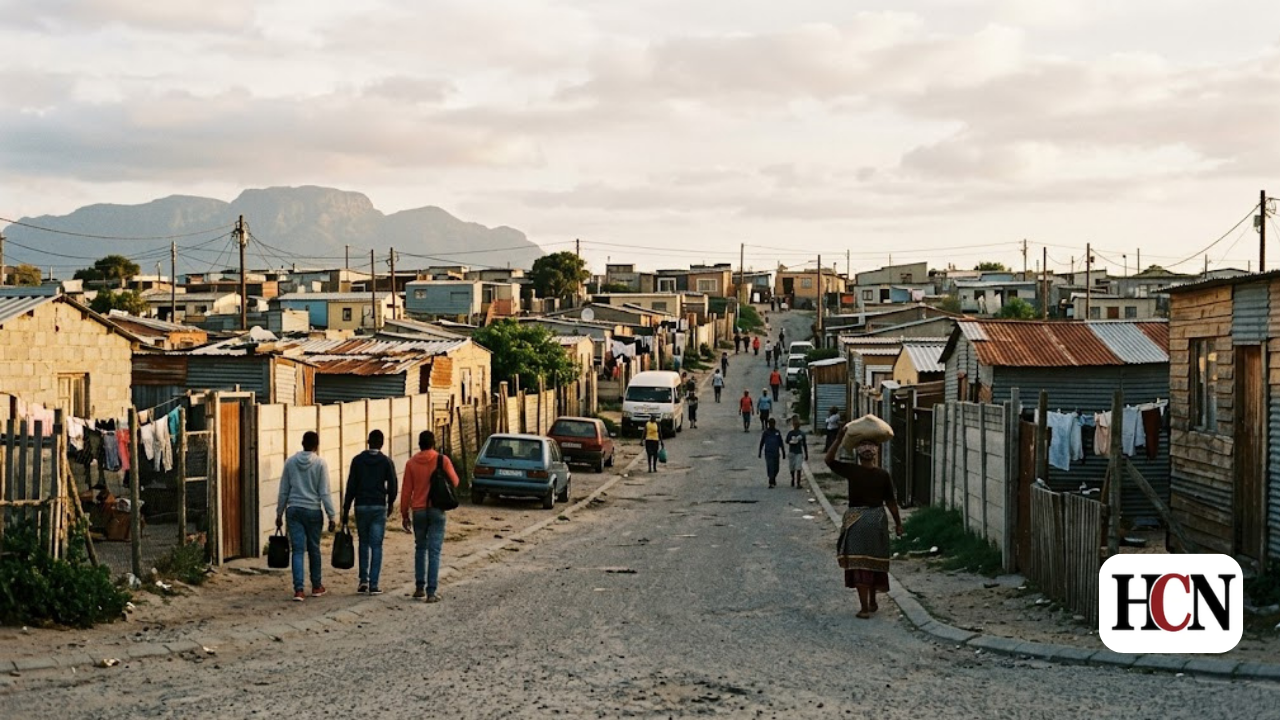
The South Africa poverty rate 2026 conversation usually starts with a number and stops there. But at community nutrition hubs across Gauteng and the Eastern Cape, the number has a face: young adults who show up not because they’ve given up looking for work, but because the work they’ve found — a shift stacking shelves, a day of piecework, a few hours of casual labour — still isn’t enough to cover the next meal (Oxfam South Africa, July 2026).
That’s the detail most headlines skip. It’s easy to picture poverty as simply an unemployment problem — fix the jobs crisis, and the queues disappear. What’s showing up at these nutrition hubs says something more uncomfortable: in South Africa today, having a job doesn’t guarantee you can feed yourself.
How South Africa Got Here
South Africa’s poverty numbers have actually been improving for nearly two decades. Stats SA’s Poverty Trends report, drawn from the 2022/23 Income & Expenditure Survey, found the share of the population living below the lower-bound poverty line fell to 37.9% in 2023 — a drop of nearly 20 percentage points since 2006, equal to roughly 4.1 million fewer poor people. Extreme poverty has eased too: the food-poverty headcount dropped from 27.4% in 2006 to 17.6% in 2023.
So why does 2026 still feel like a crisis rather than a turnaround? Because “improving” and “acceptable” are very different things. About 23 million South Africans, or 37.9% of the population, still live below the lower-bound poverty line, set at R1,300 per person per month, while the food poverty line sits at R777. Decades of progress have still left more than one in three citizens short of what’s needed simply to survive.
The Numbers Behind the Queues
Oxfam South Africa put it plainly in its response to this year’s State of the Nation Address: poverty in the country remains widespread and deep-rooted, with nearly 38% of the population — around 23 million people — still living below the lower-bound poverty line. These aren’t figures confined to a few struggling towns; poverty is pervasive across the entire country.
Children carry a disproportionate share of that burden. Those aged 0 to 17 make up just over 43% of South Africa’s poor population — meaning the poverty rate isn’t only a story about adults who can’t find stable income, but about the households and children who depend on them.
For adults without steady work, the main safety net is the Social Relief of Distress (SRD) grant. Oxfam has been blunt about its limits, pointing to the state’s continued refusal to upgrade the R370 grant into a decent, permanent income floor indexed to the lower-bound poverty line. At a January 2026 panel on basic income, one economist framed the imbalance starkly, contrasting families living on R370 a month with a single South African on track to become the world’s first trillionaire — a gap of scale that’s difficult to put into ordinary language.
Unemployment compounds the problem. Around 12.4 million working-age adults — about 31.4% — lack regular work or income, according to the Stats SA Quarterly Labour Force Survey. Oxfam has warned that with nearly a third of South Africans unemployed, modest increases to permanent grants provide only limited inflation protection, while the SRD grant has seen no meaningful upward adjustment.
Underneath all of this sits one of the starkest inequality figures anywhere in the world. South Africa’s Gini coefficient stands at roughly 0.65, pointing to one of the most unequal distributions of market income on the planet. Separate global rankings place South Africa at the very top of the list for income inequality worldwide.
Why This Isn’t Just a South African Problem
South Africa is a sharp, well-documented illustration of a pattern playing out in other unequal economies too: growth alone does not solve hunger. The country has managed real GDP expansion and measurable poverty reduction since 2006, and poverty has still stayed entrenched for over a third of the population.
Without deliberate redistribution — grants that track the actual cost of food and shelter, wages that reflect survival costs, not just headline growth figures — a growing economy can sit comfortably alongside deep, lasting deprivation. Extreme income concentration like South Africa’s doesn’t only strain household budgets; economists and civil society groups warn it erodes trust in institutions and the kind of social stability democracies depend on.
What’s Being Done
The pressure isn’t going unanswered. Oxfam South Africa and a coalition of civil society groups have used both the SONA and Budget Speech cycles this year to push government toward two concrete asks: introducing a wealth tax as a first step toward reducing inequality, and converting the SRD grant into a permanent, adequately funded basic income rather than a temporary emergency measure.
The 2026 Budget Review confirmed a R36.4 billion allocation to keep the SRD grant running for roughly 8 million monthly beneficiaries through March 2027 — a sign the programme will continue, even as advocates argue its value needs to rise, not just its runway.
What the Numbers Mean, in Plain Terms
What is the “lower-bound poverty line”? It’s a threshold Stats SA calculates to represent the minimum a person needs for both food and basic non-food essentials like shelter, clothing, and transport. It currently sits at R1,300 per person per month — anyone living on less is considered unable to meet basic needs consistently.
Why does the Gini coefficient matter? It’s a single number, from 0 (perfect equality) to 1 (total inequality), used to compare how evenly income is spread across a population. South Africa’s figure of around 0.65 is among the highest recorded anywhere, which is why the country is frequently described as the most unequal in the world rather than simply a poor one.
Is South Africa’s poverty rate getting better or worse? Both things are true depending on the timeframe. It has fallen substantially since 2006, but progress has stalled in recent years, and the absolute number of people affected — 23 million — has barely moved.
Closing Thought
Numbers like 37.9% and 0.65 can start to feel abstract the more they’re repeated. What they describe isn’t abstract at all: it’s a working adult doing the math between a shift’s pay and a plate of food, and coming up short. South Africa has proven poverty can decline. What it hasn’t yet proven is that growth, on its own, is enough to finish the job.