
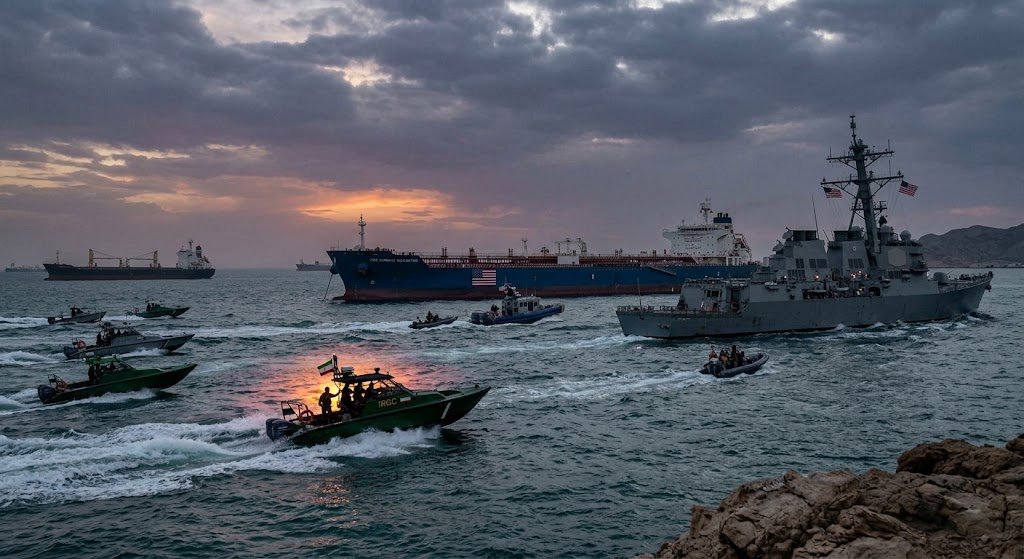
Iran deal or escalation is the choice now facing President Donald Trump, one day after midterm elections in which Democrats won control of both chambers of Congress and senior Republicans, including Vice President JD Vance, linked their losses to the war with Iran. Reports on Wednesday, November 4, said Trump had not decided whether to resume major strikes, pursue a negotiated settlement or keep up economic pressure. Meanwhile, Iran says it remains ready to respond to any new attack, and the Strait of Hormuz, the waterway that carried about a fifth of the world’s oil before the war, is still at the centre of the dispute.
Iran deal or escalation: key facts at a glance
- The war: It began on February 28, 2026, with joint U.S.-Israeli strikes on Iran. It is now in its ninth month, with intermittent fighting since a ceasefire was announced in April.
- The latest incident: U.S. forces carried out what officials called limited, defensive strikes on Iran’s Qeshm Island on Monday evening, after Iran’s Revolutionary Guard fired at a U.S. aircraft.
- Diplomacy: Qatar and Pakistan are mediating indirect talks. Qatar said it hoped for an interim deal, and Trump said a deal “could happen.”
- Pressure on Trump: Israeli Prime Minister Benjamin Netanyahu is reported to be urging new strikes, while other advisers favour continued economic pressure or a deal.
- What is unknown: Whether Trump has made a decision on the Iran deal or escalation question, and whether Iran and the U.S. have replied to the latest mediators’ proposal.
Where the Iran deal or escalation decision stands
Over the past week the two tracks have run side by side. According to CBS News, Qatari mediators held several rounds of talks with Iranian officials and expected feedback from both sides on a new proposal within about 36 hours of Tuesday morning. Iran’s foreign minister said the exchanges were proceeding intensively but that everything depends on Washington. Vice President Vance told reporters that some progress had been made, and Secretary of State Marco Rubio said Trump had set no deadline and had not decided on further strikes, which means the Iran deal or escalation debate inside the administration is still open.
At the same time, the military track did not stop. The U.S. strike on Qeshm Island, which The National described as a single fighter jet destroying a surface-to-air missile launcher, followed Iran’s claim that it had shot down an American drone. Iranian officials said the country keeps the right to self-defence, and the Revolutionary Guard said Iran will decide when attacks end. A senior Iranian security official said Washington’s response to Tehran’s demands was “not convincing” and that the Strait of Hormuz will reopen only if Iran’s seven conditions are met.
What each Iran deal or escalation option involves
The first option is a deal. The draft under discussion, based on Iran’s seven-point plan, would have the U.S. end its blockade of Iranian ports, Iran reopen the Strait of Hormuz, and Washington ease restrictions on Iranian oil sales, with talks on the nuclear programme to follow. Iran also demands that fighting stop on all fronts, including Lebanon, and that frozen assets be released. The U.S. wants verifiable limits on Iran’s nuclear programme first, and reporting suggests Washington is unlikely to accept most of Iran’s points as written.
The second option is escalation. Netanyahu is pressing for a quick and extensive air campaign, including strikes on a suspected underground nuclear site known as Pickaxe Mountain, according to AP. But analysts quoted by The National note that air strikes may not change Iran’s position, that destroying sites does not erase expertise, and that U.S. interceptor stocks are reported to be heavily depleted. Some Gulf allies have warned that more strikes would destabilise the region. The third option is the “no war, no deal” status quo, which CIA Director John Ratcliffe is reported to favour, letting the naval blockade and sanctions keep squeezing Iran’s economy. Each path in the Iran deal or escalation debate carries costs that reporting has not yet shown how to avoid.
Why the midterm result matters for the Iran deal or escalation choice
Trump acknowledged that the war contributed to the Republican defeat, according to Axios, and Vance was blunter, writing that the war was the reason the party lost. Polling cited by Global News found that the war and the cost of living were major factors for voters. Analysts told The National that a Republican loss in Congress makes it harder to fund and sustain political support for renewed military action, although Trump can still order strikes on his own authority.
Tehran has read the result as a victory. Iranian officials described it as a political defeat for Trump, and a message attributed to Supreme Leader Mojtaba Khamenei said the election would not change U.S. hostility. Diplomats and advisers told Axios that this triumphant tone could make Trump more likely to return to military action, not less. International Crisis Group analyst Ali Vaez told CNN that Trump must choose between a face-saving deal he can present as a win and a military escalation to regain the initiative.
The human and economic cost behind the Iran deal or escalation question
The war has already hit civilians well beyond the battlefield. The UN refugee agency estimated in March that up to 3.2 million people had been displaced inside Iran. By April, AP reported that the conflict had killed at least 3,000 people in Iran and more than 2,290 in Lebanon, and later totals were not available to HCN. Iranian officials have now warned of possible winter gas shortages and asked people to cut consumption, and AFP reported that residents of Tehran describe soaring prices and anxiety about renewed war.
Shipping is also under strain. The UK Maritime Trade Operations centre recorded 30 attacks on commercial vessels in October, a record, and on Tuesday India said a seafarer from Gujarat died after his dhow was struck near the strait. Houthi attacks on Saudi airports last month killed at least 20 people, and the Asian Cup football tournament was postponed because of the security situation. For energy consumers, Brent crude has swung between roughly 70 and 120 dollars a barrel since before the war, and it fell 7.4 per cent to about 105 dollars on Monday on hopes of a deal. Whatever Trump chooses on Iran deal or escalation, these costs fall first on civilians, seafarers and households.
HCN analysis: the Iran deal or escalation choice is narrower than it looks
The evidence suggests the real gap is not between peace and war but between sequences. Iran wants the blockade lifted and sanctions eased before it discusses its nuclear programme, while Washington wants nuclear concessions first. Mediators appear to be working on an interim step, an exchange of reopening Hormuz for lifting the blockade, which analysts quoted by CNN described as more realistic than a comprehensive settlement. That is HCN’s reading of the reporting, not an announced plan.
Two things complicate it. Attacks on ships have continued during the talks, which makes any reopening harder to verify, and each side publicly describes the other’s position as a sign of weakness. The political result in Washington adds pressure on Trump to end the war, but it does not by itself change Iran’s demands. No source reviewed by HCN suggests that any of the three options carries a clear, low-cost path to a lasting outcome, so the Iran deal or escalation decision is likely to turn on sequencing and verification, not on slogans.
What to watch next in the Iran deal or escalation decision
The first signals will be the replies to the mediators’ proposal and whether Qatar announces an interim agreement. Watch also for any new strike or attack on shipping, for statements from Netanyahu and Trump about timing, and for whether the Strait of Hormuz sees a verified reopening. The current Congress stays in office until January, and the new one will be sworn in in early January. More coverage of the Middle East and global conflicts is available on Human Crisis News, and CBS News is tracking developments in its live updates on the Iran war.