
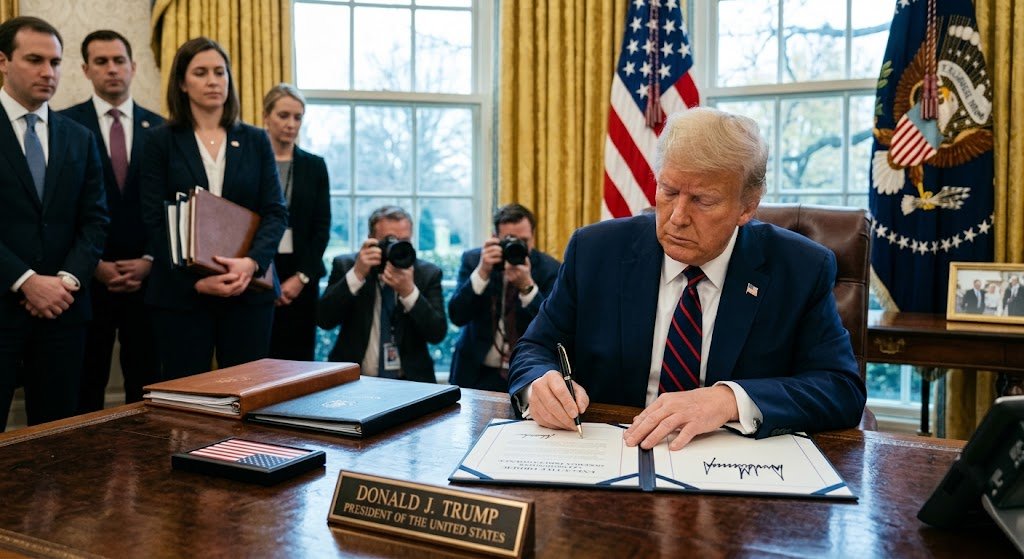
A Russia sanctions waiver signed by President Donald Trump on Friday, October 16, has put a sweeping package of penalties on hold, only weeks after he signed the bill into law. In the order, Trump told Congress that the pause serves the national interest. The White House has not yet explained that reasoning in any detail.
The law is named for the late Republican Sen. Lindsey Graham, who died in July and had pushed for tougher action against Moscow. According to Euronews and the Associated Press, it targeted Russian officials, major banks and tankers in Russia’s shadow fleet. It also provided for duties on Russian goods and on goods from countries that keep buying Russian oil and gas.
Euronews reports that the waiver came shortly before the measures were due to take effect. The South China Morning Post adds that Trump relied on a waiver clause written into the law itself, so the pause uses a power that the legislation already contained.
Why the Russia sanctions waiver is a surprise
The White House posted the order late on Friday without saying how the pause serves the national interest. Its notice said only that a report on the decision had gone to Congress. The administration had stayed mostly quiet after the bill passed by large margins in both chambers, and the AP described the move as unexpected.
The decision follows a deal Trump announced about a week earlier for Russia to supply diesel to the United States and global markets. He wrote that Russia would deliver more than 300,000 tons immediately, 500,000 tons in November and 1 million tons soon after. Republicans and Democrats alike criticized that deal, the AP reports, saying it helps Russia fund its war without lowering fuel prices.
Who is reacting to the Russia sanctions waiver
Ukrainian President Volodymyr Zelenskyy called the decision unfortunate and said blocking the sanctions would encourage Russia to keep attacking without bringing the war closer to an end. Speaking in Brussels, he also warned that diesel deals could be followed by gas deals, and later by easing of sanctions on banks. That is his prediction, not an established fact.
Democratic lawmakers also criticized the move. Sen. Richard Blumenthal, who helped draft the legislation, was among those who spoke out against it, according to the AP. Rep. Don Beyer called on Congress to revise the law so that a president cannot suspend the sanctions in this way.
On the Russian side, presidential envoy Kirill Dmitriev called the decision a “significant and truly historic moment.” He added that the package could have brought economic cooperation between Moscow and Washington to a standstill. Both statements reflect his own view, and no independent source has confirmed them.
What the Russia sanctions waiver means for ordinary people
For Ukrainians, the central question is whether Russia keeps access to the money and shipping routes that the sanctions were meant to restrict. That depends on how long the pause lasts and how strictly any measures are enforced afterward, and neither detail is public yet. Supporters of the sanctions argue that easing pressure on Moscow could prolong the war.
For American drivers and businesses, the issue is fuel costs. NBC News reported that diesel prices have risen almost 70% since the Iran war began in February. Whether Russian diesel will bring them down is unproven, because the delivery schedule comes only from Trump’s own post, and critics doubt it will move global prices.
Politics sits in the background as well. Midterm elections are on November 3, and an AP-NORC poll published on October 1 found that Americans blame Trump for higher prices. Any step that could affect fuel costs will be watched closely by voters.
What we still don’t know
The sources reviewed did not say how long the Russia sanctions waiver lasts or what would bring it to an end. It is also unclear whether Russia will deliver the diesel on schedule, or whether Congress will act to limit a president’s power to waive these sanctions. Each answer will shape whether the pause is brief or becomes a longer shift in US policy.
The Associated Press has full details of the order and the reaction in its report on the sanctions pause. For more of our coverage of how global decisions reach daily life, visit the Human Crisis News homepage. This story is based on published reporting and official statements, HCN did not report from the scene, and it will be updated as new information emerges.