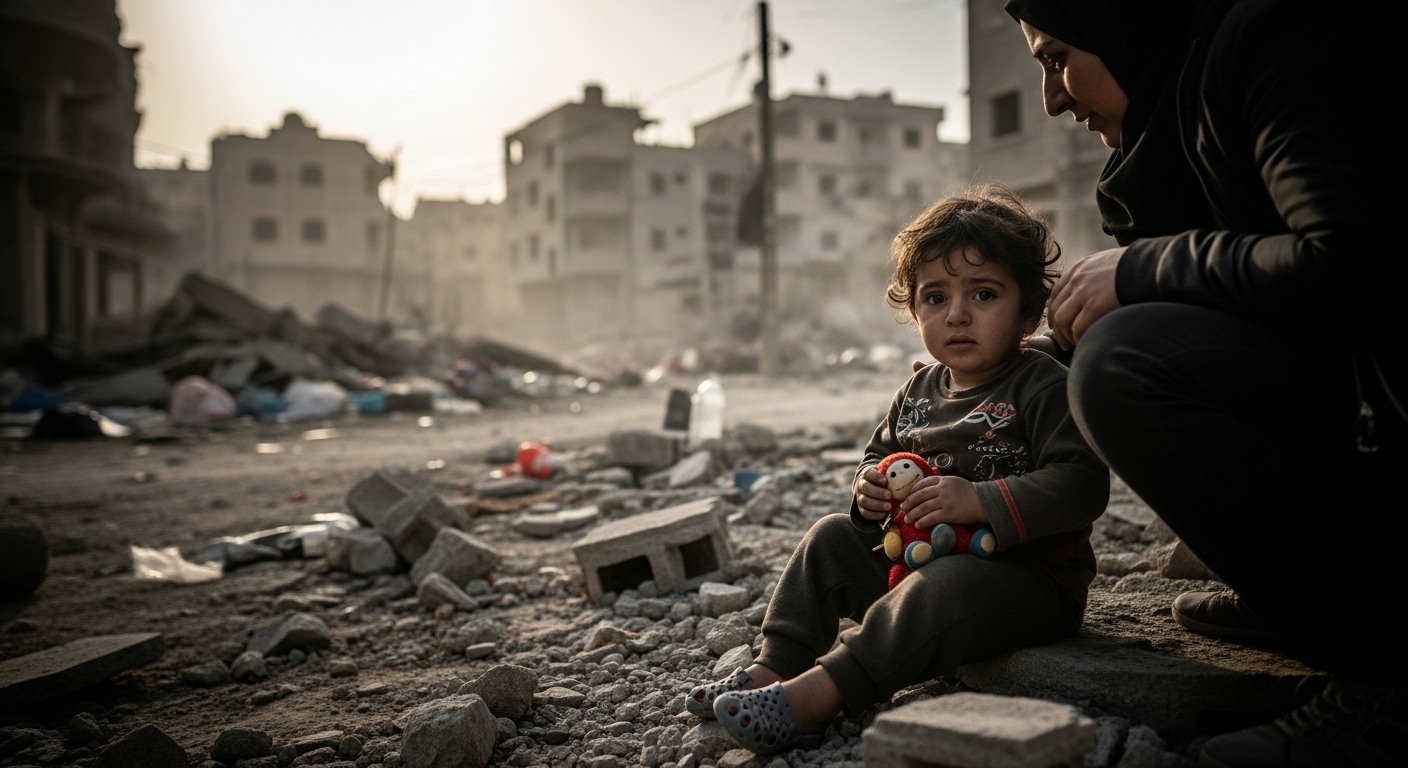
Sudan El Fasher child hunger 2026 is not just a statistic. It is the story of Amina, 32, a mother from El Fasher who lost her husband and two children in a hospital bombing last week. Before the attack, Amina lived with her family in a modest home surrounded by her neighbors. Her children went to school, and her husband worked at the local market.
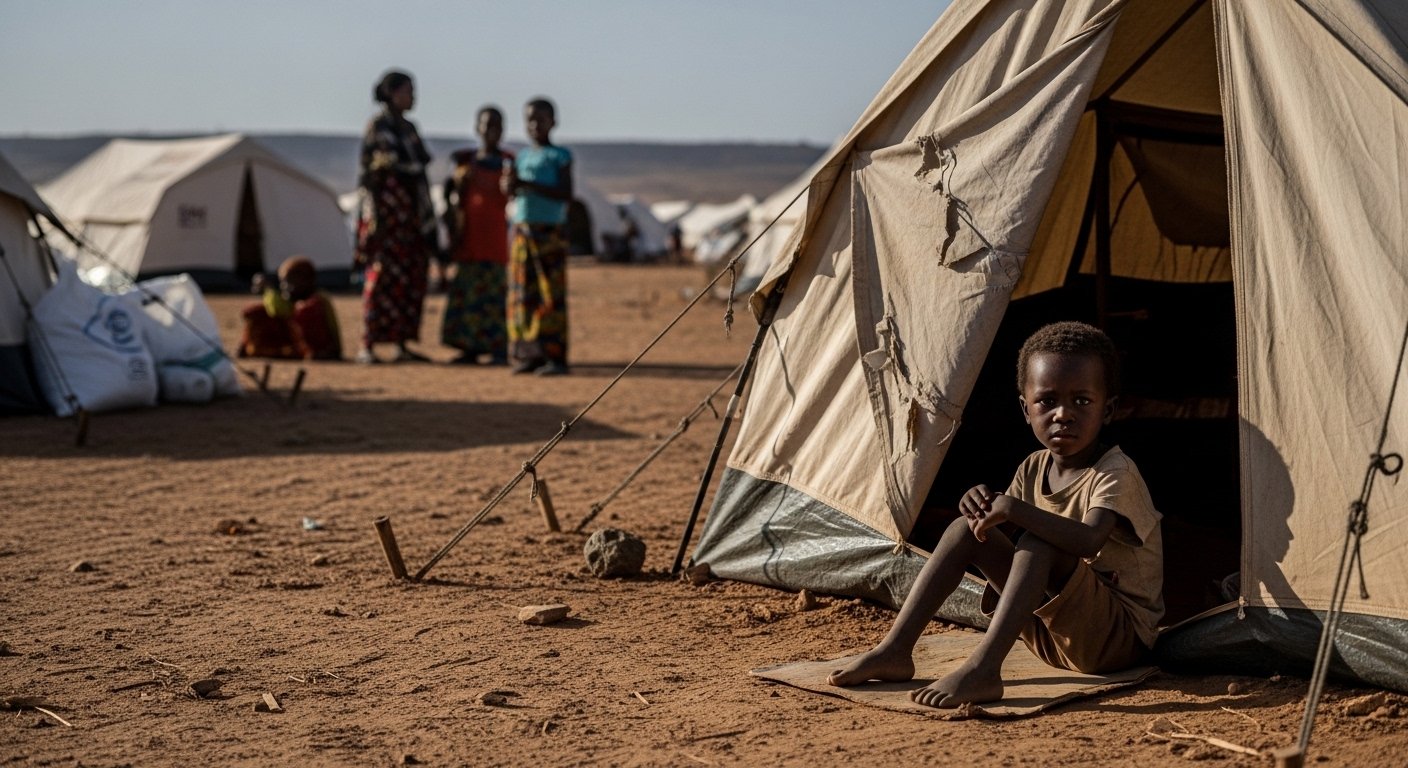
Then came the strike. The hospital where her children were being treated for malnutrition was hit, and in an instant, her life changed forever. Now, Amina is in a makeshift tent in a crowded displacement camp. She has no home, no family, and limited access to food or clean water. Her youngest daughter cries from hunger as Amina struggles to comfort her, powerless against the devastation around her.
This personal tragedy reflects a larger humanitarian disaster in El Fasher and North Darfur. Tens of thousands have been displaced, and hundreds of children are malnourished. The world is watching, yet action remains insufficient. Sudan El Fasher child hunger 2026 is now an urgent crisis that America, the UK, and Canada cannot ignore.
What Is Really Happening – And Why the World Must Pay Attention
The situation in El Fasher and North Darfur has deteriorated sharply since April 2023, but in 2026 it has reached a terrifying peak. After months of fighting between the Rapid Support Forces (RSF) and Sudanese government troops, the city is a war zone with civilians trapped in the middle.
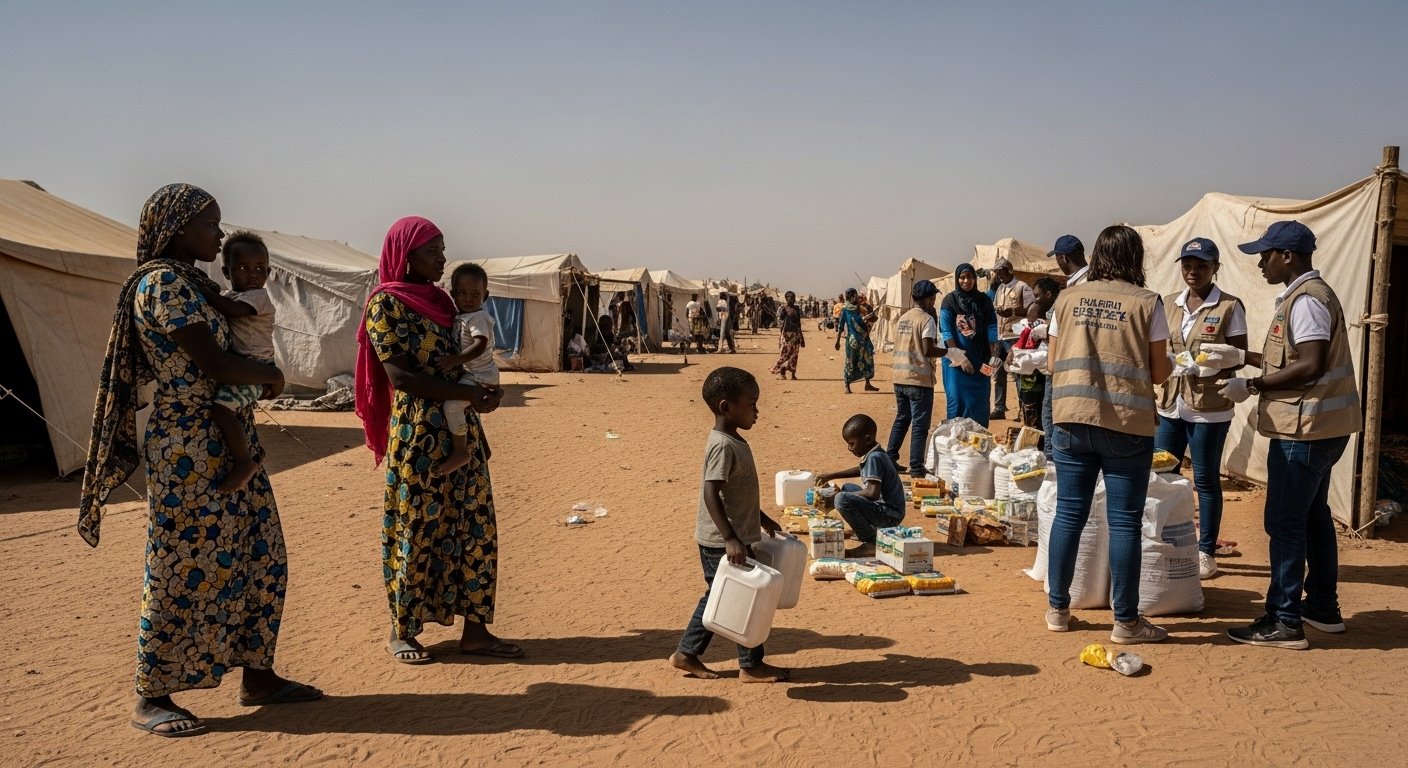
UNICEF reports that over 100,000 people have fled El Fasher in recent months, many of them children and women, seeking safety in overcrowded displacement camps. Humanitarian access is severely limited: roads are blocked by armed groups, and hospitals are targeted instead of protected. In one tragic incident, a hospital strike killed 64 civilians, including 13 children, highlighting the indiscriminate nature of the conflict.
Food, water, and medical supplies are scarce. UNICEF warns that acute malnutrition among children is rising at an alarming rate, with thousands at risk of death without immediate intervention.
What makes this crisis different from previous conflicts is its scale, speed, and deliberate targeting of civilians. Aid agencies describe El Fasher as a “crime scene,” with mass killings, destroyed homes, and collapsed healthcare. This is not some distant story – it is happening now, and without global intervention, the humanitarian toll will grow exponentially. Families like Amina’s live every day in fear, hunger, and uncertainty, making it impossible for the world to ignore.
The Numbers That Should Shock Every American
Some numbers are too large to grasp, yet they reveal the human cost clearly:
- Over 100,000 people have fled El Fasher alone – equivalent to the population of a mid‑size American city like Tulsa, Oklahoma, forced to flee in just a few months.
- Nearly 64 civilians, including 13 children, were killed in a single hospital strike – a tragedy that echoes the worst mass‑casualty events in the U.S., but with far less media coverage.
- UNICEF reports that 1 in 2 children in North Darfur is malnourished, meaning their bodies are too weak to fight disease.
- Across Sudan, over 25 million people now need urgent humanitarian aid – a number larger than the entire population of Australia.
U.S. taxpayers are already contributing through USAID and other humanitarian programs – around $500 million in 2025 toward Sudanese relief. Yet this barely scratches the surface of what is needed.
Every dollar helps, but the scale of suffering far exceeds available budgets. Americans must realize that their tax dollars are literally saving lives in these camps – but the crisis could spiral further without immediate action.
Why This Crisis Is Getting Worse in 2026
Four key factors have made Sudan El Fasher child hunger 2026 worse this year:
- Intensified fighting
RSF advances and government retaliation have displaced thousands, with civilians caught in the crossfire. - Funding gaps
Delayed USAID disbursements and reduced donor funding mean less food, water, and medical aid reaching the camps. - Climate stress
Poor rainfall has ruined crops and killed livestock, deepening food insecurity in an already starving region. - Bureaucratic and political blockage
International aid is hampered by Security Council vetoes, delays, and logistics obstacles. Even when convoys are allowed, they often arrive too late or with insufficient supplies.
Experts warn that without sustained funding and diplomatic pressure, Sudan could face one of the worst humanitarian disasters of the decade.
Dr. Marie‑Pierre Poirier, a UNICEF official in North Darfur, warns:
“We are seeing the consequences of inaction in real time. Children are starving while the world debates logistics and permissions. Every day counts.”
Amina’s Story: The Human Cost of Child Hunger
Amina’s story is not an exception — it is the everyday reality for thousands in El Fasher. Before the crisis, her family lived a relatively peaceful life. She cooked meals for her children, sent them to school, and her husband earned a modest income selling vegetables at the local market.
When the hospital was struck, Amina lost her children and husband instantly.
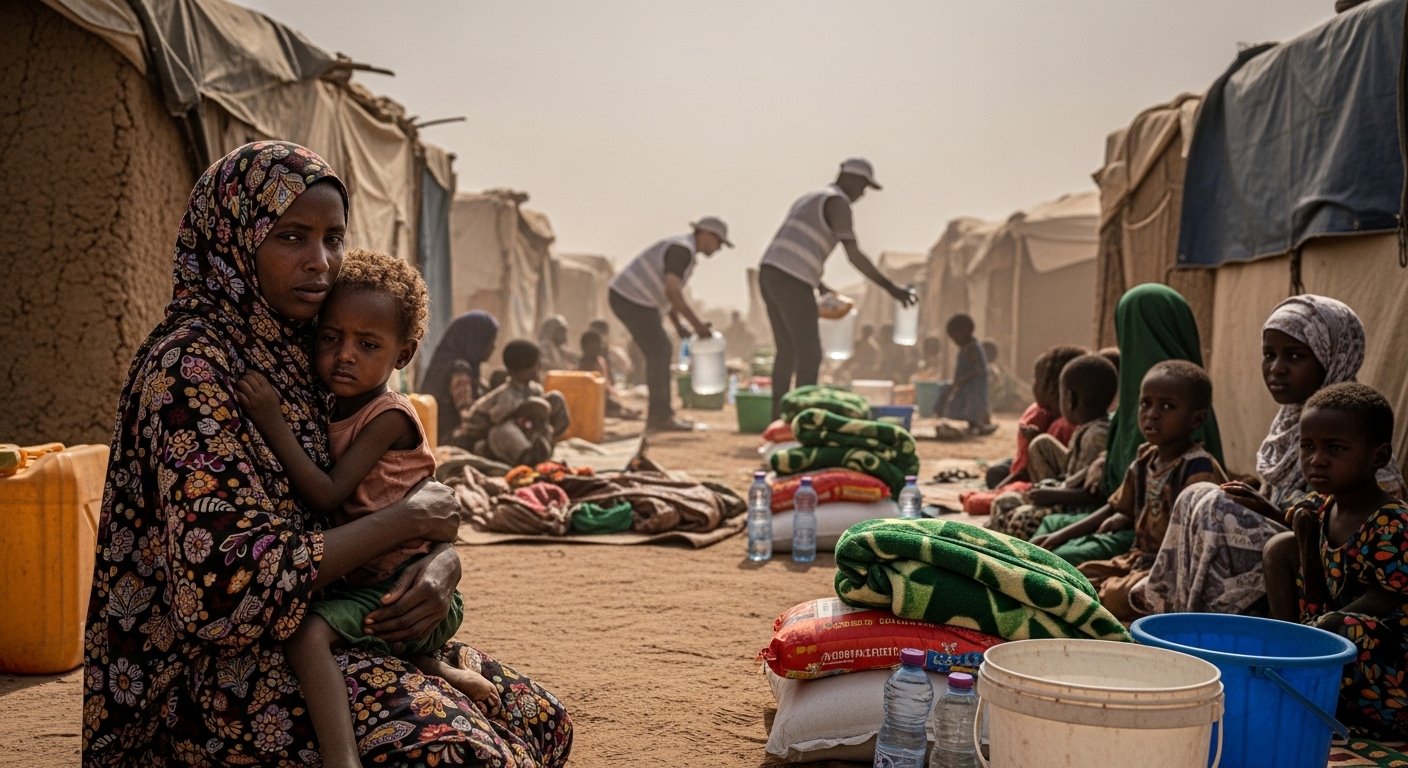
Now, she lives in a tent with hundreds of other displaced families, relying on meager aid rations. Water is scarce, and she must queue for hours to collect what little is available. Every day, she watches children suffer from hunger, disease, and trauma. Education has ceased, healthcare is inaccessible, and security is a constant worry.
The psychological toll is immense. Amina struggles with grief, anxiety, and the burden of survival.
She says:
“I feel like I am living in a nightmare that will never end. My children are gone, but I must keep going for the others who remain.”
This human story is why the world cannot ignore Sudan. It is not numbers on a page – it is the devastation of real families who once lived ordinary lives. Every American, British, and Canadian who hears her story should understand that these tragedies are preventable with immediate action and global attention.
America’s Role – The Part That Is Hard to Say Out Loud
The United States plays a complex role in Sudan. U.S. tax dollars contribute significantly to humanitarian aid in North Darfur — about $500 million in 2025 alone, according to USAID. These funds support UNICEF programs, refugee camps, medical supplies, and food distribution.
However, U.S. policy decisions also shape the conflict indirectly. The U.S. provides diplomatic support, peacekeeping advocacy, and occasional military aid to Sudanese forces, while also approving arms sales to regional partners. Critics argue that inconsistent diplomacy and selective funding have limited the effectiveness of humanitarian efforts.
Compare this: the U.S. spends roughly $1 trillion annually on defense, yet only a fraction goes to prevent mass starvation and displacement in Sudan.
Americans must understand that their tax dollars are already at stake, and their voices can influence policy. By demanding accountability, funding, and diplomatic pressure, the U.S. can help save thousands of lives and prevent further tragedies like the hospital strike. Ignoring these realities contributes, even inadvertently, to ongoing suffering.
Where the System Has Completely Failed
The international system has repeatedly failed Sudan. UN resolutions meant to protect civilians were ignored, and Security Council vetoes blocked swift action. Aid organizations are chronically underfunded, with UNICEF reporting that only about 40% of requested funds were received for North Darfur programs.
Bureaucratic red tape delays food and medicine shipments, and political obstacles prevent safe passage for aid convoys.
As a result:
- Thousands of children and families have no access to healthcare or adequate nutrition.
- Refugee camps overflow, sanitation fails, and disease spreads rapidly.
- Aid workers report that even when convoys arrive, they often lack enough supplies to cover basic needs.
A UN aid coordinator states:
“We have the logistics and the plans, but we lack political will and funding. The consequences are human lives — real children dying from hunger and preventable diseases.”
This systemic failure underscores the urgent need for global accountability and immediate action to address Sudan El Fasher child hunger 2026.
Children Paying the Highest Price
Children are the most vulnerable victims of this crisis. UNICEF reports that 1 in 2 children in North Darfur is malnourished, a staggering statistic that represents tens of thousands of young lives.
They are losing access to:
- Education — schools are destroyed, occupied, or closed.
- Proper healthcare — clinics are bombed or blocked.
- Safe spaces — many camps are crowded, unsafe, and unhygienic.
Psychologically, children endure trauma from losing family members and witnessing violence daily. Long‑term, this generation may face stunted growth, chronic illness, and lifelong mental health challenges. Girls are especially vulnerable to exploitation and early marriage, as families struggle to survive.
Imagine half of all children in your local school district suffering from life‑threatening hunger. That is the reality in El Fasher. Children cannot advocate for themselves; they rely on international attention and support to survive. Every moment without action compounds their suffering, making this a deeply urgent, emotional, and shareable crisis.
Why Every American Family Should Care About This
Many Americans feel disconnected from distant crises, but Sudan El Fasher child hunger 2026 affects every family indirectly. U.S. taxpayers already fund humanitarian relief – about $500 million in 2025 supported food, water, and medical aid for displaced Sudanese families. If the world fails, this investment could be wasted while children continue to die.
There are also national security implications. Instability in Sudan threatens the entire region, creating conditions where extremist groups can flourish. Refugee flows could eventually affect neighbors, creating a ripple effect that touches U.S. foreign policy, trade routes, and military commitments.
Economically, the cost of inaction is higher than the cost of proactive aid. Every day children go hungry and families flee, the world risks long‑term instability, famine, and conflict, which will require larger emergency responses later.
Morally, it is a reflection of American values. Families who hear Amina’s story should ask:
“What would I want the world to do if this happened to MY family?”
Compassion and action are part of the American ethos. The stakes are not just political; they are deeply human, urgent, and impossible to ignore.
What the UK and Canada Are Doing – And What They Are Not
The UK and Canadian governments have provided funding to Sudan, but both nations fall short of fully addressing the crisis.
- The UK has allocated about £120 million in humanitarian aid.
- Canada contributes roughly CAD $75 million to UN programs in Sudan, including UNICEF and the World Food Programme.
However, both governments face criticism for not expanding aid corridors fast enough. Refugees cross into Chad and neighboring countries, but resources are limited, leaving families exposed to disease and malnutrition. UK and Canadian NGOs emphasize that political constraints and slow bureaucratic processes hinder emergency relief.
Compared to nations like Germany or Norway, which have quickly mobilized emergency funds and logistics teams, the UK and Canada could do more to support displaced families and children. Public awareness in both countries is crucial; citizens can advocate for increased aid, refugee support, and diplomatic pressure to prevent the crisis from worsening.
What Experts Are Warning Will Happen Next
Experts warn that without immediate action, Sudan could face a full‑scale famine within months. UNICEF and UN humanitarian coordinators predict that if current funding and aid access remain limited, malnutrition rates among children could surpass 60% by mid‑2026.
Dr. Ahmed El‑Tayeb, a regional nutrition expert, states:
“We are on the brink. If aid does not reach these children now, thousands more will die from hunger and preventable diseases.”
Security analysts warn that prolonged instability may allow armed groups to expand influence, further complicating aid delivery and increasing civilian casualties.
Worst‑case scenarios include:
- Regional displacement affecting millions of people.
- Long‑term health crises due to malnutrition and disease.
- Destruction of social infrastructure — hospitals, schools, and water systems.
Aid organizations are pleading for international cooperation, emphasizing that the window to prevent total disaster is closing fast.
Why the Media Is Not Showing You the Full Picture
While major outlets cover the conflict occasionally, the full scale of El Fasher’s crisis remains underreported. The hospital strike, the mass displacement, and the surge in child malnutrition receive minimal attention in U.S. mainstream media. Coverage often focuses on political narratives or other global conflicts like Iran, Ukraine, or Gaza, leaving human suffering in Sudan largely invisible.
Journalists on the ground report that editors prioritize stories with higher clicks and political angles over life‑and‑death humanitarian coverage. As a result, millions of Americans remain unaware of the suffering of tens of thousands of children. This discrepancy allows the crisis to escalate quietly while global attention drifts elsewhere.
By sharing stories like Amina’s, and reporting verified statistics from UNICEF and UN agencies, we can counter media gaps. Highlighting real human suffering ensures accountability and pressures governments to act before more children are lost.
What Can Be Done – And What YOU Can Do Right Now
There are concrete, practical steps to help Sudanese families affected by Sudan El Fasher child hunger 2026:
- Donate to verified organizations like UNICEF, International Rescue Committee, World Food Programme, and Doctors Without Borders.
- Sign petitions calling for increased U.S., UK, and Canadian funding for Sudan relief.
- Contact your representatives and demand expedited aid and safe passage for humanitarian convoys.
- Share this article to raise awareness among friends, family, and social networks.
- Educate others about the crisis using verified sources and stories.
- Support local refugee families who have fled Sudan through community programs.
- If possible, volunteer with international NGOs or participate in fundraising campaigns.
Individual action amplifies global response. When governments see citizens demanding change, they are more likely to increase aid, expand humanitarian corridors, and pressure combatants to allow safe access. While the crisis is immense, collective action can save lives.
Conclusion
Amina’s story reflects a heartbreaking reality for thousands of families. She lost her children and husband in the hospital strike — a single event that captures the horror of Sudan El Fasher child hunger 2026. Yet her story is not unique. Tens of thousands of children face malnutrition, trauma, and displacement every day.
This crisis is human, urgent, and deeply connected to the global community. U.S., UK, and Canadian families have a real role to play, from funding humanitarian programs to advocating for stronger aid responses. Governments, aid organizations, and citizens must act collectively to prevent further tragedy.
HumanCrisisNews – Voice of the World believes in reporting these stories to empower readers. Amina’s struggle is a call to action: we cannot afford to ignore the suffering of children half a world away. Every click, share, donation, and conversation brings hope.