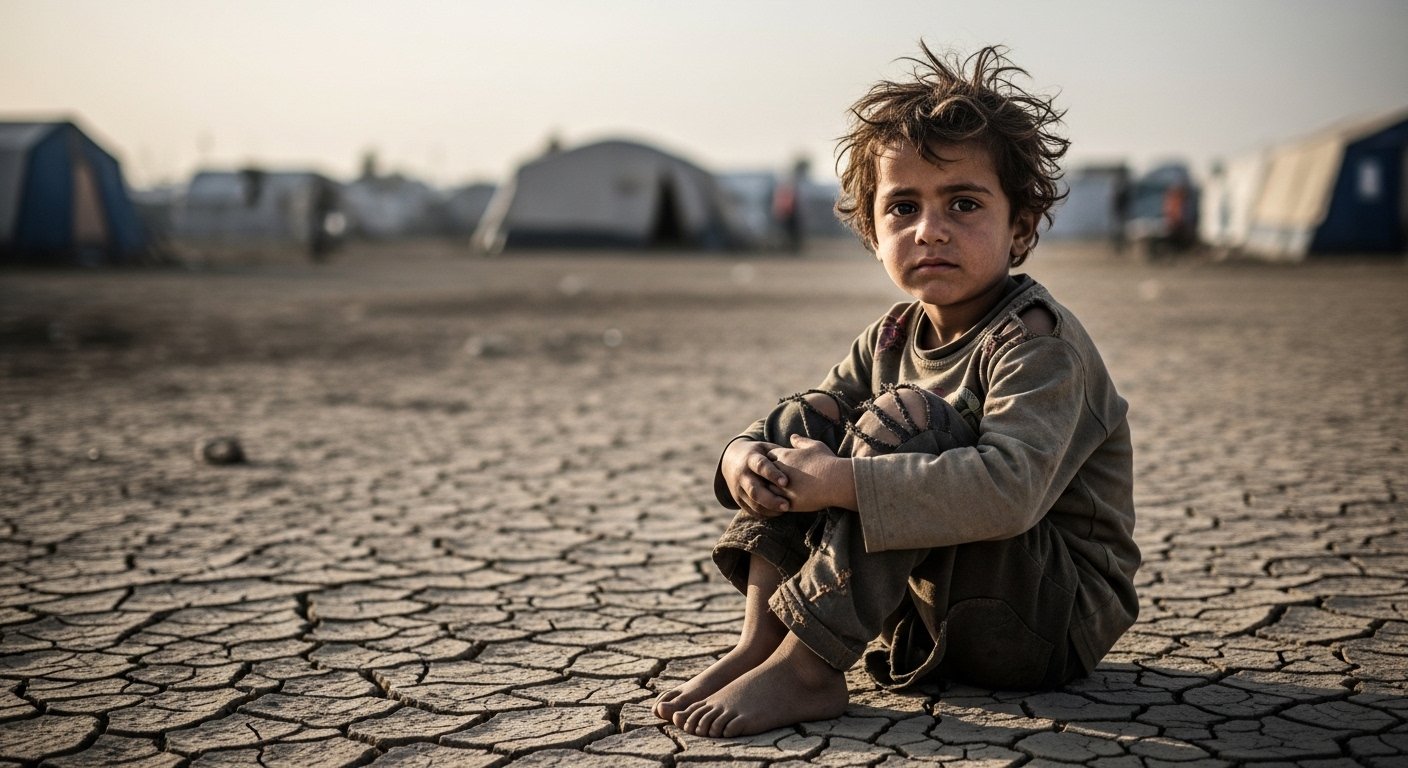
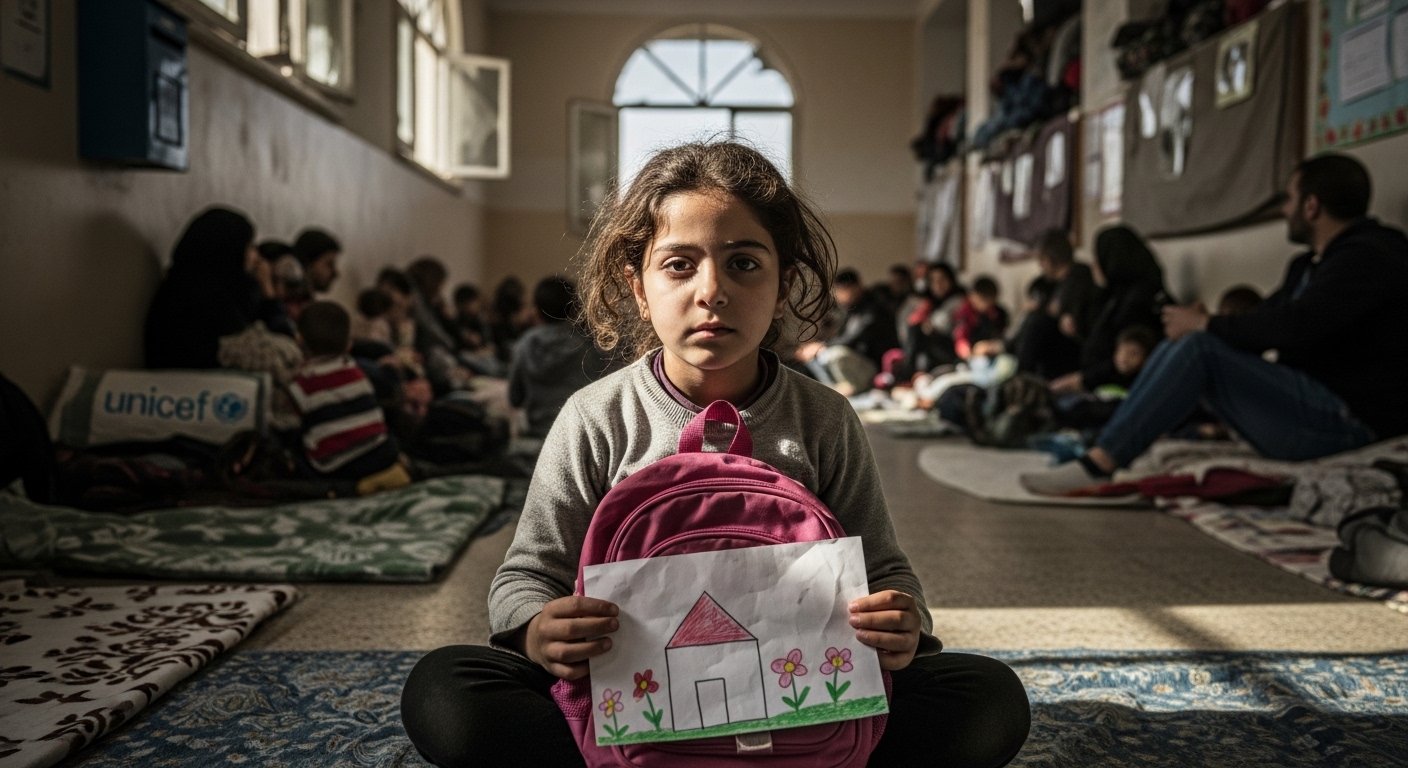
Lebanon children displaced 2026 is not just another headline – it is the story of Mira, a 9‑year‑old girl whose life changed in a single night. For her, what sounds like a distant conflict in the news is the reality she wakes up to every morning. Once, Mira had a small school, a pink backpack, and a quiet corner in her home where she loved to draw flowers. That simple, safe world vanished the night bombs fell near her neighborhood in southern Lebanon.
Her father grabbed her hand, her mother carried her baby brother, and the family ran into the darkness with nothing more than fear. Today, Mira sleeps on the floor of a classroom turned shelter – no bed, no toys, and almost no sense of safety. She is not alone. In just three weeks, more than 370,000 children in Lebanon have been forced from their homes, and this is a crisis that no parent, no teacher, and no ordinary citizen can afford to ignore.
What Is Really Happening – And Why the World Must Pay Attention
What is happening in Lebanon right now is not just another border clash – it is a fast‑moving humanitarian disaster. In a matter of days, violence has escalated sharply, with airstrikes, shelling, and clashes forcing families to flee almost overnight.
According to UNICEF, more than 370,000 children have already been displaced, and that number continues to rise with each passing day. Imagine every child in a major American city suddenly losing their home – that is the scale of what is happening. Many of these children are now living in overcrowded schools, unfinished buildings, or temporary shelters with no proper insulation, no privacy, and almost no access to safe spaces.
Clean water is limited, food is uncertain, and daily life has turned into a constant struggle for survival. Even more heartbreaking, over 120 children have been killed, and hundreds more injured. These are not just statistics in a report – they are young lives cut short or forever altered.
What makes this crisis different from past conflicts is the speed and intensity. In previous years, displacement in Lebanon was already high, but never this sudden or this large. Families now have hours, not days, to decide what to save and what to leave behind. There is no detailed planning, no safety net – just fear, urgency, and the hope of finding somewhere, anywhere, to stay alive. Globally, the world often focuses on the headline‑making battles, but the quiet, steady escalation in Lebanon is growing in the background, fast, silent, and deadly.
The Numbers That Should Shock Every American
The numbers behind this crisis should shock every American because they are far from abstract. Behind each figure is a child, a family, and a future turned upside down in an instant.
Start with this: 370,000 children displaced. That is more than the entire population of cities like Tampa, Florida, all forced from their homes in just a few weeks. Now look at the daily pace: 19,000 children fleeing every single day. That is as if multiple American schools were emptied out every hour, with children vanishing from their classrooms into uncertainty and often with no clear destination.
Then comes the most painful number of all – over 120 children killed. Each one represents a life cut short, a family broken, and a future that will never unfold. Here is what many Americans do not always realize: the United States is one of the largest contributors to global humanitarian aid, sending billions of taxpayer dollars each year through organizations like the United Nations and major non‑governmental organizations.
But there is a clear gap. Only a fraction of the funding needed for Lebanon has actually reached the ground. While defense budgets climb into the hundreds of billions, humanitarian aid struggles to keep pace. This is not about blaming any single country or government; it is about awareness. The reality is that American taxpayer money is connected to both sides of this crisis: the systems of war and the systems of relief. That connection creates a moral responsibility many citizens do not even know they carry. When policy decisions are made in Washington, they ripple outward, shaping the lives of children like Mira thousands of miles away.
Why This Crisis Is Getting Worse in 2026
So why is this crisis getting worse right now – and how did it reach this level in 2026? The answer lies in several overlapping pressures pushing Lebanon deeper into instability.
First, regional tensions have escalated dramatically. Conflicts involving Israel, Iran, and nearby regions have spilled over into Lebanon, turning already fragile areas into active zones of danger. Second, humanitarian funding is critically low. Aid agencies have repeatedly warned that they lack the resources to respond at the scale needed. One senior official described the situation as “a crisis growing faster than we can manage.”
Third, climate and infrastructure pressures are making everything worse. Water shortages, damaged housing, and extreme weather conditions are adding new layers of hardship to communities already struggling to survive. And finally, global attention is divided. When multiple crises unfold at once, some receive intense media coverage, while others slip into the background. This is one of the hardest truths: not all suffering gets equal attention. In 2026, Lebanon is paying the price for that imbalance. The world rushes to react to the loudest conflicts, while the quiet, steady destruction in Lebanon moves on almost unnoticed.
The Story America Is Not Hearing – A Family’s Nightmare
There is a story that many Americans never hear: the story of a family just like yours, caught in a situation they never imagined. Ahmed was a math teacher in a small town in southern Lebanon. For 15 years, he believed that education could change lives. He marked homework, celebrated his students’ successes, and quietly hoped for a better future for his community.
Today, his classroom is gone. His school building has been converted into a shelter for displaced families – including his own. Ahmed now sleeps in the same room where he once taught equations and problem‑solving, surrounded by the same chairs and desks, but now filled with people carrying blankets, clothes, and the weight of fear. His daughter no longer asks about homework. She asks if there will be food tomorrow. She asks if they will ever go back home.
This is the part of the crisis that many people in the United States never see: not just the destruction of buildings, but the transformation of lives. Homes become shelters. Schools become camps. Lives become survival stories. For families like Ahmed’s, there is no clear end in sight. Every day feels like a temporary pause in a journey that has no map.
America’s Role – The Part That Is Hard to Say Out Loud
This is where the conversation becomes uncomfortable, but it is a truth that cannot be ignored. The United States plays a major role in global conflicts – both directly and indirectly. Through military alliances, defense support, and foreign policy decisions, the U.S. influences the balance of power in regions like the Middle East.
At the same time, it is one of the largest humanitarian donors in the world, providing billions of dollars to relief efforts each year. The reality is sharp and complex: the same system that fuels conflict is also trying to fix its consequences. It is not simple. It is not clean. It is political. But it is also deeply human. Behind every decision in Washington is a real family, like Mira’s, like Ahmed’s, whose lives are shaped by choices made thousands of miles away.
Many Americans would care deeply if they fully understood that connection – if they realized that the wars they read about in the news are not distant shows, but events that shape the lives of real children, real parents, and real families. This is not about turning people against their own government; it is about awareness, responsibility, and the power of individual voices. When citizens understand the impact of their tax dollars and policy choices, they can push for change.
Children Paying the Highest Price
Children are always the most vulnerable in any crisis, and in Lebanon, they are suffering like never before. 370,000 children have been displaced. This means there is no school, no stable home, and almost no sense of normal life for hundreds of thousands of young people.
Some have lost one or both parents. Some have been injured in the chaos of escape. Many show clear signs of trauma – nightmares, anxiety, withdrawal, and a kind of silence that speaks louder than words. Education has been completely disrupted for over 150,000 students. Playgrounds are now filled with tents instead of children playing. Classrooms have become shelters instead of places of learning.
The impact of this disruption will echo for decades. When children miss years of education, lose their sense of safety, and suffer emotional damage that goes untreated, the result is often a lost generation. This is what makes the Lebanon children displaced 2026 crisis so heartbreaking. It is not just about surviving the next meal or the next night. It is about the future that is being stolen before it even has a chance to begin.
Why Every American Family Should Care About This
You might be wondering why a family in the United States should care about children displaced in Lebanon. The answer is simple: the world is deeply connected. Crises like this ripple far beyond borders. They affect global stability, disrupt economies, fuel migration, and even influence security back home.
A child in Lebanon may seem far away, but the consequences of their suffering are not. When large numbers of people are displaced, it creates pressure on neighboring countries, shifts population flows, and can impact trade, security, and even international politics. But this is not just about politics or money. It is about values. It is about the kind of world people want to live in – and the kind of world they want for their own children.
Ask yourself this: if your child lost their home tonight, would you expect the world to stand by silently? Or would you hope for urgent help, protection, and action? That is exactly why the Lebanon children displaced 2026 crisis matters. At its core, it is about humanity, responsibility, and the lives of children who cannot wait.
What the UK and Canada Are Doing – And What They Are Not
The United Kingdom and Canada have pledged humanitarian support to Lebanon. Aid funding has been announced, and relief organizations are mobilizing to deliver food, medicine, and shelter. Both governments have spoken publicly about the need to protect civilians and support refugees.
But experts warn that these efforts are not enough. Compared to the scale of the crisis, the current level of support falls short. Other countries are stretched thin by multiple global emergencies, leaving aid organizations with limited resources to respond. This creates a dangerous gap. When the response is slow, suffering grows – and it is the children who pay the highest price.
Humanitarian experts are sounding alarms. If the fighting continues, displacement numbers could double, food shortages may worsen, and disease outbreaks could spread faster. One senior official warned, “We are looking at a potential long‑term displacement crisis.” This is not a crisis that will be resolved in a few weeks. It may take years to recover. The window to act is closing, and communities like Mira’s are waiting for the world to notice.
Why the Media Is Not Showing You the Full Picture
One of the biggest challenges in Lebanon is that many Americans do not see the full story. Not all crises get equal coverage. Big geopolitical events dominate headlines, while humanitarian emergencies like Lebanon often get limited attention.
It is not because they are less important; it is because they are complex, uncomfortable, and lack quick, easy solutions. The stories of displaced children, traumatized families, and destroyed schools do not make for neat, one‑sentence headlines. They require time, context, and nuance. That is why they often fall into the background.
The result is a dangerous gap: a disconnect between what is happening on the ground and what people know from the news. When the public does not see the full picture, it is harder to build pressure for action, donate to relief efforts, or push governments for change. This is why it matters so much for independent outlets and informed journalists to keep telling these stories.
What Can Be Done – And What YOU Can Do Right Now
This is not a hopeless situation. Change is possible, but it requires action – not just from governments, but from individuals.
At the policy level, governments can increase funding for humanitarian aid, expand the capacity of relief organizations, and put pressure on all sides to protect civilians, especially children. They can also improve access to the hardest‑hit areas, so that aid is not stuck in warehouses while people suffer. Policies that prioritize education, mental‑health support, and long‑term recovery for displaced children can help prevent a lost generation.
At the individual level, you can do more than you might think. Donate to reputable organizations like UNICEF, the International Rescue Committee, or the Red Cross, so that supplies reach the people who need them. Share verified information about the crisis with your friends and family, not just emotional headlines. Use your voice to contact elected representatives and demand stronger support for humanitarian efforts.
Support local refugee programs in your community, where displaced families may be rebuilding their lives. Educate those around you, especially children, about the real human cost of conflict. Even small actions matter. Awareness creates pressure, and pressure creates change.