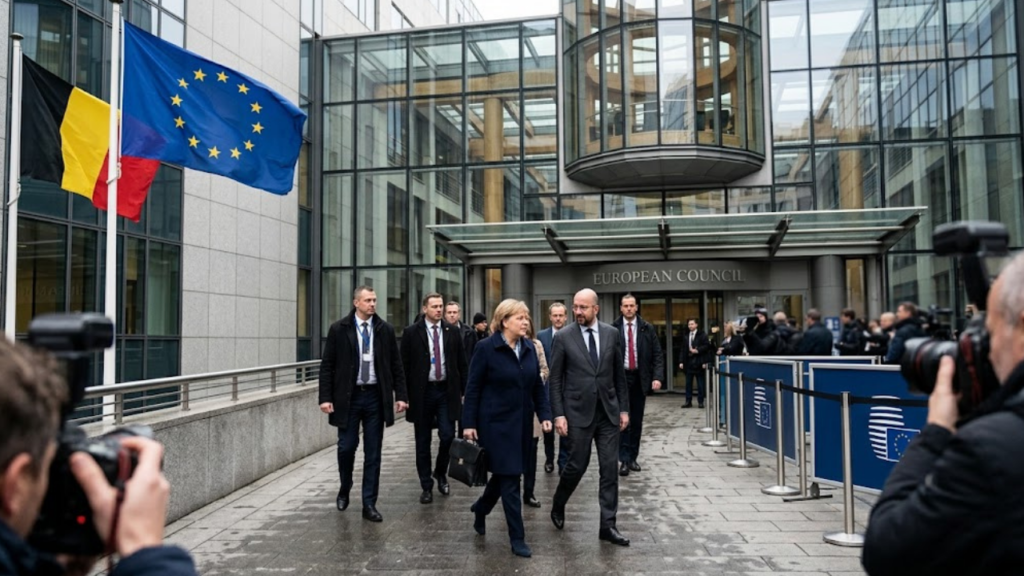
Ireland has proposed EU budget cuts worth €141 billion in the bloc’s next seven-year spending plan. The draft falls short of what Germany and its allies have demanded. At least one of them has already criticised it.
Ireland currently holds the EU’s rotating presidency. Its draft compromise, known as the negotiating box, was circulated on 10 October. It sets spending for 2028–2034 at €1,622 billion in 2025 prices. That is 8% below the European Commission’s proposal and still 30% above the current budget. In current prices, the total is about €1,825 billion.
Where the cuts fall
Most of the reduction lands on competitiveness and overseas cooperation. Funding for competitiveness, research and defence would fall 13% to €456 billion. The Global Europe programme, which finances cooperation outside the EU, would fall 17% to €157 billion. EU administration would be cut 8.8% to €95 billion.Spending on cohesion (aid to poorer regions), agriculture and fisheries is the largest item. It takes the smallest cut, 3%, and would stay at €914 billion.
The draft also proposes new EU-wide revenue sources, known as own resources, estimated at €55 billion a year. The main change from the Commission’s plan is a higher call rate for the Carbon Border Adjustment Mechanism, a levy on carbon-intensive imports. The rate would rise from 75% to 90%. Three levies proposed by the European Parliament, on digital services, online gambling and crypto assets, were left out.
Germany’s demand for EU budget cuts
Germany is the EU’s largest net contributor, meaning it pays in more than it receives. It has led the push for a smaller budget. On 30 June, Reuters reported that an internal German government document called for €400 billion to be cut from the Commission’s plan. The document described the proposals as “unaffordable”. Reuters said that even after such a cut, the budget would be 27% larger than the current €1.3 trillion framework. The coverage reviewed did not state the price basis for that 27% figure, so it may not be directly comparable with the 30% above.
Chancellor Friedrich Merz has been less specific in public. During a July visit to Dublin, he did not say how deep the cuts should go. He said no sector could be exempt.
On 27 August, the leaders of Germany, Denmark, the Netherlands, Austria, Finland and Sweden called for cuts of “several hundred billion euros in a balanced manner” across all spending headings. The same group opposes further joint EU borrowing. In a 28 September letter to the Irish presidency, the six governments argued that they alone finance almost 40% of member states’ contributions. That figure is the group’s own claim.
Reaction so far
Sweden’s EU affairs minister, Jessica Rosencrantz, called the draft “unreasonable” in a post on X. She said it still contained a “wildly unaffordable increase” and that the sides were nowhere near an agreement. Other frugal countries were also reported to be disappointed. The sources reviewed did not include a German government response to the Irish text.
The opposing camp wants the budget to stay large. On 2 October, 17 southern and eastern governments said agriculture and cohesion should be the central priorities.
In Parliament, co-rapporteur Siegfried Mureșan has warned against unjustified cuts. He also disputed German claims that Parliament’s position would raise spending by 60%. Parliament cannot amend the budget. It can only approve or reject it.
What happens next
EU ambassadors were due to discuss the Irish text on Sunday 11 October. Ministers will take it up at the General Affairs Council on 13 October. Leaders will follow at the European Council on 15–16 October. European Council President António Costa is expected to take over negotiations after the summit, with the aim of a deal by Christmas.
The final budget needs unanimous approval from all 27 member states. Elections are complicating the timetable. Spain’s prime minister has called a snap vote for 29 November, and several other countries go to the polls in 2027. As of 11 October, no agreement on the overall size of the budget had been reached.
[…] came from several governments and bodies. The United Nations and the European Commission president, Ursula von der Leyen, criticised the attacks, with von der Leyen warning that they were […]