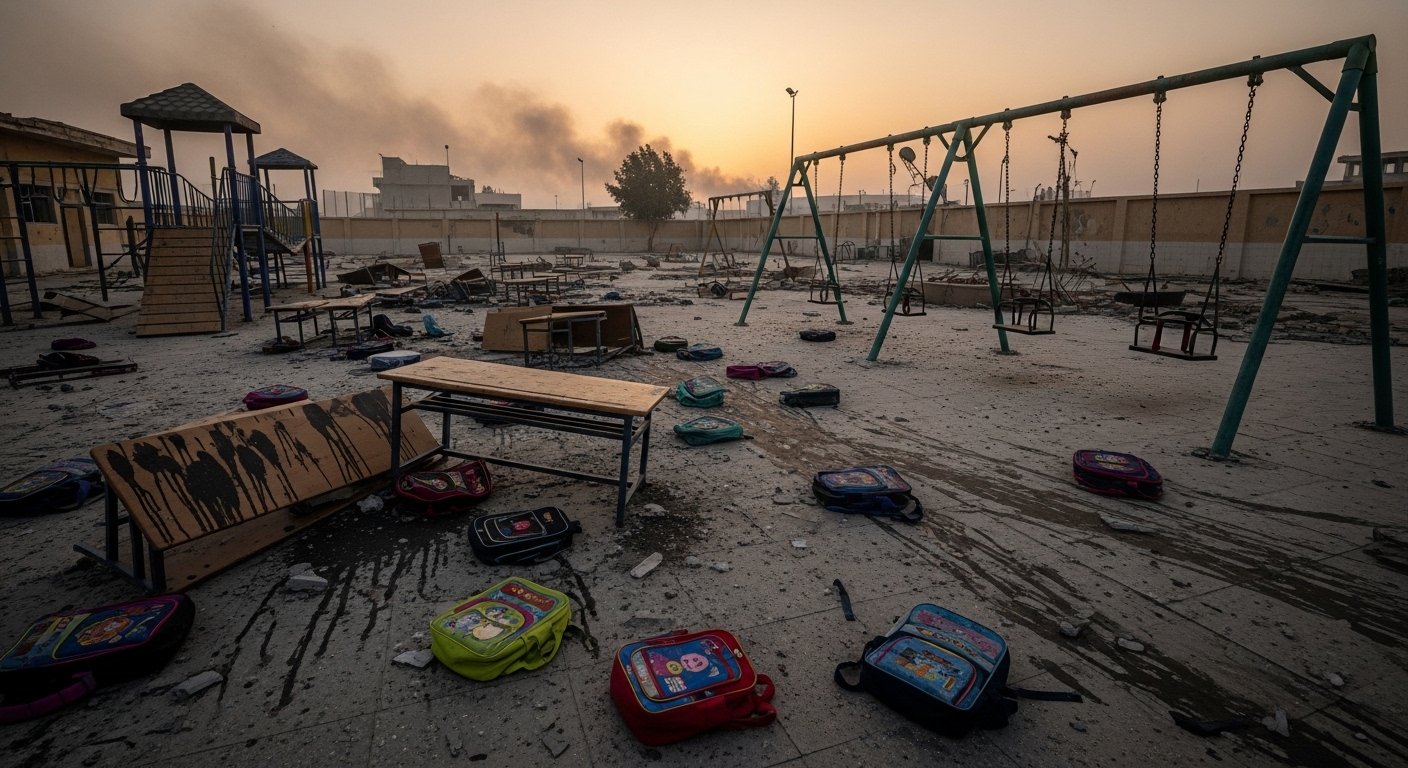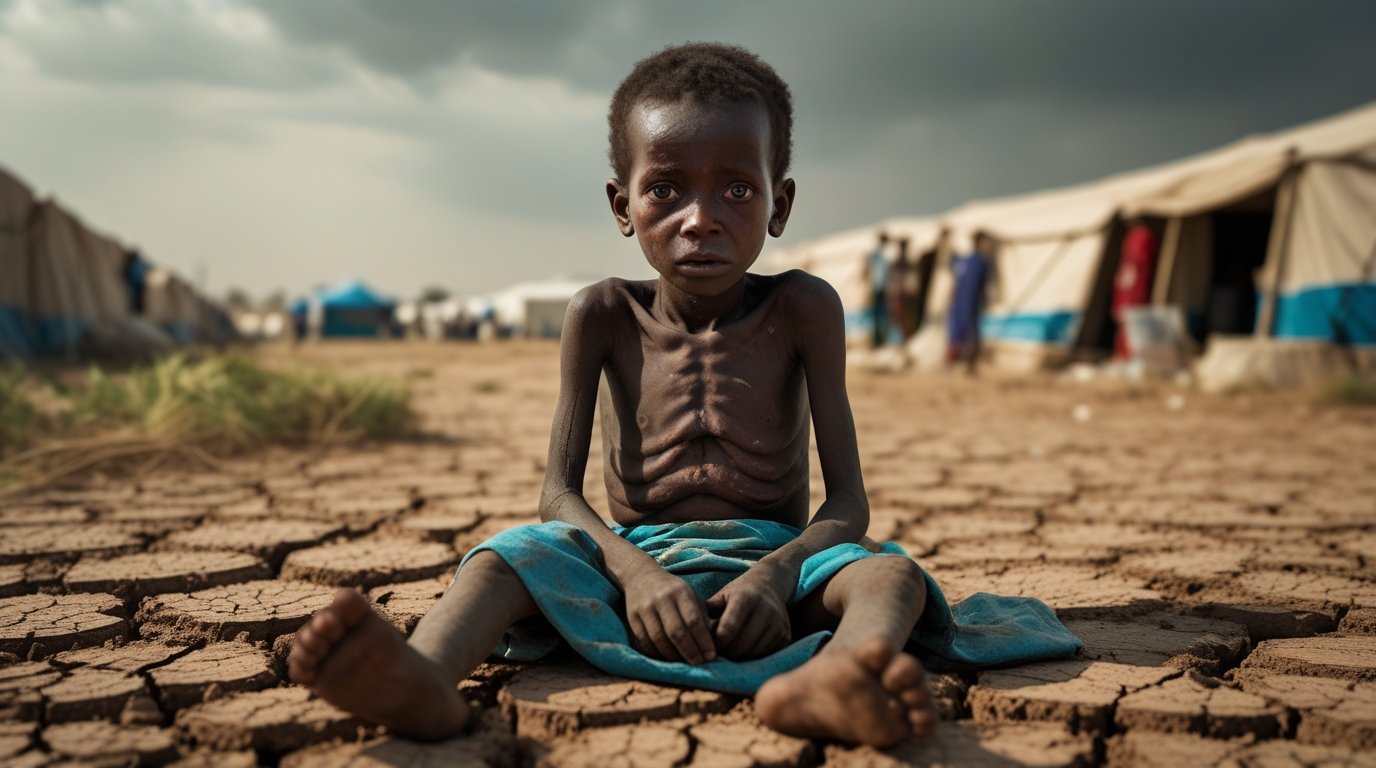
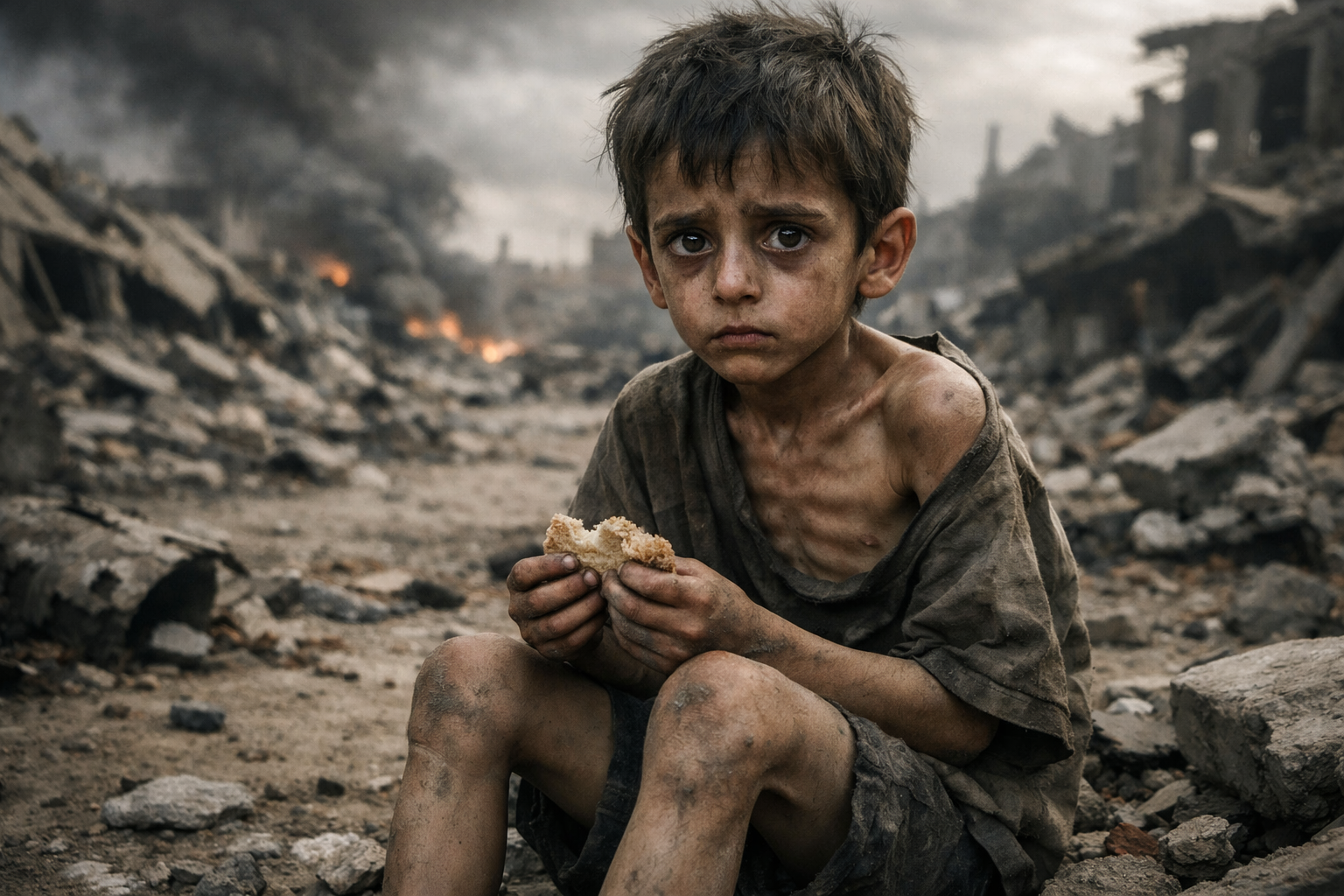
Gaza kids starving 2026 is no longer just a headline. It is the heartbreaking daily reality for 800,000 innocent children after the United States cut the vital aid that was keeping them alive. In the dusty ruins of Gaza City in March 2026, six‑year‑old Amina sits clutching an empty plastic bottle. Her once‑bright eyes are now sunken and lifeless, her small body too weak to cry.
Just three months ago, American aid was putting food in her stomach. Meals, even small ones, arrived through international programs that helped families survive. Today, that lifeline has been slashed. Amina, along with hundreds of thousands of other children, is slowly starving to death in silence. The world keeps watching other headlines, sharing memes, and arguing online, while her belly grows emptier each day. Gaza is no longer just a war zone. It has become a slow‑motion graveyard of children.
The Shocking Decision That Changed Everything
On a cold day in early 2026, the United States government made a decision that would condemn hundreds of thousands of innocent children to unimaginable suffering. In one stroke of policy, USAID funding that was keeping Gaza’s most vulnerable families alive was dramatically reduced. The move was quietly passed in the middle of political debates, far from the eyes of the general public, yet its impact is brutal and immediate.
What was once a lifeline of emergency food rations, medical supplies, and clean water suddenly vanished. For families already living on the edge after years of conflict, this was not just a budget cut. It was a death sentence. Before the reduction, families in Gaza understood that the world was watching. Aid trucks came with food, medicine, and reassurance that someone, somewhere, cared enough to send help. After the cuts, that hope disappeared.
Mothers who used to receive monthly food packages now stand empty‑handed at distribution points that no longer exist. The same women who once lined up in the early morning, waiting for small bags of flour, rice, and canned food, now walk home with nothing to feed their children. Fathers who once scavenged for scraps now sit in the shade of crumbling buildings, watching helplessly as their children’s bodies waste away. The difference between surviving and dying used to be measured in kilograms of food. Now it is measured in silence, fear, and emptiness.
Aid organizations estimate that over 800,000 children under the age of 12 are now facing acute malnutrition and starvation. This is not a distant, far‑away problem. It is happening in Gaza, a place whose images are seen on phones every day, yet whose human cost remains invisible to most. The silence surrounding this crisis is deafening. The world keeps watching other wars, other headlines, while children in Gaza quietly disappear.
Meet Amina: One Face of a Hidden Catastrophe
Amina is only six years old. She used to love drawing pictures of birds and flowers. Before the war and the aid cuts, she had enough energy to play, run, and laugh. Her mother remembers her joyful voice calling out for water, for food, for attention. Today, Amina sits in the shade of a broken wall, her body too weak to move. Her once‑bright eyes stare blankly at nothing.
Her mother, Fatima, whispers through tears that Amina hasn’t had a proper meal in weeks. The last real food she remembers was a small bag of grains that Amina’s older brother somehow brought home. Since then, the family has survived on whatever wild plants they can find, water that smells strange, and the hope that aid might return one day. Amina’s once‑round cheeks are gone. Her skin clings tightly to her bones. Her hair is falling out in patches, a clear sign of severe malnutrition.
Doctors who still have access to the camps say they are seeing kwashiorkor and marasmus – diseases that most people only read about in history books. These conditions occur when the body is starved of protein and calories for extended periods. The stomach swells while the limbs shrink. The body consumes its own organs to survive. The mind becomes dull and slow. Children who survive this level of hunger often never recover fully.
Every night, Amina asks the same heartbreaking question: “Mama, when will the food come back?” Fatima has no answer. How do you explain to a six‑year‑old child that the richest country in the world decided their survival was no longer a priority? The world knows about Gaza. The world watches videos of destroyed buildings, bombed streets, and crowded hospitals. But the world does not see the quiet suffering of children like Amina, who are slowly dying in the shadows.
How USAID Cuts Created This Nightmare
The recent USAID budget cuts were sold to the American public as “fiscal responsibility” and “reducing foreign spending.” Politicians framed the decision as a way to save money, to protect the American economy, and to focus on domestic issues. What they did not say – what they did not want to admit – is that these cuts directly hit emergency nutrition programs that were preventing mass starvation in Gaza.
Before the reductions, aid organizations were distributing high‑energy biscuits, therapeutic milk, and micronutrient supplements to tens of thousands of children every week. These products were not luxuries. They were life‑saving tools designed to keep children alive until the situation stabilized. The biscuits provided calories. The milk provided protein. The supplements provided vitamins and minerals that children’s bodies desperately needed. Without these supplies, children cannot survive for long.
Those programs have now collapsed or shrunk to almost nothing. Warehouses that once stored life‑saving food now sit empty or have been destroyed. Some of the food that was stored in those warehouses was never able to reach the people who needed it. The timing of the cuts could not be worse. Gaza’s local economy is in ruins. Jobs are almost nonexistent. Families have sold everything they own -furniture, clothes, even their own homes – just to survive another week. The last line of international support was the only thing keeping them from complete collapse.
When that support disappeared, the fall was immediate and brutal. There was no time to adjust. No slow fade‑out. Just sudden hunger, fear, and silence. Families who once relied on USAID‑funded programs now walk miles in search of anything that can fill their stomachs. They boil grass and drink dirty water. They wait for trucks that never come. The children pay the price for decisions made in distant offices, far from the dirt and hunger of Gaza.
The Silent Suffering No Camera Captures
While dramatic images of destroyed buildings and bombed streets make headlines, the slow, invisible agony of starvation is rarely photographed. Cameras do not capture the way a child’s voice grows quieter each day. They do not show the moment when a child realizes they are too weak to cry. They do not follow the mothers who sit in the dark, holding their children’s hands, watching their tiny bodies fade away.
In the overcrowded refugee camps, mothers hide their children’s deteriorating condition because they feel ashamed. They fear judgment, criticism, or the belief that they are not doing enough to protect their families. Fathers stop talking because the guilt of being unable to feed their children is too heavy to carry. They watch their sons and daughters lose weight, lose energy, and lose hope, and they feel helpless. Entire communities are surviving in a painful, dignified silence that the outside world rarely sees.
This is not a crisis of noise or chaos. It is a crisis of quiet suffering, where children disappear one by one, without dramatic explosions or breaking news. The world closes its eyes to the slow, silent deaths happening in Gaza. It is easier to watch videos of war, to argue about politics, or to scroll past social media posts than it is to face the reality that children are dying because no one chose to help them. The silence is not just complicity. It is a betrayal of every promise the world has ever made to protect the innocent.
Children Are Paying the Price for Adult Wars
This is the cruelest truth of all: the children of Gaza did not start this conflict. They did not fire rockets or drop bombs. They did not choose to be born in the middle of a war zone. They did not decide to live under occupation, under siege, under constant fear. Their only crime is being born in the wrong place at the wrong time.
While world leaders argue in air‑conditioned rooms, these children are wasting away on dirt floors, their bodies consuming their own muscle and organs just to stay alive a few more days. Their lives are being spent as if they are bargaining chips in a game they never chose to play. Every child who dies in Gaza is a reminder that the world has failed. The world has failed to protect the innocent. The world has failed to stop the violence. The world has failed to provide the basic necessities of life.
The children of Gaza are not soldiers. They are not politicians. They are not spies. They are six‑year‑old girls who love to draw, five‑year‑old boys who used to play football, four‑year‑old babies who have never seen anything but war and hunger. They are children who should be in school, in playgrounds, in their parents’ arms, laughing and dreaming. Instead, they are lying in the shadows, slowly fading away, while the world chooses to look away.
What Starvation Actually Does to a Child’s Body
Severe malnutrition doesn’t just make children thin. It attacks their organs, weakens their immune system, and damages their developing brains. Children who survive this level of hunger often face lifelong cognitive impairments, stunted growth, and chronic health problems. Their bodies may carry the scars of starvation for the rest of their lives.
Doctors on the ground report seeing children as young as four with the bodies of infants. Their bellies are swollen from edema, while their arms and legs look like sticks. Their skin is pale and dry. Their hair is brittle and falling out. Many are too weak to even cry anymore. They lie in the shade or in dark tents, slowly fading away. The world assumes that starvation is just about hunger. But it is about disease, weakness, and the slow death of the body.
When a child’s body does not receive the nutrients it needs, it begins to consume itself. Fat reserves disappear first. Then muscle. Then vital organs. The brain stops developing properly. The immune system collapses, leaving children vulnerable to infections, diseases, and illnesses that would be treatable in normal conditions. In Gaza, there is no normal. There is only hunger, fear, and the slow, silent death of children.
The World’s Shameful Indifference
Social media feeds are filled with celebrity gossip and political fights, while 800,000 children fight for their lives. Hashtags trend for a day, then disappear. Memes spread, then are forgotten. The world moves on, while children in Gaza die quietly, one by one. The international community has failed these children. Governments issue statements, but the aid trucks have stopped coming. Celebrities post black squares, but the food packages have disappeared.
The silence is not just complicit. It is criminal. When the world chooses not to act, it becomes part of the problem. The children of Gaza deserve more than empty words and weak statements. They deserve food, medicine, clean water, and the right to survive. The world has the tools to stop this crisis. It has the money. It has the technology. It has the logistics. It has the people who care. But it does not have the will to act.
The world has watched as Gaza’s children starve. It has watched as mothers hold their dying children, as fathers bury their sons and daughters, as communities collapse under the weight of hunger and fear. And still, the world looks away. The world chooses to ignore the quiet suffering of children who are dying because no one chose to help them.
Stories from the Camps That Will Break Your Heart
In one camp, a father carried his unconscious five‑year‑old daughter for six miles hoping to find medical help, only to be told there was no medicine left. The child’s body was too weak to respond to treatment, even if it had been available. The father walked back to the camp, his daughter’s body in his arms, knowing that he had failed to protect her.
In another camp, a mother boiled grass and dirty water to feed her three children, knowing it wasn’t enough but having nothing else to give. She watched her children drink the water, their small bodies too weak to protest. Later, one of her children fell unconscious, and she had no one to turn to for help. These are not isolated incidents. These stories are repeating in hundreds of camps across Gaza right now as you read this.
Every day, parents make impossible choices: which child eats, which child gets comfort, and which child is left in the growing silence. The world assumes that starvation is a distant problem, something that happens in forgotten corners of the world. But it is happening in Gaza, in real time, as children slowly die in the shadows of a world that refuses to look.
What One American Can Still Do
Even after official aid has been cut, individual Americans still have the power to make a difference. Small donations can fund emergency food packages, medical kits, and clean water through independent humanitarian organizations working on the ground. These organizations may not have the same reach as USAID, but they are still trying to help.
Your $15 can feed a child for a week. Your $50 can provide therapeutic food for a severely malnourished toddler. Your voice can pressure policymakers to reconsider these devastating cuts. No one person can save everyone, but many people acting together can change the course of this crisis. The world has the money. It has the people. It has the tools. It only needs the will to act.
If this story moved you even a little, don’t just scroll past. Share it. Talk about it. And if you can, donate whatever you can afford today. One child’s life might depend on your decision in the next 24 hours.
The Clock Is Ticking – We Cannot Look Away Anymore
Every hour that passes, more children slip closer to the point of no return. The window to save hundreds of thousands of young lives is closing rapidly. If the world continues to look away, we will wake up one day to headlines about mass graves of children – and we will have no excuse. The choice is simple: keep scrolling, or act now while there is still time.
The world has watched Gaza’s children starve. It has watched mothers hold their dying children. It has watched fathers bury their sons and daughters. And still, the world looks away. The world has the power to stop this crisis. It has the resources. It has the people. It has the will, if it chooses to use it.
We cannot bring back the dead, but we can still save those who are fighting to stay alive right now. If this story moved you even a little, don’t just scroll past. Share it. Talk about it. And if you can, donate whatever you can afford today. One child’s life might depend on your decision in the next 24 hours.
Will you look away, or will you be the one who refused to stay silent?
Conclusion: Faces Behind the Numbers
The children of Gaza are not statistics. They are Amina, Yazan, Fatima’s daughter, and thousands more with dreams, laughter, and futures that are being stolen from them every single day. America’s decision to cut aid didn’t just save money. It took away food from the mouths of hungry children who had already lost everything else.
We cannot bring back the dead, but we can still save those who are fighting to stay alive right now. If this story moved you even a little, don’t just scroll past. Share it. Talk about it. And if you can, donate whatever you can afford today. One child’s life might depend on your decision in the next 24 hours. Will you look away, or will you be the one who refused to stay silent?