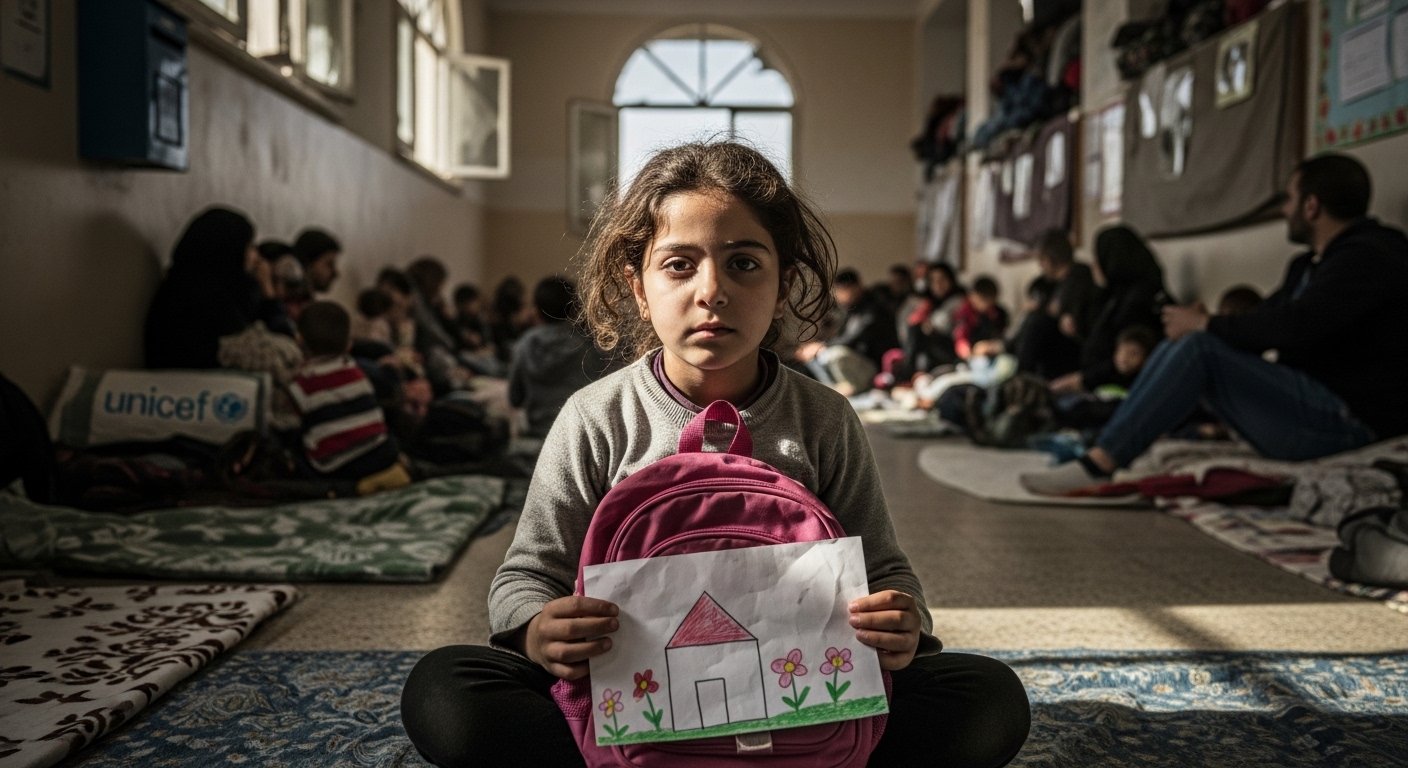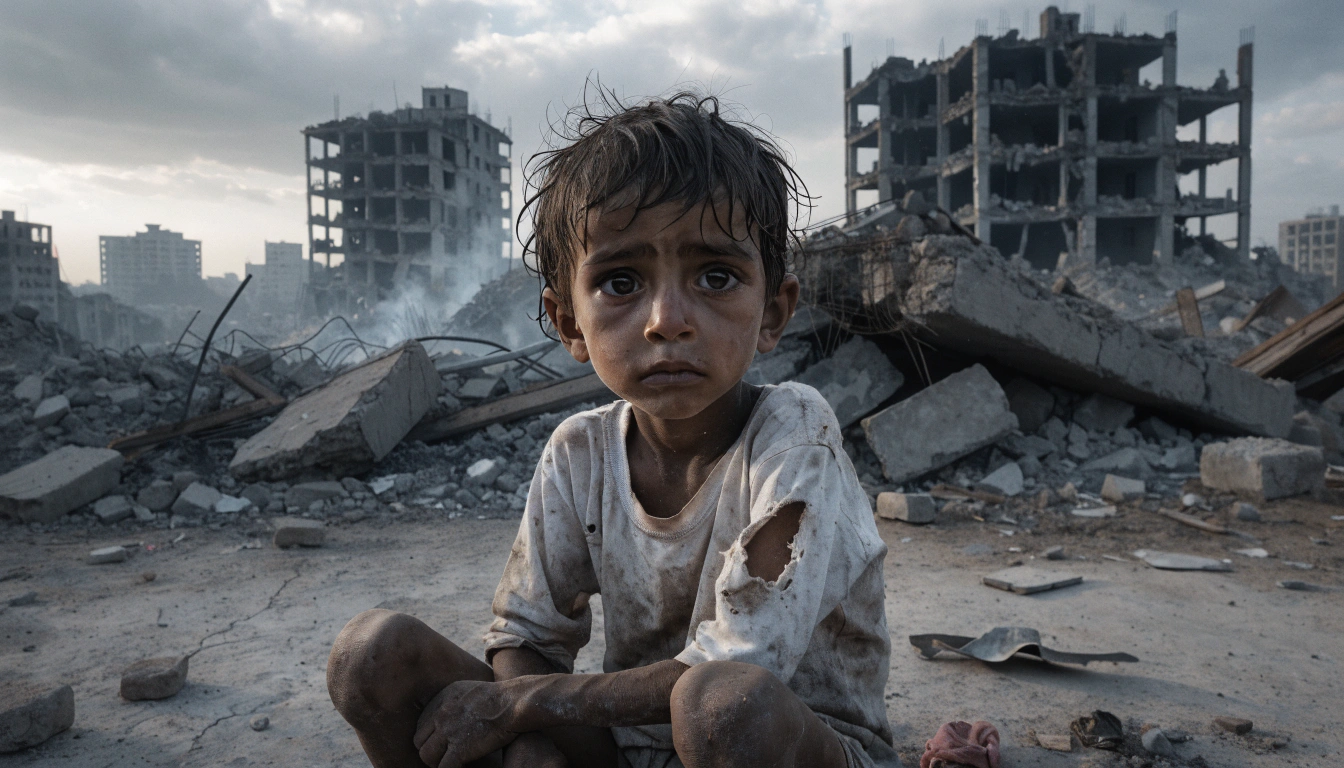
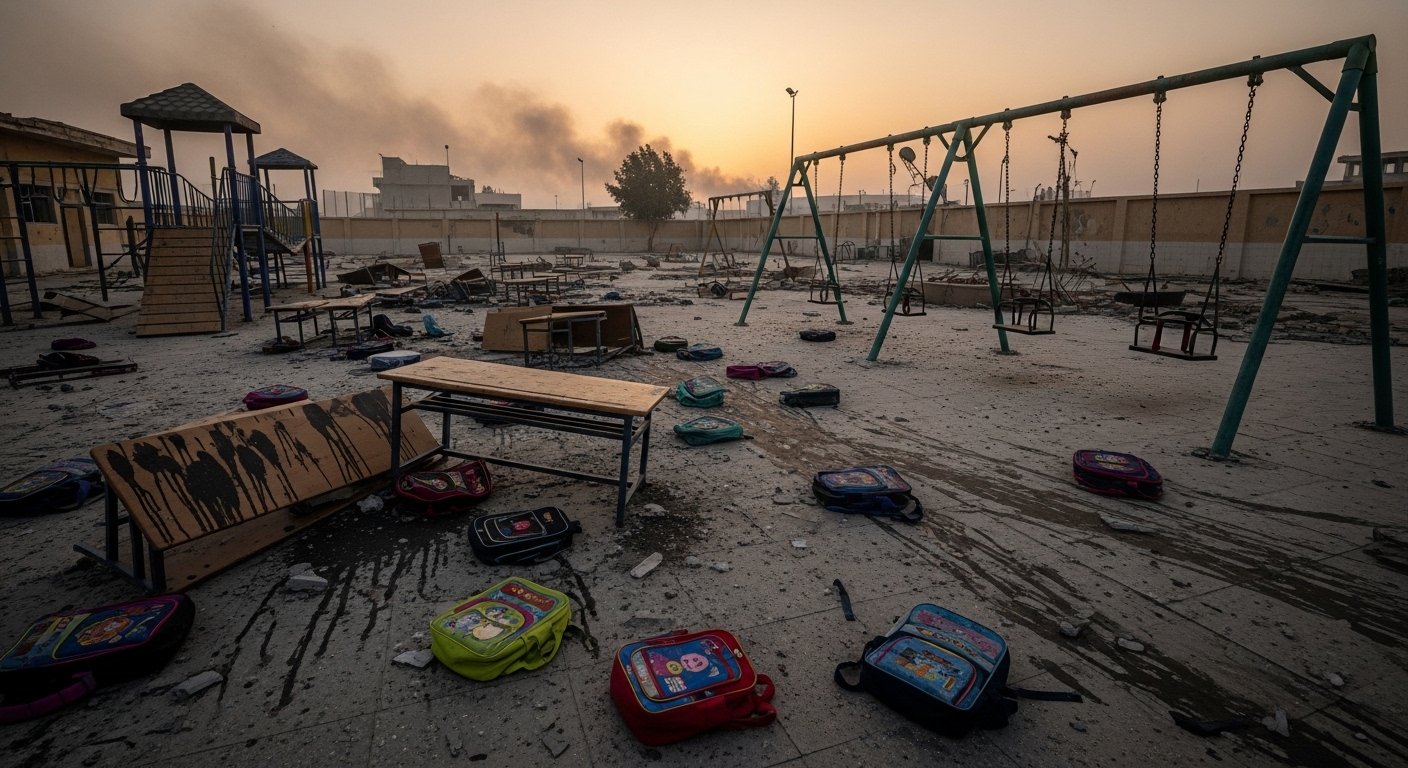
Iran schoolgirls killed US strikes is no longer a distant headline. It is the heartbreaking reality for hundreds of families after a US‑led airstrike destroyed a primary school in Minab, southern Iran, on March 3, 2026. In the rubble of what was once a bright classroom, over 100 schoolgirls were pulled out lifeless — their backpacks stained with blood, their futures erased in seconds.
Before that Saturday, these were ordinary girls like Zahra, 8 years old, who skipped to school with dreams of becoming a teacher. Her mother waved goodbye, proud of her bright, smiling daughter. The school walls were painted with rainbows, drawings, and apples. By the next morning, that same school had become a funeral ground for little girls.
This is not fiction. It is the crushing reality of a new humanitarian crisis exploding across the Middle East – where US, Israeli, and Iranian military actions are pushing children to the edge of survival. The world is watching, but many still do not fully see the cost.
What Is Really Happening – And Why the World Must Pay Attention
The Iran schoolgirls killed US strikes crisis officially exploded on March 3, 2026, when a US‑led airstrike hit a girls’ primary school in Minab, Hormozgan province, Iran. The missile struck during morning lessons, when 150–200 students and teachers were inside. The building collapsed instantly, burying dozens of children under the rubble.
Iranian authorities and international human rights groups report that over 150 people were killed in the attack, including more than 100 children, several teachers, and parents who had come to pick up their daughters. The school, once a symbol of education and hope, became the site of one of the deadliest civilian‑targeted attacks of the current war. Human rights organizations like Amnesty International have called the strike “unlawful” and “a serious violation of international humanitarian law,” warning that it could amount to a war crime if confirmed.
By the following week, the death toll from US‑led strikes in southern Iran had risen to over 200 children and civilians, with hundreds more injured. United Nations officials described the situation as “horrific”, with reports of children’s bodies buried in mass graves and families left in shock amid an ongoing internet blackout in Iran.
The crisis is not limited to Minab. The same military escalation has spilled across 12 countries, from Iran to Lebanon, Gaza, and the Red Sea, crushing aid routes, pushing oil prices higher, and leaving millions of children at risk. If the trend continues, the world could be staring at a regional war with children as its main victims.
The Numbers That Should Shock Every American
The numbers behind Iran schoolgirls killed US strikes are not abstract – they are the real, lived pain of families like Zahra’s.
- Over 100 schoolgirls killed in a single school bombing in Minab – more than a full classroom in any American elementary school wiped out in seconds.
- Over 200 children killed or seriously injured across Iran and neighboring countries in late February and early March 2026, according to UN and rights groups.
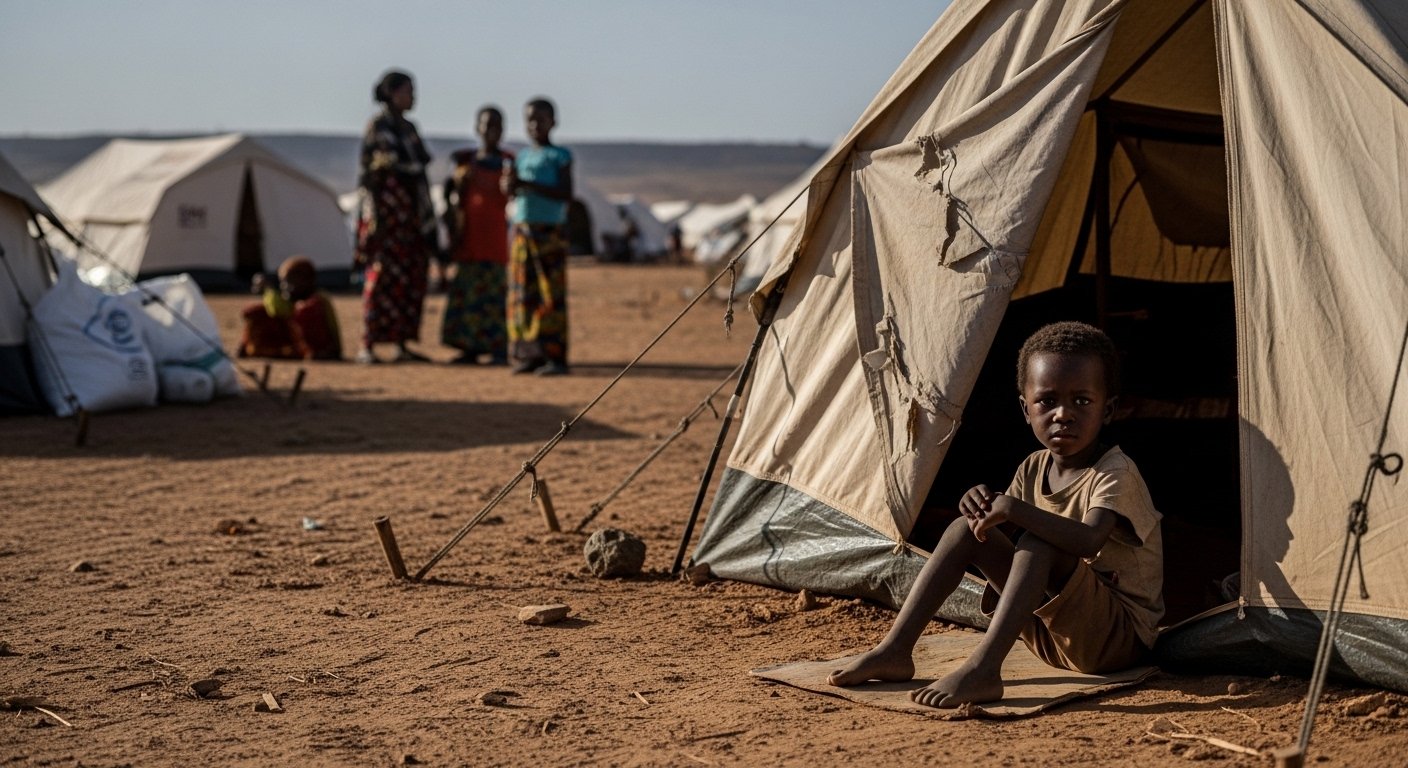
- In Lebanon, over 30,000 people displaced in just a few days, with families sleeping in cars, shelters, and on roads, as the conflict spreads south.
- The World Food Programme (WFP) reports that flour supplies for Gaza could run out in just 10–14 days, as sea routes through the Strait of Hormuz and Red Sea are disrupted.
For Americans, this matters directly. US taxpayers indirectly fund the military operations and humanitarian aid that shape this crisis. While the United States spends over $800 billion on defense annually, humanitarian aid budgets have been cut by roughly 20% in recent years, according to UNICEF and UNHCR data. These cuts are now showing their real cost – children starving, schools bombed, and families torn apart.
Imagine:
- One F‑35 jet costs around $100 million – that same amount could rebuild hundreds of schools, feed thousands of children, or save entire villages from hunger.
- The $800 million in fresh US arms deals to Israel and others in early 2026 could instead fund entire years of humanitarian programs in Gaza, Sudan, and Yemen.
The numbers are not just shocking – they are a choice between war and care.
Why This Crisis Is Getting Worse in 2026
The current spiral started in February 2026, when US‑led strikes on Iranian targets escalated, following attacks by Iran‑backed militias in the region. Before 2026, the conflict was largely fought through proxy groups. Now, direct strikes on Iranian soil have turned the region into a full‑scale war zone, with civilians and children paying the price.
Key reasons the crisis is worsening:
- Military escalation:
- US‑led coalition airstrikes hit Iranian bases, infrastructure, and sometimes civilian‑adjacent areas, including the school in Minab.
- Iran has responded with missile and drone attacks across the region, igniting further retaliation.
- Humanitarian aid collapse:
- USAID overhaul and funding cuts have weakened global relief efforts.
- WFP and UNHCR report that over 3.2 million people in Iran and 1 million in Lebanon have been displaced, but aid cannot keep up.
- Political and media silence:
- The UN has called for independent investigations into the Minab school strike, but powerful countries, including the United States, block or delay action.
- Western media coverage remains fragmented, with many outlets focusing on politics, elections, and war strategy, not the children who died in that school.
As displacement and hunger grow, experts warn that the situation could spiral into full‑scale regional famine and refugee crisis within months.
The Story America Is Not Hearing – A Family’s Nightmare
Behind the numbers is the story of Dr. Leila, a 35‑year‑old pediatrician from the suburbs of Beirut, Lebanon. Before the war, Leila ran a small clinic that treated refugee children, many of them from Gaza and Syria. Her evenings were spent laughing with her two sons, 6 and 9, who loved football and cartoons.
Then Hezbollah entered the war in full force, and Israeli airstrikes began hitting the southern suburbs of Beirut. Leila’s home was destroyed in a Monday night strike. Her sons, traumatized and without sleep, had to flee in the chaos, sleeping in the back seats of cars caught in traffic jams. Her clinic collapsed, leaving dozens of children without medical care.
“Every day, children are hurt, scared, and hungry, and I can’t do anything,” Leila says through a smuggled phone call. “Before this, we had UNHCR help, food, and a sense of safety. Now, everything is gone. The world is watching sports and politics, and we are burying children. It feels like we are being forgotten.”
Stories like Leila’s are repeating across Iran, Lebanon, Gaza, and beyond. Families are not just fleeing war – they are fleeing the slow, silent death of hunger, fear, and loss.
America’s Role – The Part That Is Hard to Say Out Loud
America’s hand in this crisis is deep and undeniable. The US military, alongside Israel, has conducted hundreds of airstrikes across the Middle East since late February 2026. The Minab school strike was launched using US‑made Tomahawk and precision missiles, according to military sources and Amnesty International reports.
US policy shifts have made the crisis worse:
- Defense spending:
- The United States now spends over $858 billion on defense annually, with billions in arms deals to Israel and regional allies.
- One aircraft carrier group could fund an entire year of WFP operations in multiple crisis zones.
- Humanitarian aid cuts:
- Under policy changes in late 2025–2026, US funding for UNHCR and UNICEF was reduced by around 20%.
- USAID programs in Syria, Yemen, and Gaza have been scaled back or shut down, leaving millions of children without food, medicine, and shelter.
When the world asks, “Who killed those schoolgirls in Minab?” the answer is not just a single pilot or soldier – it is a system that chooses bombs over bread, missiles over medicine, and war over peace. For American families, this is a moral question:
- If your child’s school were hit in a similar strike,
- If your family was forced to flee with nothing,
- Would you want the world to ignore it?
The world has a choice: look away, or act.
Where the System Has Completely Failed
The international system built to protect civilians has collapsed under pressure.
- UN resolutions are ignored:
- The UN has repeatedly called for ceasefires, aid access, and investigations, but vetoes and political pressure block real action.
- Humanitarian aid is blocked:
- UNICEF is 20% short of funding for Middle East programs.
- WFP routes through the Strait of Hormuz and Red Sea are disrupted, increasing costs and delaying food shipments.
- Refugee systems are overwhelmed:
- In Lebanon, shelters overflow with families who have nowhere else to go.
- Iran’s internet blackout hides the full scale of civilian suffering from the world’s eyes.
One WFP official said, “Seas contested, airspace shut – costs soar, and aid delays are fatal.” In the case of Iran schoolgirls killed US strikes, children are dying waiting for answers and help that never come.
Children Paying the Highest Price
Children are ground zero of this crisis:
- Over 1,100 children have been killed or injured since late February 2026, according to UNICEF and other monitoring groups.
- In Minab alone, dozens of schoolgirls died in a single strike, their bodies buried in mass graves.
- Across the region, 102 million children are now at risk of hunger, displacement, and trauma, UNICEF warns.
Their education has been shattered: schools bombed, teachers killed, and families too afraid to send their children back to class. Their health is collapsing: no vaccines, no clean water, and rising malnutrition and disease.
This is not just a short‑term crisis. It is the creation of a lost generation – children who will carry the scars of war, hunger, and loss into adulthood.
Why Every American Family Should Care About This
This crisis matters to every American family, not just because of the human cost, but because of the real‑world impact:
- Taxes and priorities:
- US taxpayers fund both military operations and humanitarian aid. The balance between them determines how many children live or die.
- Security and terrorism:
- When children are humiliated, humiliated families often turn to extremism and violence.
- Unstable, war‑torn regions become breeding grounds for future threats.
- Economy and oil:
- The war in Iran has disrupted oil flows, pushing gas prices higher and increasing inflation.
- Values and identity:
- America’s image as a defender of freedom and human rights is on the line.
- If the world sees America as a protector of schools, not destroyer, it will trust the country more.
The real question is: What would you want the world to do if your child’s school were bombed?
What the UK and Canada Are Doing – And What They Are Not
The UK and Canada have responded with modest humanitarian aid and political pressure, but their actions are limited:
- The UK has pledged around £100 million in emergency aid to the Middle East, but domestic budget cuts threaten the long‑term impact.
- Canada has increased refugee resettlement programs and offers temporary protection to those fleeing the region, but its borders and systems are already under strain.
Both countries call for UN investigations and ceasefire, but they lack the leverage to force real change. The world needs much more than statements and small donations – it needs strong, unified action.
What Experts Are Warning Will Happen Next
UN and humanitarian experts are issuing dire warnings:
- “War crimes” investigations:
- UN human rights spokespersons and groups like Amnesty International demand prompt, independent investigations into the Minab school strike, warning that failure to act could enable further atrocities.
- Regional war:
- If strikes continue unchecked, the conflict could escalate into a full‑scale regional war, involving dozens of countries and millions of civilians.
- Famine and displacement:
- WFP and UNHCR officials warn that famine and mass displacement are weeks, not months, away unless aid is restored.
The world is at a crossroads: choose more violence, or choose peace, justice, and care.
Why the Media Is Not Showing You the Full Picture
US media outlets are often focused on elections, politics, and military strategy, not the human cost of the Iran war. The Minab school strike was covered in short segments, but the names, faces, and stories of the children were rarely highlighted.
While people in the United States watch entertainment news, sports, and political debates, children in Iran, Lebanon, Gaza, and Sudan are dying or starving. The world is watching a silent genocide of children, one that could be stopped – if enough people demand it.
What Can Be Done – And What YOU Can Do Right Now
There is still time to change the course of this crisis:
- Support humanitarian aid:
- Donate to UNICEF, WFP, Save the Children, and other independent organizations working on the ground.
- Raise awareness:
- Share stories of children like Zahra and Leila on social media, in schools, and in communities.
- Talk to leaders:
- Contact your representatives and demand more aid, stronger investigations, and ceasefire support.
- Volunteer and help refugees:
- Support refugee families in your local area with food, shelter, and emotional support.
Every dollar, every word, every action counts. Awareness leads to action, and action saves lives.
Conclusion: Faces Behind the Tragedy
The children of Minab, Gaza, Lebanon, and Syria are not just numbers. They are Zahra, Leila’s sons, the unnamed girls and boys who died in that school bombing. They are the future of the Middle East — and they are being killed in silence while the world looks away.
The world has a choice: continue watching, or start acting.
The world can choose to demand justice for the Iran schoolgirls killed US strikes, protect children in war zones, and rebuild broken lives.
If Zahra’s story touched you, share it, talk about it, and help those who can’t speak for themselves.
Because for every child saved, a family finds hope.
HumanCrisisNews – Voice of the World