
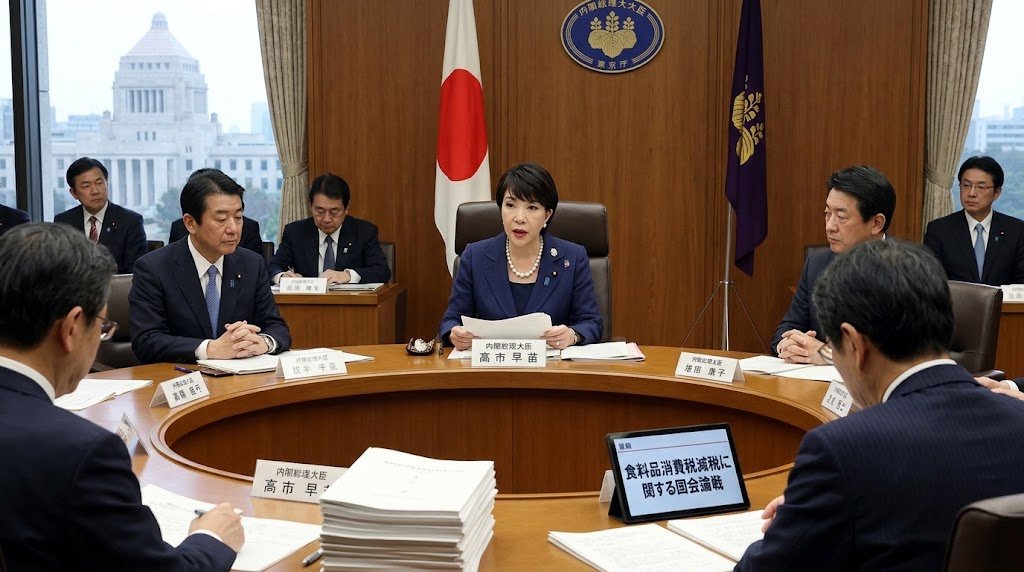
The Japan food consumption tax cut will go before parliament on Tuesday, October 20, 2026, when the lower house begins debating a plan to cut the tax on food from 8% to 1% for two years and create a cash benefit program tied to income. Prime Minister Sanae Takaichi will attend the opening session of the House of Representatives, according to Jiji Press. The ruling coalition wants the bills through the lower house by early November, and the cut would be Japan’s first reduction in the consumption tax since it was introduced in 1989.
What the Japan Food Consumption Tax Cut Would Change
Japan’s standard consumption tax rate has been 10% since October 2019, while most food and non-alcoholic drinks carry a reduced rate of 8%. Alcohol and dining out are taxed at 10%. Under the bill, approved by the Cabinet on October 9, the food rate would fall to 1% for two years from April 2027, according to Xinhua.
The government says the cut is a bridge to a permanent system of income-linked benefits, which it plans to introduce fully in fiscal 2029. Takaichi has pledged that the food rate will return to 8% after two years. The bill also provides annual cash payments for low- and middle-income earners, which the government says would bring their effective food tax close to zero. The income thresholds and payment amounts have not yet been set.
Why the Government Is Pushing Now
The plan fulfils a pledge made by Takaichi’s Liberal Democratic Party (LDP), which won a landslide in February’s House of Representatives election. Her platform included considering a cut to the food tax rate to zero for two years. Officials describe the aim as easing pressure on households struggling with high prices, taxes and social insurance premiums.
Public opinion currently leans in favour. A Jiji Press poll published on October 15 found 55.3% of respondents supported the legislation and 37.3% opposed it. That support does not remove the political obstacles, because several opposition parties have been critical of the details.
Funding the Japan Food Consumption Tax Cut
The biggest unanswered question is how to pay for it. Xinhua reported that the tax cut and cash benefits together are expected to need about 10 trillion yen (roughly $63 billion) over two years, which raises concerns about Japan’s already weak public finances. Other outlets report different annual figures, which may reflect whether the benefit program is counted alongside the tax cut itself.
Takaichi has pledged not to rely on deficit-covering bonds, but she has not named the funding sources. Finance Minister Satsuki Katayama has said the government will identify them during the coming budget process. The Democratic Party for the People and Komeito, both opposition parties, have said the lack of a clear funding source and of details about the benefit system are major problems. There is also concern that the cut could affect local government finances, since part of the consumption tax collected nationally is passed on to municipalities.
What It Could Mean for Households
For families, the Japan food consumption tax cut would reduce the cost of everyday groceries, which weigh more heavily on households with lower incomes. The cash benefits are designed to add to that relief for low- and middle-income earners. Critics have noted that higher-income households spend more on food and could therefore receive larger savings in yen, and that it is not certain that supermarkets will pass the full tax cut on to shoppers.
There is also a risk at the end of the two years. When the food rate returns from 1% to 8%, shoppers could feel a sharp rise at the checkout. Reporting based on the Asahi Shimbun suggests there could be a gap of about six months in 2029 between the tax returning and the benefit payments arriving in autumn. These are possibilities based on how the plan is currently designed, not confirmed outcomes.
The Road Through the Diet
The bills still have to clear both chambers before the current session ends on December 12. The ruling coalition does not hold a majority in the upper house, the House of Councillors, and an LDP executive has said related legislation may be rejected there, according to a report from August. If the upper house does not act, the lower house can pass the bill a second time to override it, but one analyst noted that there may not be enough days left in the session for that to happen. That could force the government to extend the session or win opposition votes.
After the debate opens on October 20, the next milestone is a lower house vote targeted for early November. For further updates on this story and other developing crises, follow the latest reporting from Human Crisis News.