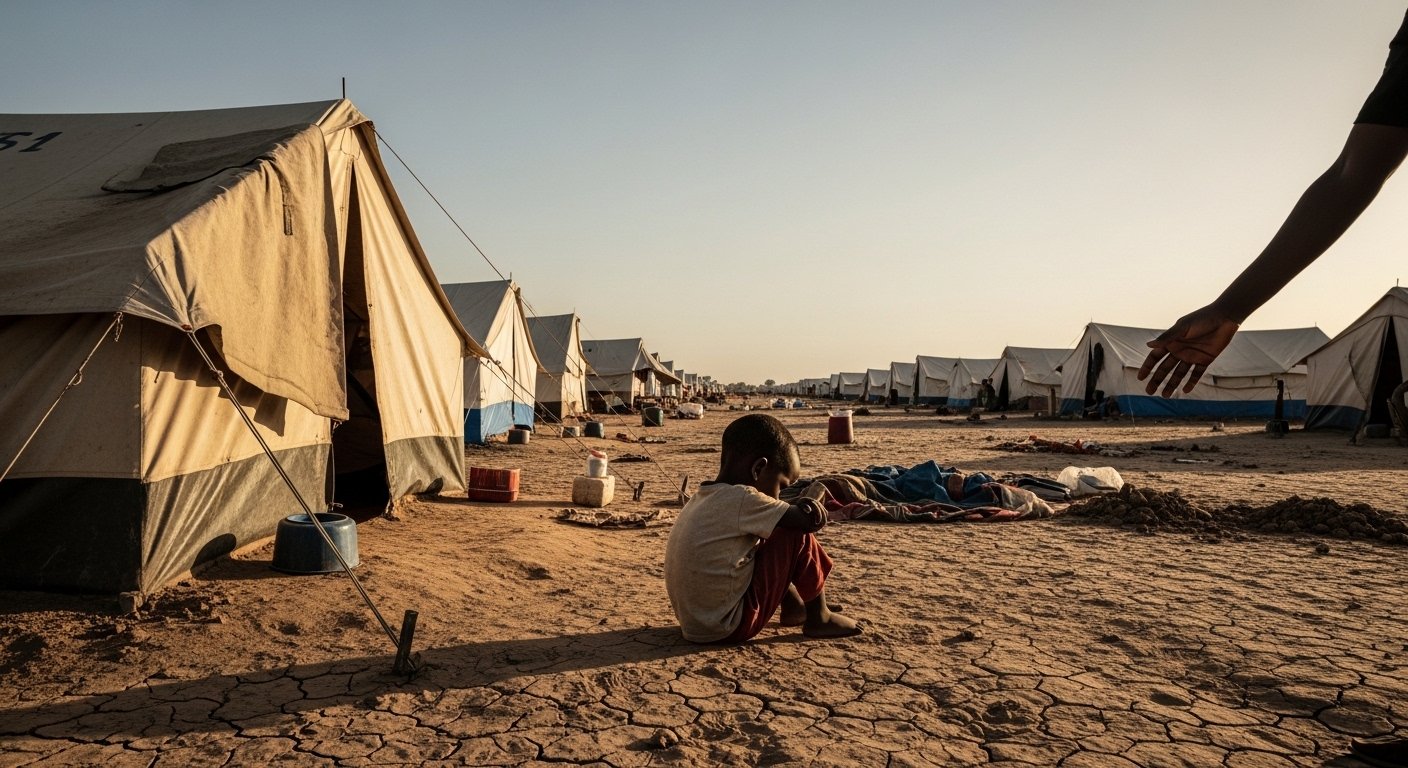
Sudan famine 2026 is not just a headline. It is the daily reality of children who have names, who hold their mothers’ hands, and who once dreamed of going to school. In 2026, Sudan is living through the worst humanitarian crisis on earth – a man‑made famine fueled by war, blockade of aid, and the sudden collapse of international support, driven by decisions made far away in Washington. The children of Sudan are not numbers on a screen. They are small, fragile bodies with hollow eyes, visible ribs, and voices too weak to cry.
What Is Really Happening in Sudan – And Why the World Must Pay Attention
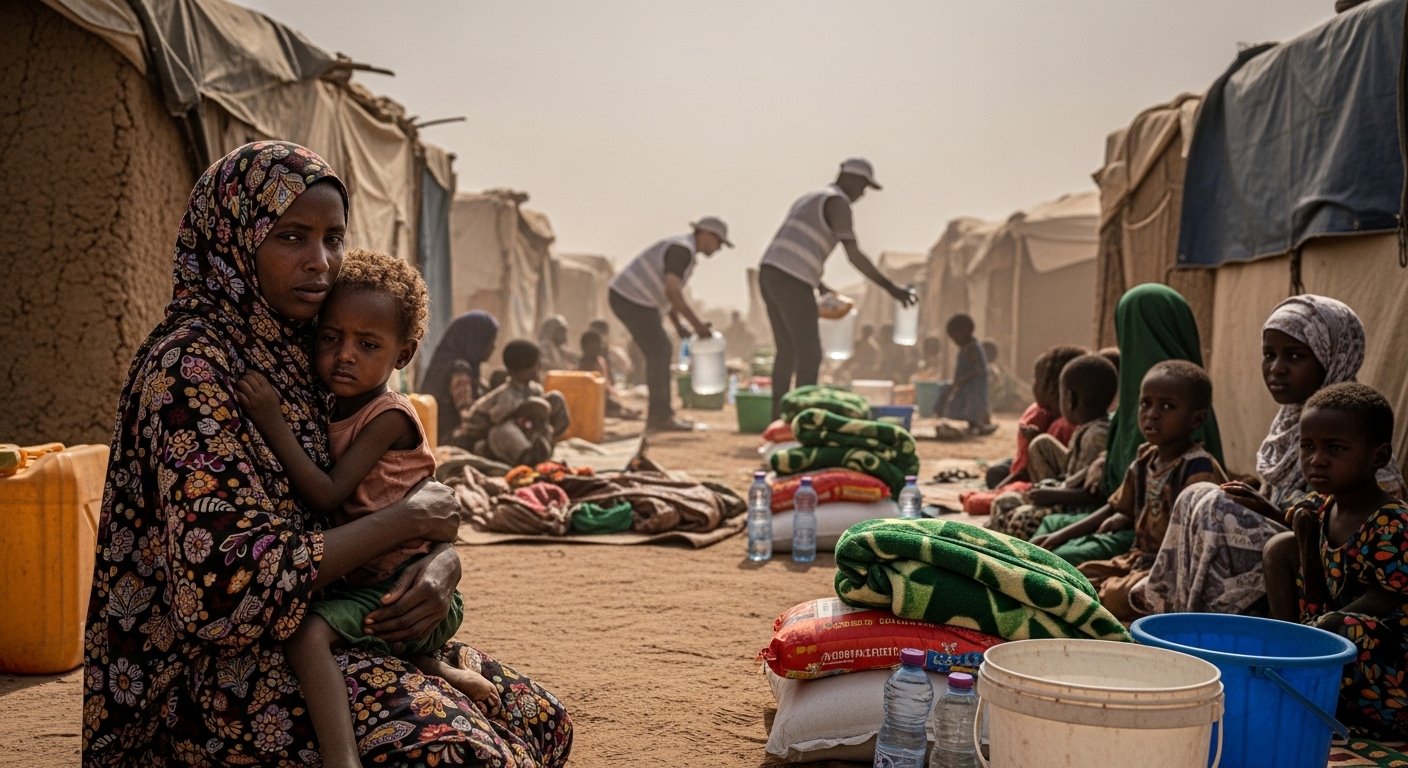
Most Americans, if asked to locate Sudan on a map, would struggle. But they should know this name. What is happening there right now is, by almost every humanitarian measure, the worst crisis on the planet. Sudan has been at war since April 2023, when the Sudanese Armed Forces and the Rapid Support Forces turned on each other and tore the country apart. Cities were bombed, villages burned, and millions of families were driven into displacement camps that quickly became overcrowded and food‑stressed.
The result is a hunger crisis officially classified as the worst in the world. In 2026, around 21 million people in Sudan face acute food insecurity, meaning they wake up every day not knowing if they will eat. Famine has already been confirmed in places like Al Fasher and Kadugli, while new data from 2026 shows catastrophic levels of child malnutrition emerging in Um Baru and Kernoi, where more than half of the children screened are acutely malnourished. This is not just a slow decline. It is a famine‑level emergency accelerating faster than the world is responding.
The Numbers That Should Shock Every American
Numbers can feel abstract, but they hide real lives. Behind “Sudan famine 2026” lie children with names, families with stories, and futures being stolen. In 2026, around 4.2 million children under five and pregnant or breastfeeding women in Sudan are projected to suffer from acute malnutrition. Among them, about 824,000 children face severe acute malnutrition, where the body begins consuming its own tissues to stay alive. Without treatment, many will not survive.
3.4 million children are at risk from deadly diseases like cholera, measles, and respiratory infections – in a country where nearly 70% of health facilities no longer function. 33.7 million people -almost two‑thirds of Sudan’s population – need urgent humanitarian assistance to survive, and 13.6 million people have already been forced from their homes since the war began. Perhaps the most telling number for Americans is this: about 50% of Sudan’s pre‑war humanitarian aid once came from the United States, making the U.S. the backbone of the relief system. When that support vanished, the entire structure feeding millions of children began to collapse.
Why the Sudan Famine Is Getting Worse in 2026
Three years ago, when the war began, aid organizations rushed into Sudan. They set up soup kitchens, malnutrition treatment centers, trauma clinics, and safe spaces for children. The work was dangerous, but it was saving lives. So why, three years later, is the crisis worse than ever?
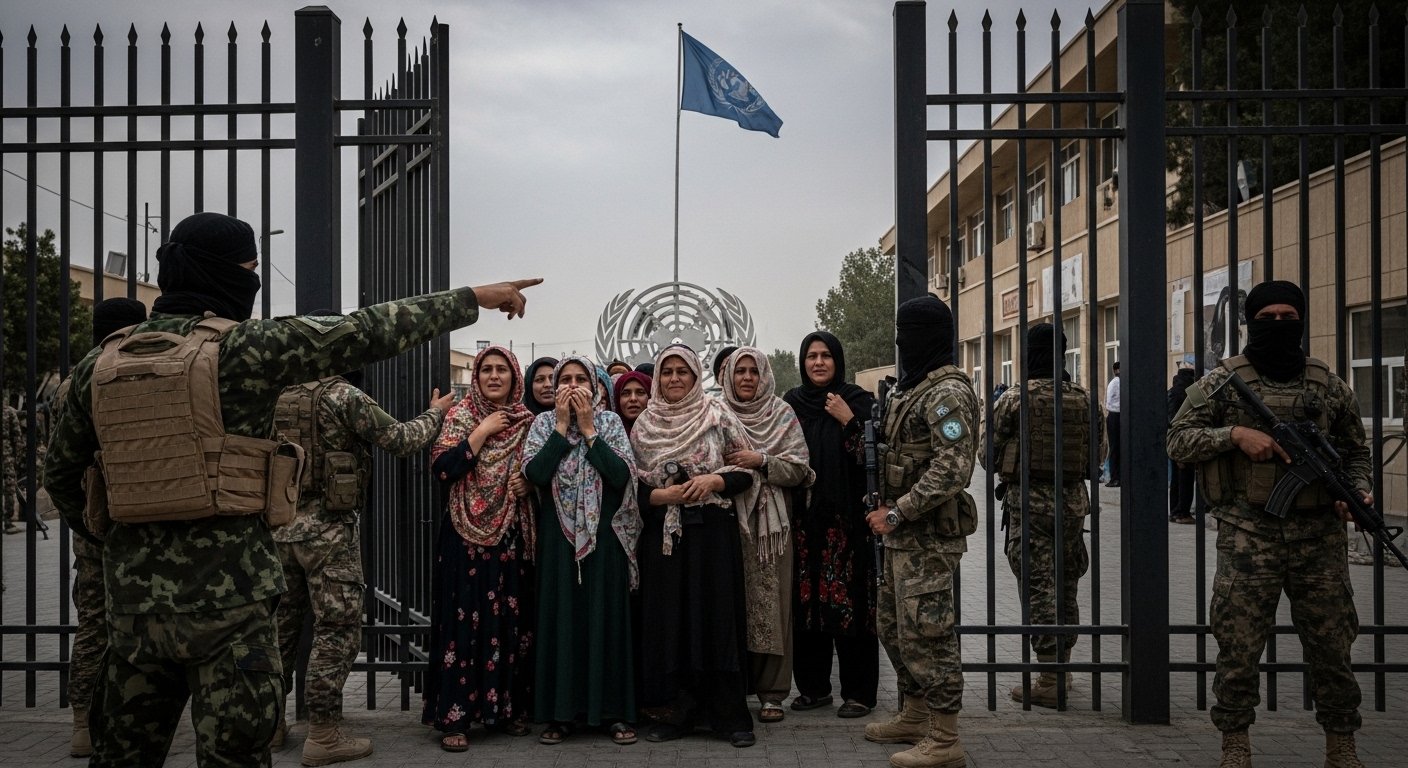
The first reason is the fall of El Fasher in October 2025. After an 18‑month siege, the city collapsed, triggering thousands of deaths and massive displacement and pushing waves of hungry families into already fragile areas like Um Baru and Kernoi. The second reason is the collapse of aid funding. In 2025, the U.S. froze foreign assistance and shut down much of USAID’s operations, which led to the closure of over 70% of community soup kitchens, cutting off food for millions almost overnight.
The third reason is that other donors did not fully fill the gap. Despite early hopes, global donors reduced their aid budgets, leaving more than half of Sudan’s humanitarian funding needs unmet. The fourth reason is ongoing violence blocking aid access. Both the SAF and RSF have attacked aid convoys, looted warehouses, and targeted hospitals, making it nearly impossible to reach the people who need help the most. Together, war, lack of funding, and blocked access have turned a crisis into a preventable, man‑made famine.
The Story America Is Not Hearing – A Family’s Nightmare in North Darfur
In North Darfur, let’s follow a family whose identity must remain hidden to protect them. The father, Hassan, was a farmer who grew sorghum and groundnuts on a small plot near El Fasher. He had a wife, four children, and a simple home he built brick by brick. They were not rich, but they had food, stability, and hope for their children’s future.
In the spring of 2025, armed forces moved through their village. Crops were burned, livestock stolen, and homes looted. Hassan grabbed his family and fled on foot, walking for days until they reached a crowded displacement camp near Um Baru. At first, a USAID‑funded soup kitchen kept them alive. It was never enough, but it gave them something to eat each day and a chance to survive. Then the funding stopped. There was no warning, no backup plan. Within weeks, the kitchen closed. The food vanished.
Hassan later said they began eating leaves, wild roots, and anything they could find. He would skip meals so his children could eat, while his youngest daughter grew so weak she could barely walk or speak. She survived only because a local volunteer found her and gave her emergency therapeutic food. Without that moment of help, she likely would not have lived. Her story is not rare. In places like Um Baru, thousands of children are being treated for severe acute malnutrition every single week. The pace has not slowed. It has only become faster, while funding drops and access disappears, leaving many beyond the reach of help.
America’s Role – The Part That Is Hard to Say Out Loud
This is not about political parties. It is about real, documented decisions made by the United States government and the human cost of those choices on people who had no voice in the matter. Before 2025, the United States was the largest funder of global humanitarian aid, and Sudan was one of its main beneficiaries. American aid funded soup kitchens, clinics, clean water systems, vaccines, and emergency food distributions that kept millions of children alive. The impact was proven: child and maternal mortality dropped, and communities held on through the worst of the war.
Then, in January 2025, the U.S. government froze foreign assistance, and by mid‑2025, USAID’s global operations were drastically cut. Overseas, the food pipelines into Sudan dried up. In 2026, new funding was approved, but its implementation has been slow and incomplete. In places like North Darfur, many life‑saving programs, including soup kitchens and nutrition centers, remain closed. For American taxpayers, humanitarian aid is a small share of the federal budget, yet it sustained tens of millions of lives worldwide. When that support is cut, the cost is not paid in Washington. It is paid in hunger, disease, and child deaths in Sudan.
Where the System Has Completely Failed
The United Nations, international agencies, and donor governments have passed resolutions, held briefings, and issued emergency warnings for years. Yet, children in North Darfur continue dying at a rate of one every six minutes from hunger and disease. The UN Security Council, with the power to impose sanctions and demand ceasefires, has been paralyzed by vetoes and political calculations. Arms continue to flow into Sudan while aid is blocked or diverted.
Humanitarian organizations like UNICEF, WFP, and Doctors Without Borders face attacks, theft, and deep funding cuts. Staff have been reduced by 30–40% in key agencies. On the ground, 70% of health facilities in conflict‑hit areas are non‑functional, clean water is scarce, and disease outbreaks are spreading through overcrowded displacement camps. Children who survive malnutrition still face cholera, measles, and pneumonia – illnesses that could be treated easily in a functioning health system but are lethal here. As WHO has warned, patients and medical workers should not have to risk death just to seek or provide care.
Sudan’s Children in 2026 – Paying the Highest Price
Everything about Sudan’s crisis falls hardest on children. They are the first to feel the hunger, the first to stop crying when they are too weak, the first to die from diseases that should be simple to treat. In March 2026, 4.2 million children under five and pregnant or breastfeeding women in Sudan face acute malnutrition. Of these, 824,000 children suffer from severe malnutrition, with their bodies shutting down without urgent treatment.
In places like Um Baru, 53% of children assessed are acutely malnourished. In Kernoi, the figure is 34% – both considered “catastrophic” by international standards. Three out of every five displaced people in Sudan are children, many separated from their parents or forced to walk for days or weeks to reach safety. Health risks are extreme: 3.4 million children are at risk from life‑threatening diseases. Common illnesses like fever, diarrhea, and respiratory infections become death sentences for malnourished children with no access to functioning clinics.
Education has nearly vanished. Schools have been bombed, looted, or turned into military barracks, leaving children without lessons and teaching them only survival. The long‑term cost is stunted growth, cognitive delays, learning difficulties, chronic illness, and deep psychological trauma. UNICEF Executive Director Catherine Russell has said that “children in Sudan are not statistics” – they are frightened, displaced, and hungry, yet still determined and resilient, waiting for the world to act. And they are still waiting.
Why Every American Family Should Care About Sudan Famine 2026
Many Americans, when they hear about a crisis in a distant country, feel a brief sadness and then move on. But Sudan is different. It bears American fingerprints. The United States, through USAID, spent decades building a global humanitarian system that saved tens of millions of lives. It was funded by American taxpayers and guided by American expertise. The decision to dismantle that system was made by a few political appointees, not the public – while millions of lives hang in the balance.
There is a practical reason to care as well. Disease does not respect borders. In overcrowded displacement camps with no clean water or medicine, outbreaks of cholera, measles, and respiratory infections can spread quickly and widely. The cost of preventing the next global health crisis is far less than the cost of ignoring it. There is also a security argument: Sudan borders seven fragile countries, and a collapsing state creates power vacuums exploited by extremist groups, as seen in Somalia, Iraq, and Syria. The cost of inaction is eventually paid by those who could have prevented it.
Finally, there is a moral question. If your own child in South Carolina were starving in a camp, you would want the world to act without delay. Hunger is universal. It does not matter if the child is in Sudan or South Carolina. If this were your family, what would you want the world to do?
What the UK and Canada Are Doing – And What They Are Not
The United States is not the only wealthy country whose decisions affect Sudan. The United Kingdom and Canada are both major donors, with strong humanitarian traditions and large Sudanese diaspora communities watching closely from afar. The UK has historically been a leader in African crises and responded early when the war began in 2023. But in 2025, it reduced its Overseas Development Assistance from 0.7% of GDP to 0.3%, a major cut that Oxfam, Human Rights Watch, and other groups warned would cost lives.
Canada has maintained a relatively higher level of aid and has been vocal in multilateral forums. Canadian funding supports UNICEF, WFP, and MSF Canada on the ground in Sudan. Still, it cannot replace the scale of the U.S. withdrawal. Both countries could do more: increase emergency funding, push for unfettered humanitarian access, sanction individuals blocking aid, and expand refugee pathways. Public support in the UK and Canada for humanitarian action is strong. The gap lies in political priorities, not the will of the people.
What Experts Are Warning Will Happen Next in Sudan
Experts monitoring Sudan are not optimistic. Their warnings describe a slow‑motion catastrophe that is still preventable, but only if immediate action is taken. The World Food Programme warned in January 2026 that, without urgent new funding, food stocks in Sudan could be exhausted by the end of March, leaving areas with no alternative food sources facing starvation. UNICEF’s 2026 appeal requires around $1 billion to reach 13.8 million people, including 7.9 million children, but more than 53% of that funding remains unmet.
Save the Children warns that famine declarations often come too late, after mass deaths have already begun. Harvard’s Center for International Development notes that other donors are not filling the gap left by the U.S. cuts, and aid is increasingly driven by political bargaining and domestic interests, not humanitarian need. The worst‑case scenario: famine spreads across Sudan, WFP food stocks run out, disease accelerates, and an entire generation suffers permanent physical and cognitive damage. The cost of action now is high, but the cost of inaction will be far higher.
Why the Media Is Not Showing You the Full Picture of Sudan Famine 2026
Here’s a question worth asking: why have most Americans heard so little about Sudan famine 2026? It is not because the story is untrue, the numbers are small, or the suffering is limited. It is because of how news media works. Audiences respond to familiar faces, clear narratives, and conflicts that connect directly to their own politics. Sudan is far away, its conflict is complex, and its suffering takes place in remote camps and villages with no electricity, no cameras, and no press.
The media landscape has also changed. Newsrooms are smaller, international bureaus have closed, and far fewer correspondents cover sub‑Saharan Africa than in the past. Competition for attention is fierce. Stories from Lebanon, Iran, Gaza, and Washington dominate the cycle because they involve prominent political figures and US debates. Sudan lacks that visibility. Meanwhile, reports show that 85,000 children in North Darfur were treated for severe malnutrition, famine was confirmed in new areas, and soup kitchens feeding millions closed — all while Western headlines focused elsewhere. Sudan famine 2026 is underreported not because it is unimportant, but because it is distant, complex, and politically inconvenient. That is exactly why it matters that you know about it.
What Can Be Done – And What YOU Can Do Right Now About Sudan Famine 2026
This crisis can feel overwhelming, but it is not unstoppable. Famine moves slowly compared to earthquakes or tsunamis, which means it is still largely preventable if help arrives in time. At the government level, urgent steps are needed. The United States, the United Kingdom, Canada, Germany, and the European Union must increase emergency funding, open humanitarian corridors, push for a humanitarian ceasefire, and hold the warring sides accountable for blocking aid and attacking civilians. The UN Security Council must stop allowing vetoes to block life‑saving action.
At the individual level, you can help:
- Donate to UNICEF USA, Save the Children, WFP USA, International Rescue Committee, and Doctors Without Borders to support nutrition, health, and food programs in Sudan.
- Contact your representatives and ask them to ensure emergency nutrition funding reaches Sudan and children in North Darfur.
- Share this story on social media, email it to friends, or post it in community groups.
- Educate your community: talk about Sudan at home, school, or faith centers and organize small fundraisers or awareness events.
- Support local refugee families from Sudan through resettlement agencies and community programs.
- Hold media accountable: ask local news outlets why Sudan is not being covered and tag journalists on social media. Public pressure can shift editorial priorities.
The window to prevent the worst of this catastrophe is still open – but it is closing. This week, WFP food stocks may run out. This month, famine may be confirmed in new cities. The children of North Darfur cannot wait for the news cycle to change in their favor. They need help now.