
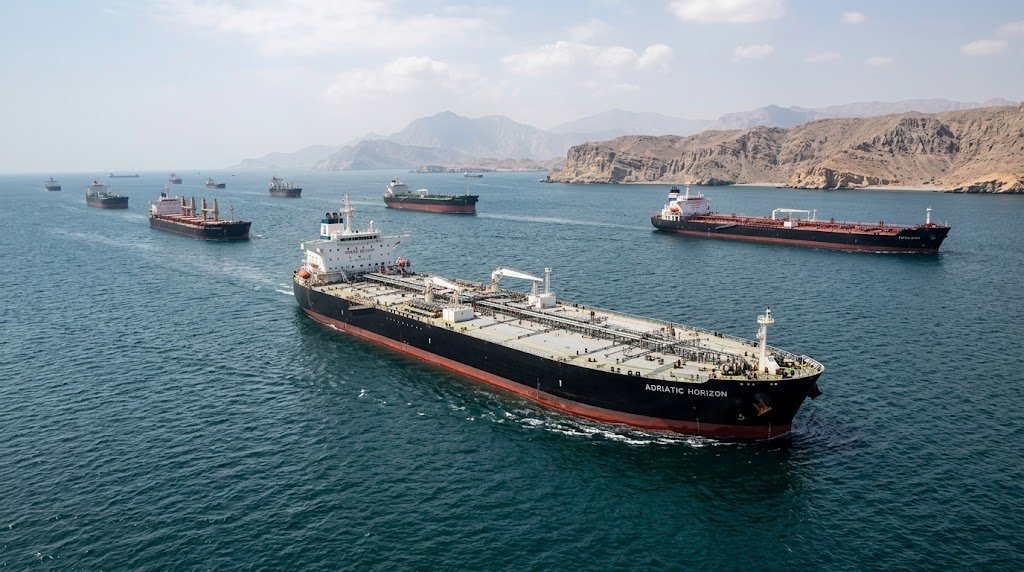
Strait of Hormuz talks between the United States and Iran have produced no breakthrough. Each side is insisting on a different order of steps, and attacks on tankers have increased in the meantime.
Iran says the strait will not reopen until its conditions are met. The US says a wider settlement must deal with Tehran’s nuclear programme. Qatar and other mediators are trying to bridge the gap while one of the world’s most important energy routes stays disrupted.
How the standoff began
The US and Israel launched strikes on Iran on 28 February, and Iran then moved to control shipping through the Hormuz waterway. In peacetime, about one-fifth of the world’s oil and natural gas passes through it. Washington has responded with a naval blockade of Iranian ports.
A ceasefire was announced in April, and a memorandum between Washington and Tehran followed in June. However, vague wording in that agreement led to disputes over who controlled shipping, and the two sides traded attacks. President Donald Trump declared the deal over on 7 July.
What Iran is proposing
At the United Nations General Assembly in New York in late September, Iran presented a seven-day roadmap through Qatari mediators. It asks the US to meet specific conditions within seven days. The strait would reopen on the final day, and talks on Iran’s nuclear programme would begin after that.
Iran’s foreign minister, Abbas Araghchi, said the discussions were focused only on Hormuz. Iranian officials have also said Tehran wants sanctions lifted, frozen assets released and an end to US-Israeli strikes. Iranian state media confirmed a meeting between Araghchi and US envoy Steve Witkoff, the first direct contact in weeks. Even so, Iran has said it is not negotiating directly with Washington on the strait.
On 4 October, Iran’s top negotiator said the strait would stay closed until the seven conditions, which he linked to the Islamabad memorandum, are met.
Where Washington stands
Trump rejected the Iranian plan shortly after it was presented. A US official told Al Jazeera that indirect talks were continuing and described them as constructive. The same official said there would be no agreement unless Iran’s nuclear programme is addressed. Iran denies it seeks a nuclear weapon.
Analysts quoted by Al Jazeera say the proposal could give Trump a way to restore shipping before the US midterm elections in November. Trump has since said the US will not attack Iran before those elections and has described the talks as productive.
Tanker attacks and oil prices
Attacks on ships have continued alongside the diplomacy. Nine tankers came under attack in and around Hormuz in the space of a week, according to CNBC. Shipping-intelligence firm Windward told CNBC that Iran attacked roughly two ships for every 100 that crossed the strait in the third quarter.
Oil is still leaving the Gulf, but largely under US Navy escort. According to Kpler data cited by CNBC, about 9.5 million barrels per day exited Hormuz in one recent week, roughly 30% below pre-war levels. Brent crude has been trading near $100 a barrel. Analysts say the cost of shipping, insuring and delivering the oil keeps prices high even when more of it gets through.
Who is affected
Seafarers face the direct risk of attack. Meanwhile, oil-importing economies and consumers face higher fuel and freight costs, and the disruption also reaches Gulf producers.
Qatar’s foreign ministry has said mediators want the strait reopened as soon as possible. A Qatari statement in August also referred to a possible temporary shipping corridor and a joint project to clear mines, which Iran says were laid during the war.
Where the Strait of Hormuz talks stand
Iran says the strait remains closed, while US officials have said it is no longer blocked. These claims conflict, and the reopening dispute is tied to the nuclear question. Neither side has accepted the other’s sequence of steps. As a result, mediators from Qatar, Oman and Pakistan continue to work between them.