There is a photograph I cannot get out of my head. It was taken in a displacement camp in southern Gaza in late 2025. A little girl – five or six years old – sits on a torn piece of foam on bare dirt, holding an empty plastic cup with both hands, staring at something outside the frame.
Nobody knows her name. Nobody knows if she is still alive. But the image is real. The child was real. The question that photo forces every American to face is brutally simple: What did we have to do with how she ended up sitting there, on that piece of foam, with that empty cup?
This post is about America’s role in Gaza 2026 – weapons, silence, vetoes, and aid cuts. This is not a political debate. This is a reckoning with what the United States is actually doing – and what that means for Gaza, the world’s view of America, and the conscience of a generation growing up watching this crisis unfold in real time.
The Human Face of Gaza 2026
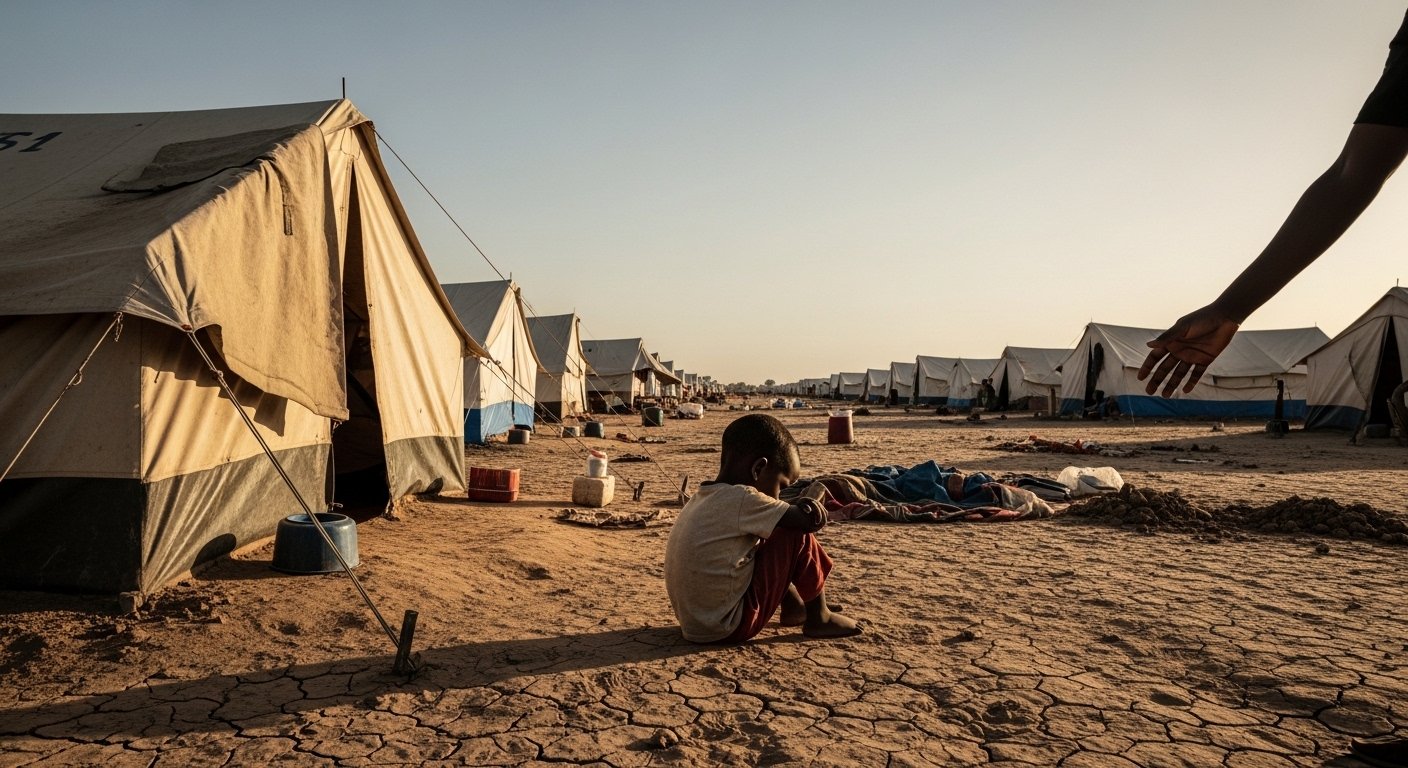
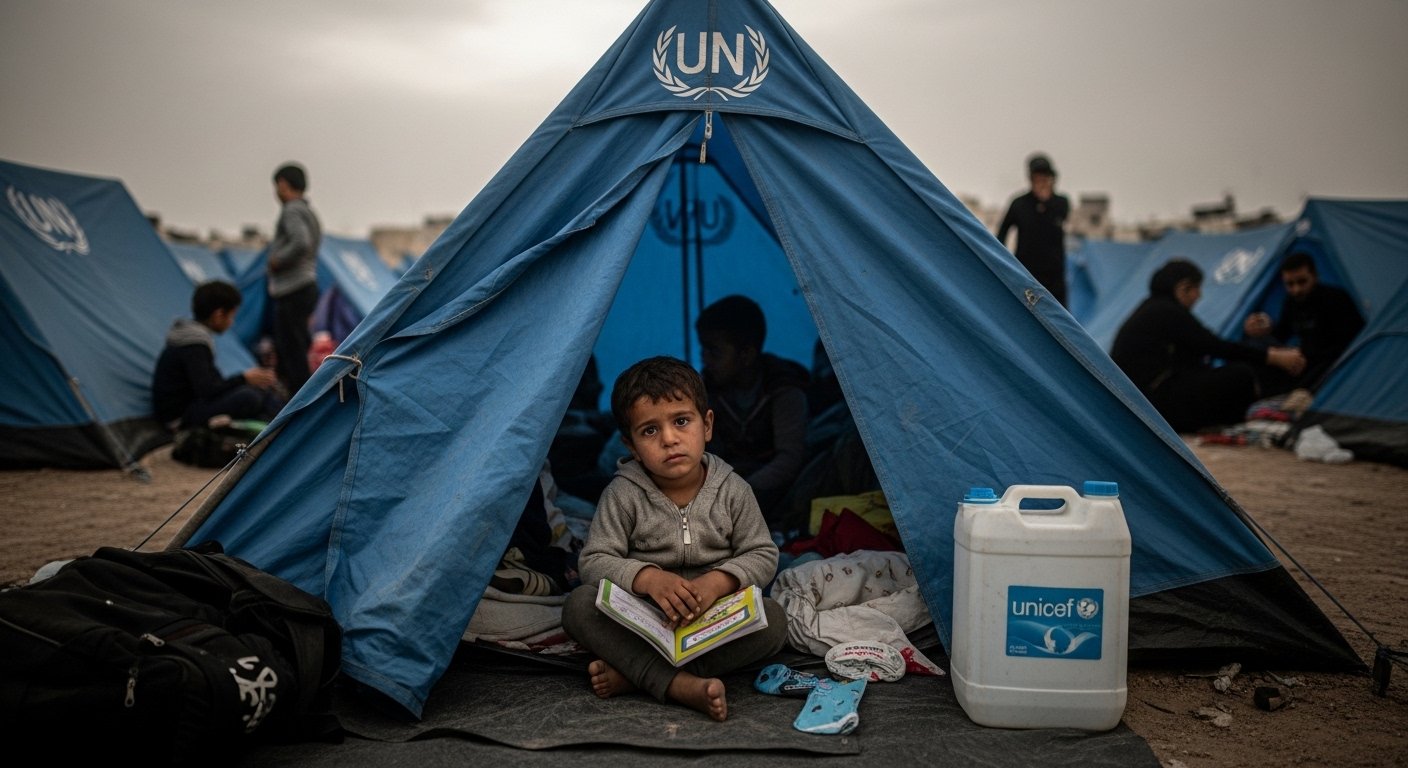
To understand Gaza in 2026, you must first see the human face of the crisis. This is not a distant “conflict zone” in policy briefs; it is a territory where two million people have been displaced multiple times, running through bombed‑out neighborhoods, makeshift camps, and overcrowded schools turned into shelters.
Families who fled north end up in the south. Those who fled south run west. Then there is no more Gaza left to run into. Hospitals that have not been destroyed operate without steady electricity, enough medicine, or enough surgeons. Doctors perform amputations on children without proper anesthesia. Premature babies die because incubators lose power. Patients bleed out on floors because there is no blood supply left.
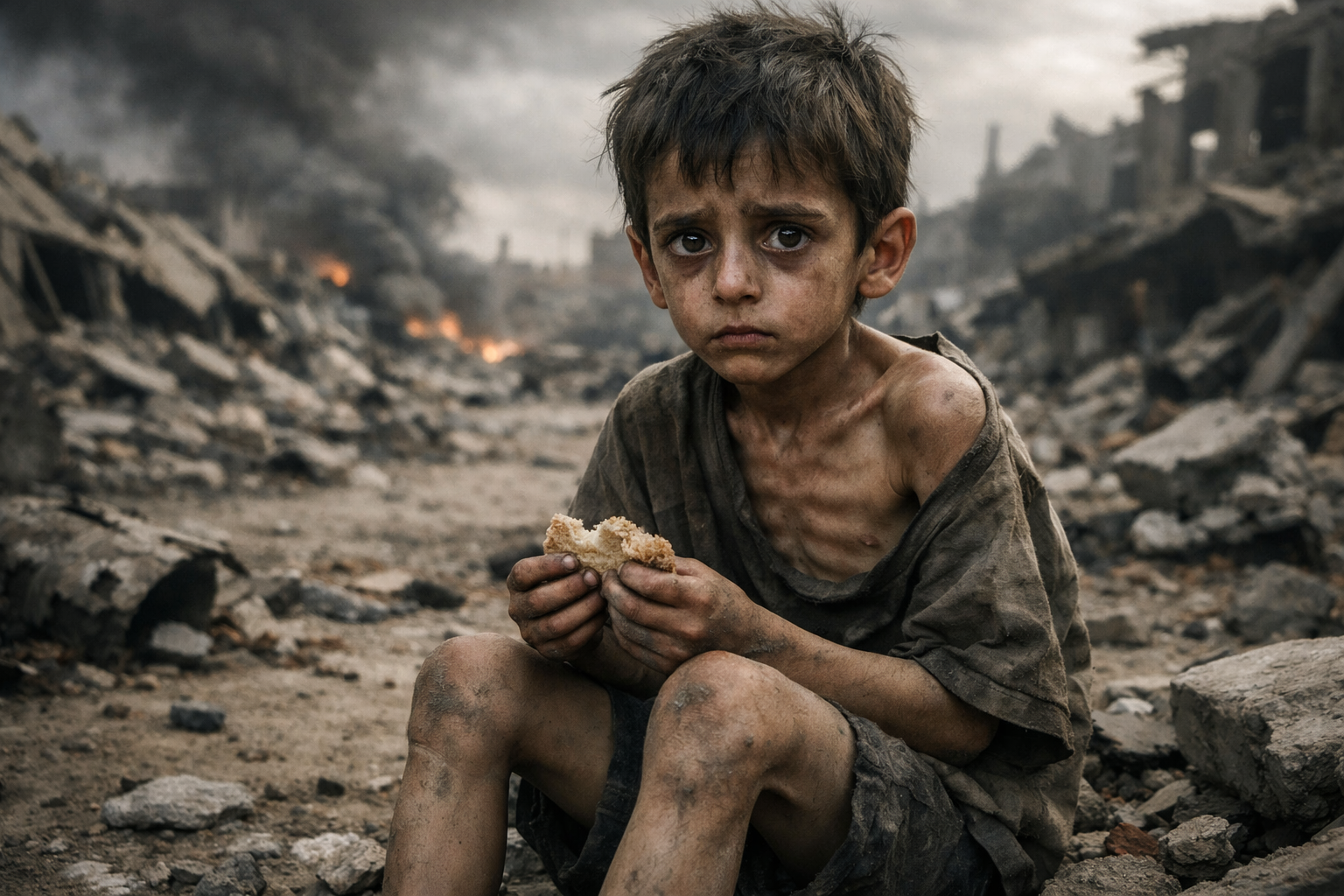
International agencies report that average daily calories in Gaza have dropped to famine levels, and acute malnutrition among children under five has spiked to its highest levels in decades. The world watches, horrified, while the institutions built after World War II struggle — and often fail — to stop the slide into full‑scale catastrophe.
For many Americans, Gaza exists mostly in headlines or social‑media videos. But for the people living there, it is the reality they fall asleep and wake up to: rubble, uncertainty, and the terrifying question of whether the next bombardment will come closer to home.
The Weapons America Supplied – And Their Impact
Talks about Gaza cannot avoid the weapons – especially those supplied by the United States. Since October 2023, the U.S. government has approved and transferred to Israel military equipment worth tens of billions of dollars, documented in public records, congressional notifications, and export licenses.
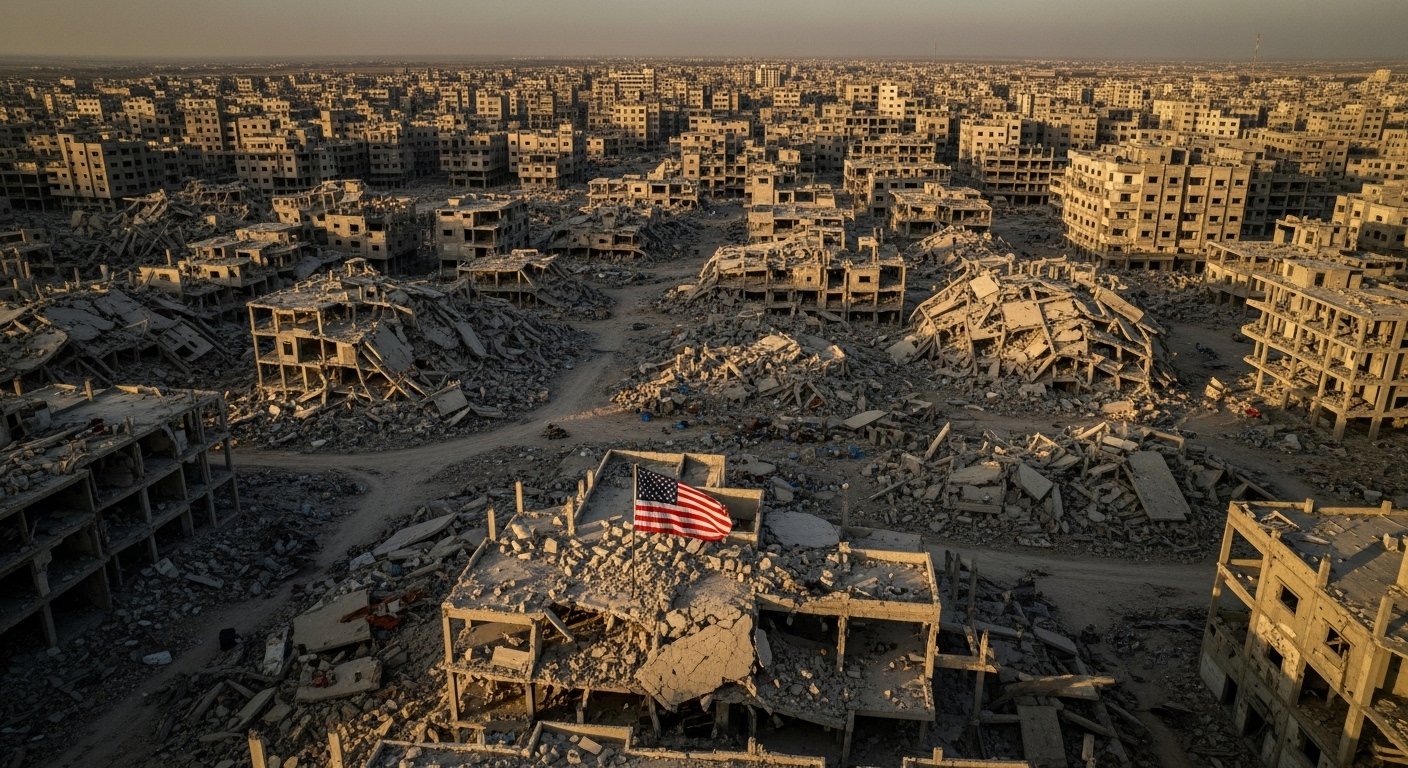
Among these weapons are 2,000‑pound MK‑84 bombs, some of the largest conventional bombs in the American arsenal. When such a bomb hits a densely populated neighborhood, the blast radius does not distinguish between fighters and civilians. It does not check whether children are sleeping on the floor above or families are sheltering in basements. It simply destroys everything within its reach.
Organizations like Human Rights Watch have documented strikes in Gaza where 2,000‑pound bombs hit apartment buildings and entire neighborhoods, listing exact dates, locations, and civilian deaths. The weapons used in those strikes were U.S‑supplied. The Biden administration briefly paused one shipment of these heavy bombs in May 2024, the only time it placed any condition on weapons transfers. That pause lasted about one month. Then shipments resumed.
Under the Trump administration in 2026, even that hesitation has disappeared. There are no pauses, no clear conditions, and no public debate about whether American weapons are being used in ways that respect international humanitarian law or basic human decency. The connection between American weapons, American law, and American responsibility is real, and it cannot be ignored.
Four Vetoes and the Cost of Silence
The United Nations Security Council was never designed to be fair. It was built with a fatal flaw: five permanent members, including the United States, each hold veto power. That means one country can block the entire world from acting on even the most urgent crises.
Since October 2023, the United States has used this veto four times to block UN resolutions calling for a ceasefire in Gaza. Each veto was a deliberate political choice – a choice to protect the U.S.–Israel relationship over the lives of Palestinian civilians. The first veto came in October 2023, when thousands were already dead. By the time the U.S. allowed a ceasefire resolution to pass – by abstaining instead of vetoing in March 2024 – over 30,000 people had been killed.
Those months represent a period when the United States actively blocked the international community from trying to stop the killing. The vetoes did not stop the war, but they signaled to Israel and the world that the United States would shield its ally from pressure, even as the death toll soared.
Legal scholars now ask whether those vetoes, combined with continued weapons transfers, could amount to complicity under international law. These are not fringe ideas; they are being debated in serious journals and international courts. The legal and moral reckoning for America’s role is still being written, and it will outlive any single administration.
Humanitarian Aid: What America Funded and Then Cut
To understand the hypocrisy many people feel, you must hold two truths in your mind at once. First, the United States was, for decades, one of the largest donors to Palestinian humanitarian programs. American taxpayers funded UNRWA schools where Palestinian children learned to read, UNRWA clinics where mothers gave birth and elders received medicine, and food programs that kept refugee families from starving. This money did real, measurable good.
Second, in early 2024, the United States suspended all that funding, based on Israeli allegations that a handful of UNRWA staff had been involved in the October 7 attacks. That decision came without waiting for an independent investigation and without public evidence. It came at the exact moment when Gaza’s population was at its most desperate.
Later, an independent UN investigation cleared UNRWA as an organization of wrongdoing, finding no evidence of institutional involvement and praising its cooperation. Many countries that cut funding quietly resumed it. The United States did not. By the time reconsideration began, the damage was done. UNRWA operations collapsed. People fell through the gaps. Children went without food and medicine.
Then, in 2026, the Trump administration’s deep USAID cuts hit Palestinian programs even harder. Nutrition programs that kept severely malnourished children alive were trimmed or ended. Medical supply pipelines broke down. Water and sanitation systems in crowded displacement camps failed. The United States funded weapons on one side and cut the humanitarian response on the other — a contradiction documented in official policy choices.
The Young Americans Watching Gaza
Something has shifted in the United States, especially among young people aged 18–35, and the political establishment has been slow to notice. This generation watched the Gaza crisis unfold in real time, on their phones, through social media, videos, and live dispatches from Palestinian journalists and civilians.
They have seen children pulled from rubble, doctors operating without anesthesia, and faces that look like their friends, cousins, and classmates. Polls from sources like Pew Research Center, Gallup, and university‑based studies consistently show that younger Americans view Gaza differently from older generations. Many support a permanent ceasefire. Strong majorities believe U.S. military aid should be conditioned on human rights compliance. Many say they believe the United States shares responsibility for civilian deaths in Gaza.
These views have already shown up in Democratic primaries, where candidates critical of U.S. Gaza policy outperformed expectations. They were central to the student protests of 2024, described as one of the largest sustained campus movements since the Vietnam era. They echo in city councils, unions, and religious communities across the country. The generation that came of age during the Gaza crisis will vote, run for office, and shape foreign policy for the next fifty years. Their opinions are not going away.
Soft Power and America’s Fading Moral Authority
In international relations, there is a concept called “soft power” – the ability to influence the world not just through force or money, but through the appeal of your values, culture, and example. For decades, the idea of America as a defender of freedom, democracy, and human rights was one of the strongest tools in U.S. foreign policy.
Gaza is eroding that image. Across Africa, Asia, Latin America, and the Middle East, the world’s majority population watches the United States veto ceasefire resolutions while calling itself the defender of international law. It sees the U.S. supply weapons used against civilians while claiming to protect human rights. It sees the U.S. cut humanitarian aid to starving children while saying it leads in global development.
The gap between how America describes itself and how it behaves in Gaza has never been wider. Countries that once welcomed U.S. leadership on climate, trade, and security have stepped back. Old alliances are straining. The credibility the U.S. spent decades building is being spent faster than it can be restored. This is not just a moral issue; it is a strategic one that will shape America’s place in the world for years to come.
The Legal Questions America Is Avoiding
In February 2024, the International Court of Justice (ICJ), the UN’s highest court, ruled that there is a plausible risk of genocide in Gaza and ordered Israel to prevent genocidal acts and allow humanitarian aid to enter. It was the first time such a finding was applied to this conflict.
The ruling raised a question the U.S. government has not answered clearly: What obligations does a country have when it supplies weapons to a state the ICJ says may be committing genocide? Under the Genocide Convention, which the U.S. has ratified, no country can be complicit in genocide. Under U.S. domestic law, such as the Leahy Law and the Foreign Assistance Act, the U.S. is banned from arming units credibly accused of gross human rights violations.
Legal scholars, some members of Congress, and human‑rights organizations argue that continued U.S. arms transfers to Israel after the ICJ ruling may violate both international and domestic law. The State Department has issued assessments claiming Israel is not blocking humanitarian aid, assessments that contradict nearly every independent humanitarian organization in Gaza. Some State Department employees have resigned in protest. America’s legal situation in Gaza is not settled, and the moral questions about complicity will not disappear.
What Ordinary Americans Can Do
Understanding America’s role in Gaza should not stop at guilt; it should lead to action. The first step is political pressure. Call your senator’s office – a real phone call, not just an email. Tell them you are a constituent and ask their stance on conditioning U.S. military aid to Israel on compliance with international humanitarian law. Write down their answer. Share it with others. Sustained constituent pressure does change how politicians vote.
Support frontline humanitarian work. UNRWA still runs schools and clinics in Gaza under impossible conditions. Doctors Without Borders (MSF) provides medical care in war zones. The Palestinian Red Crescent runs ambulances in active conflict. World Central Kitchen has fed tens of thousands in Gaza, even after several of its staff were killed in an Israeli airstrike in April 2024. These organizations know how to use money effectively in crisis.
Broaden your information base. Read Al Jazeera English, BBC, Reuters, The Guardian, +972 Magazine, and the reporting of journalists on the ground in Gaza, alongside The New York Times and The Washington Post. Attend vigils, protests, and community events in your city. You do not need to have all the answers – you just need to be there. Finally, vote like Gaza matters, because it does.
The Country That Little Girl Will Remember
The image that began this post keeps returning: the little girl on the torn foam mattress, holding the empty cup. She does not know your name. She may never understand the flags, institutions, and political calculations behind the weapons that destroyed her neighborhood or the absence of aid that left her cup empty.
But we know about her – if we choose to look. America’s role in Gaza is not something that happened by accident. It was done in our name, with our tax dollars, by leaders we elected or failed to hold accountable. That makes it ours to own – and ours to change.
The question is not whether America has a role in Gaza. It clearly does. The question is: What kind of country do we want to be when a child sits on the ground holding an empty cup – and whether that cup gets filled depends, in part, on us? We can be the nation that looked away. Or we can be the nation that finally looked – and then acted.