The Houthi Red Sea islands seizure escalated sharply this week, as Yemen’s Iran-backed rebels tightened their grip on the southern Red Sea — one of the world’s busiest shipping corridors — and claimed a missile-and-drone attack on a major Saudi air base. The fast-moving escalation is now straining Saudi Arabia’s ability to get its oil to global markets at all.
The Iran-backed group’s military spokesman, Brig. Gen. Yahya Saree, said Monday that Houthi forces fired dozens of ballistic missiles and drones at King Khalid Air Base in Khamis Mushait, in southwestern Saudi Arabia, targeting aircraft hangars, radar installations, runways and ammunition depots. Saree did not say exactly when the strike happened, and Saudi Arabia had not confirmed the claim or the extent of any damage as of Monday. The Houthis have a pattern of waiting hours or days before formally claiming attacks, which makes independent verification difficult in the immediate aftermath.
What’s confirmed versus what’s still just a Houthi claim
Saudi civil defense authorities did confirm one part of the picture: overnight, a projectile struck an area near the Yemeni border along the Red Sea coast, injuring two people and damaging a mosque and several other buildings. Officials blamed the Houthis for that strike but did not tie it directly to the King Khalid claim. Saudi Arabia has not announced any new retaliatory strikes of its own in response.
The Houthis say the air base attack was retaliation for what they describe as more than 300 Saudi airstrikes across Yemen over the preceding five days — a figure that has not been independently confirmed by outside monitors. Residents of Khamis Mushait described hearing “intense blasts” overnight, according to AFP, and Saudi authorities had sounded sirens in the city and in nearby Abha the day before, warning people to take shelter from possible incoming fire.
Why the Houthi Red Sea islands matter more than the headlines suggest
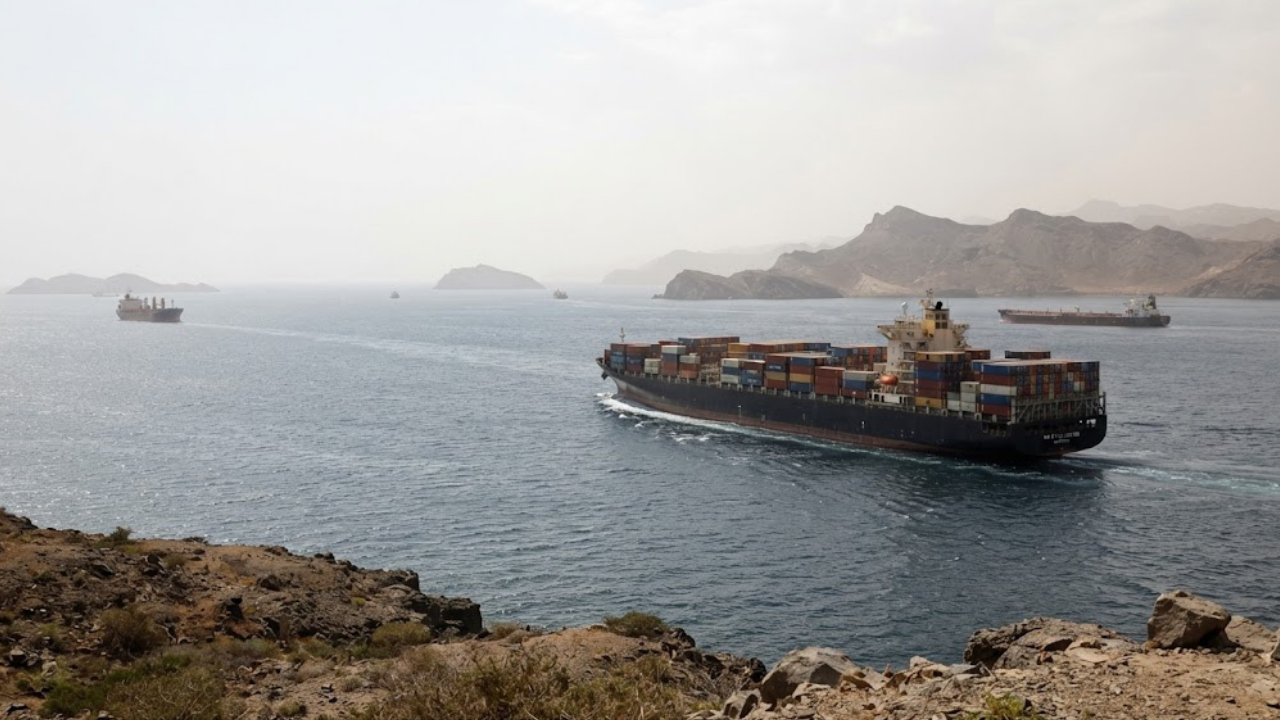
The more consequential development may be geographic rather than military. Houthi forces have been steadily seizing islands that sit astride the southern Red Sea shipping lanes, including Mayun Island — also known as Perim Island — which sits directly in the Bab al-Mandeb Strait, the narrow chokepoint connecting the Red Sea to the Gulf of Aden and the wider Indian Ocean. Roughly 10% of global seaborne trade has historically passed through that strait.
Houthi fighters also moved into the southern port city of Mokha in recent days, part of a broader push that has reshaped who controls access to that stretch of coastline. The Houthi Red Sea islands now under rebel control give the group leverage over a route far more consequential than Yemen’s own economy.
Shipping companies have responded the way they have throughout years of Red Sea instability: by avoiding the route altogether and sending vessels around Africa’s Cape of Good Hope instead, a detour that adds significant time and fuel cost to global trade.
The oil pipeline problem making this worse for Saudi Arabia
The timing compounds an existing vulnerability. A major Saudi oil pipeline — the route that carries crude westward to the Red Sea export terminal at Yanbu — was struck in a separate attack last week and will remain mostly out of service for weeks while repairs are made, according to two regional officials who spoke to the Associated Press. That pipeline had been doing double duty: it was one of the few reliable ways Saudi Arabia had left to move oil to market while bypassing the Strait of Hormuz, which Iran has intermittently restricted since a US-Israeli military campaign against Iran began in February.
Saudi oil traders told Reuters that unless the pipeline is brought back online within days, the kingdom risks running out of exportable inventory — a scenario that could pull as much as 4% of global oil supply off the market. Saudi crude stockpiles had already fallen to their lowest level in roughly 30 years even before this pipeline was hit. Oil prices climbed more than 2% on the news, with Brent crude trading above $100 a barrel.
How this fits into the wider Iran war
This is not an isolated flashpoint. The Houthis are formally aligned with Iran’s regional network of allied forces, and the escalation in the Red Sea is being tracked by analysts as a new front within the broader conflict that has gripped the region since US and Israeli strikes on Iran began in late February. Saudi Arabia, by contrast, sits on the opposite side of that broader alignment. A planned diplomatic meeting between Gulf states and Iran, intended to help ease the separate Strait of Hormuz crisis, has been postponed as tensions have risen — a sign that this week’s events in the Red Sea are adding friction to an already fragile regional picture rather than existing apart from it.
What this means beyond the region
For a global economy still adjusting to disrupted shipping through the Strait of Hormuz, a second chokepoint crisis at Bab al-Mandeb raises the odds of higher fuel prices reaching ordinary consumers well outside the Middle East, since both oil and container shipping routes run through these same waters. Airlines, freight companies and energy markets have already been pricing in Middle East risk for months; this week’s developments give them another reason to keep doing so.
What comes next
Saudi Arabia has not yet said whether or how it will respond to the King Khalid claim, and the extent of any real damage to the base remains unverified. The more immediate test will be whether the Saudi pipeline can be repaired on the timeline officials have described, and whether the Houthi Red Sea islands seized so far stay under rebel control or draw a stronger Saudi and allied response in the days ahead.
ABC News’ original wire coverage includes additional detail on the pipeline damage and Saudi response: ABC News — Yemen’s Houthi rebels seize key islands in southern Red Sea.
Related: HumanCrisisNews global affairs coverage — Sudan crisis media coverage and Nepal floods