A tunnel in Nepal collapses, and within hours the world has a name, a face, and a countdown clock. A war in Sudan enters its fourth year, and most people could not say how many have died, been displaced, or gone hungry because of it. This is not a coincidence of timing – it is a pattern in how Sudan crisis media coverage compares to disasters like the Nepal floods, and it says less about the scale of suffering than about what kind of suffering the world has learned to watch.
Two Disasters, Two Very Different Spotlights
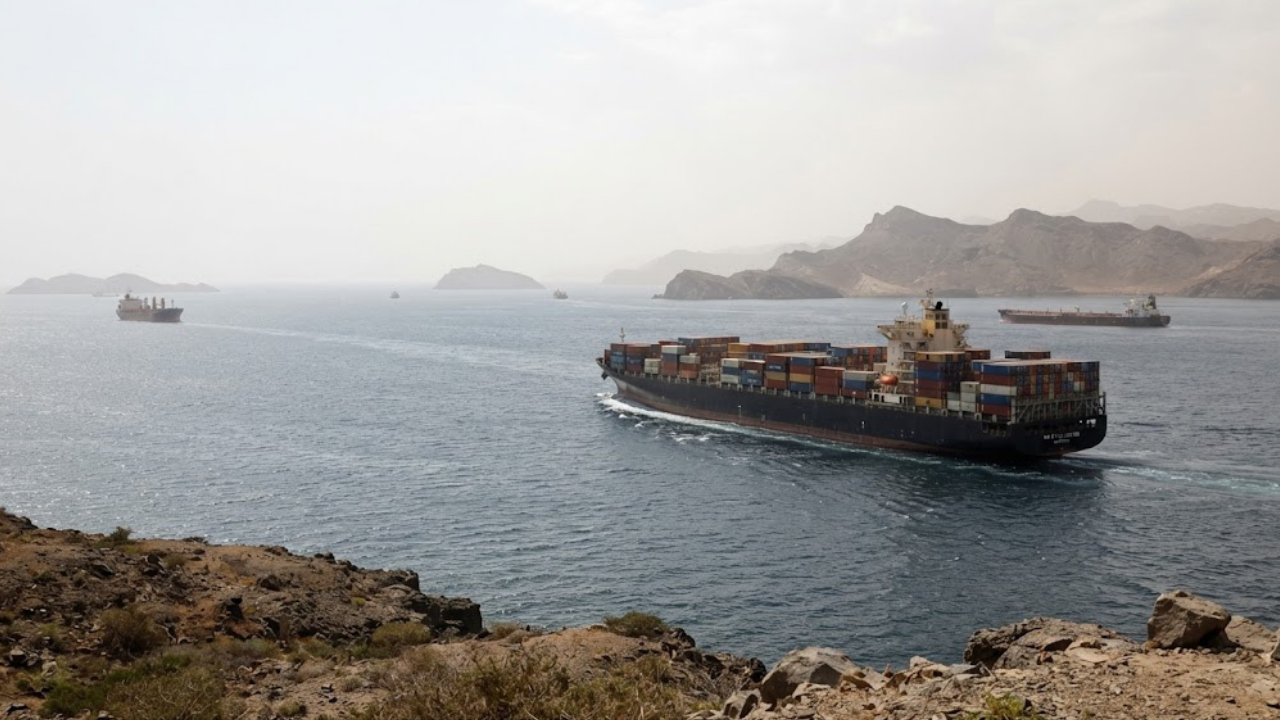
The Nepal floods that struck on August 26, 2026, were catastrophic by any measure. A glacier collapse above the Langtang valley sent flash floods and debris tearing along a stretch of the Trishuli River, killing more than 1,342 people in Nepal alone and leaving nearly 4,886 people missing, with dozens more dead or unaccounted for across the border in Tibet. Within days, international outlets including CNN, NBC, Al Jazeera, NPR and CBS had reporters filing rolling updates, live blogs and dedicated segments – culminating in globally shared footage of workers being pulled alive from a flooded hydropower tunnel nine days after the disaster struck.
Sudan’s war has been unfolding since April 2023, when fighting broke out between the Sudanese Armed Forces and the paramilitary Rapid Support Forces. Estimates of the death toll vary wildly – from roughly 150,000 to more than 400,000 – a gap that is itself telling, since a crisis this closely tracked would rarely leave analysts guessing across a range of 250,000 lives.
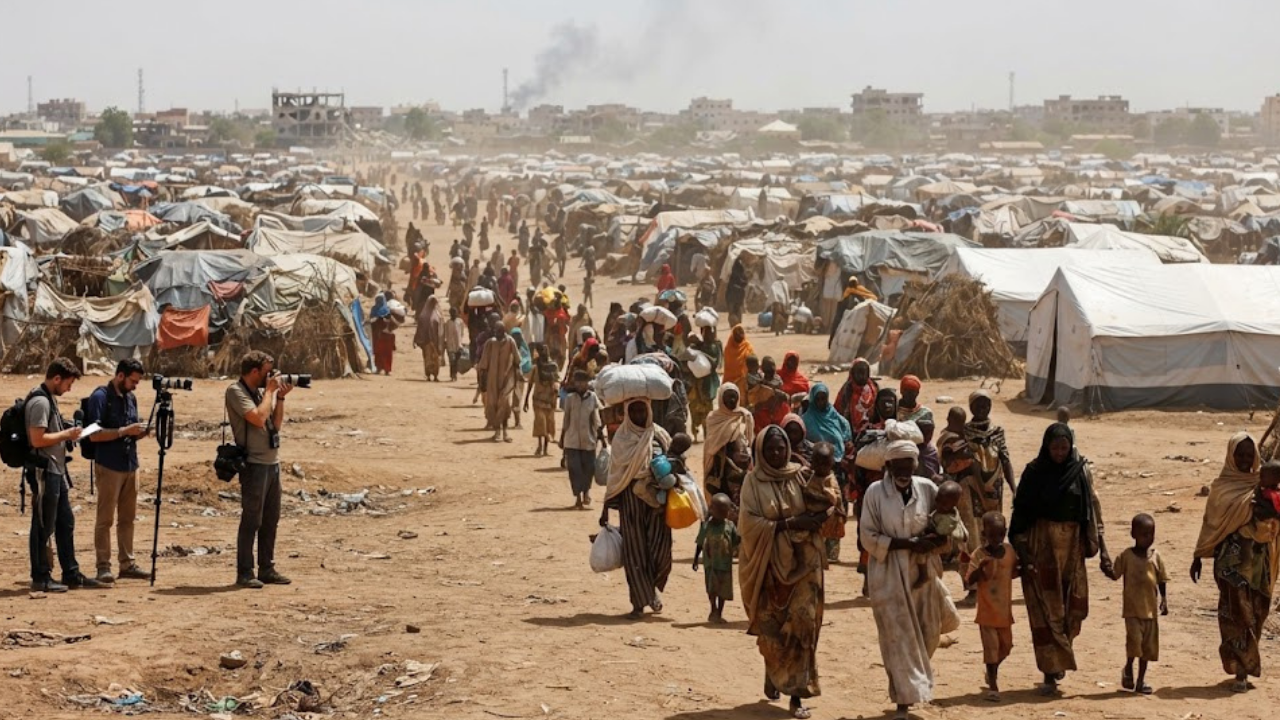
Close to 9 million people have been displaced inside Sudan, with millions more having fled across borders into Chad, South Sudan, Ethiopia and the Central African Republic. Nearly 19.5 million people – roughly two in five Sudanese – face crisis-level food insecurity, and famine conditions have already been confirmed in parts of Darfur and Kordofan, according to the UN-backed Integrated Food Security Phase Classification.
Why Sudan Crisis Media Coverage Lags So Far Behind
The disparity is not anecdotal. CARE International’s tenth annual Crisis Report, published in early 2026, analyzed roughly five million online articles about humanitarian emergencies worldwide and found that nearly half concerned a single conflict: Gaza. Sudan, despite being repeatedly described by aid officials as the world’s largest humanitarian crisis, did not come close to matching that volume of coverage – a gap journalism researchers and former diplomats alike have flagged for over a year.
Tom Perriello, who served as the U.S. special envoy to Sudan, put it plainly when he told Nieman Reports he had never witnessed anything like “a disconnect between the scale of a crisis and the scale of media coverage” in his career. Weeks later, UN Under-Secretary-General for Humanitarian Affairs Tom Fletcher told the Security Council that “more than two-thirds of the people of Sudan are in desperate need of lifesaving support” – a statement that generated far less international coverage than a single day’s headlines from Nepal.
Several structural factors help explain the gap, and none of them relate to the relative severity of human suffering:
A single event versus an open-ended grind. The Nepal floods happened on one identifiable day, with a clear before-and-after, injured and missing people to search for, and a natural narrative arc toward rescue or resolution. Sudan’s war has no such single moment – it is a slow accumulation of loss across more than three years, without the kind of discrete “breaking news” hook that algorithms, editors and audiences tend to reward.
Visibility and access. Journalists could fly into Kathmandu, coordinate with the Nepali Army, and report from the ground within days of the flood. In Sudan, reporters face extreme danger simply reaching affected areas; HumanCrisisNews’s earlier coverage of Sudan noted how humanitarian access itself has become one of the central obstacles to understanding the scale of the crisis, let alone photographing it.
Rescue narratives travel; famine statistics don’t. A worker pulled alive from a tunnel is a story with a beginning, a middle and a resolution audiences can feel relief about. A rising count of acutely malnourished children – an estimated 825,000 expected to suffer severe acute malnutrition in Sudan in 2026 alone – is a statistic, not a scene, and statistics rarely go viral the way rescue footage does.
What Gets Lost When Sudan Crisis Media Coverage Falls Behind
The consequences of this imbalance are not abstract. Humanitarian organizations have long observed that funding tends to follow headlines, not need. Sudan’s 2026 humanitarian response plan has faced significant shortfalls even as needs have grown; aid groups working in Darfur and Kordofan have repeatedly warned that without more attention – and the funding that tends to follow it – the deterioration already underway could accelerate sharply during the region’s lean season.
This is not an argument that Nepal’s floods deserved less coverage. The scale of loss there was real, the rescues were genuinely dramatic, and the reporting was, on the whole, responsible and well-sourced. The point is narrower and more uncomfortable: media attention appears to respond more reliably to the shape of a crisis – sudden, visual, resolvable – than to its actual human cost. A war that kills slowly, displaces quietly and starves without a single dramatic image struggles to compete for the same airtime, even when the number of lives at stake is many times larger.
Where This Leaves Sudan
There are signs the disparity is starting to draw its own scrutiny. Press freedom and journalism organizations have increasingly published their own analyses of the coverage gap, and a small number of outlets have committed to sustained, non-breaking-news reporting from Sudan specifically because the story does not fit the usual news cycle. Whether that shifts funding or policy attention in the way advocates hope remains uncertain, and any claim that coverage alone determines humanitarian outcomes would be an overstatement – access, funding mechanisms and political will all shape the response independently of headlines.
What is measurable is the gap itself: a flood that killed just over a thousand people generated days of dedicated global coverage, while a war that has likely killed well over a hundred thousand and displaced millions more continues to struggle for sustained international attention. That gap is worth naming, even if closing it will not be simple.
This is an analytical piece drawing on published casualty and displacement figures, which remain estimates subject to revision by the relevant authorities and UN agencies. Comparative media-volume figures are drawn from CARE International’s published Crisis Report methodology and are described by CARE as analysis of aggregated online article counts, not a comprehensive global media census.