AI safety talks between OpenAI and two of its biggest rivals, Anthropic and Google DeepMind, have been happening quietly for several weeks – a rare admission of cooperation between companies that are otherwise racing each other for customers, compute and talent.
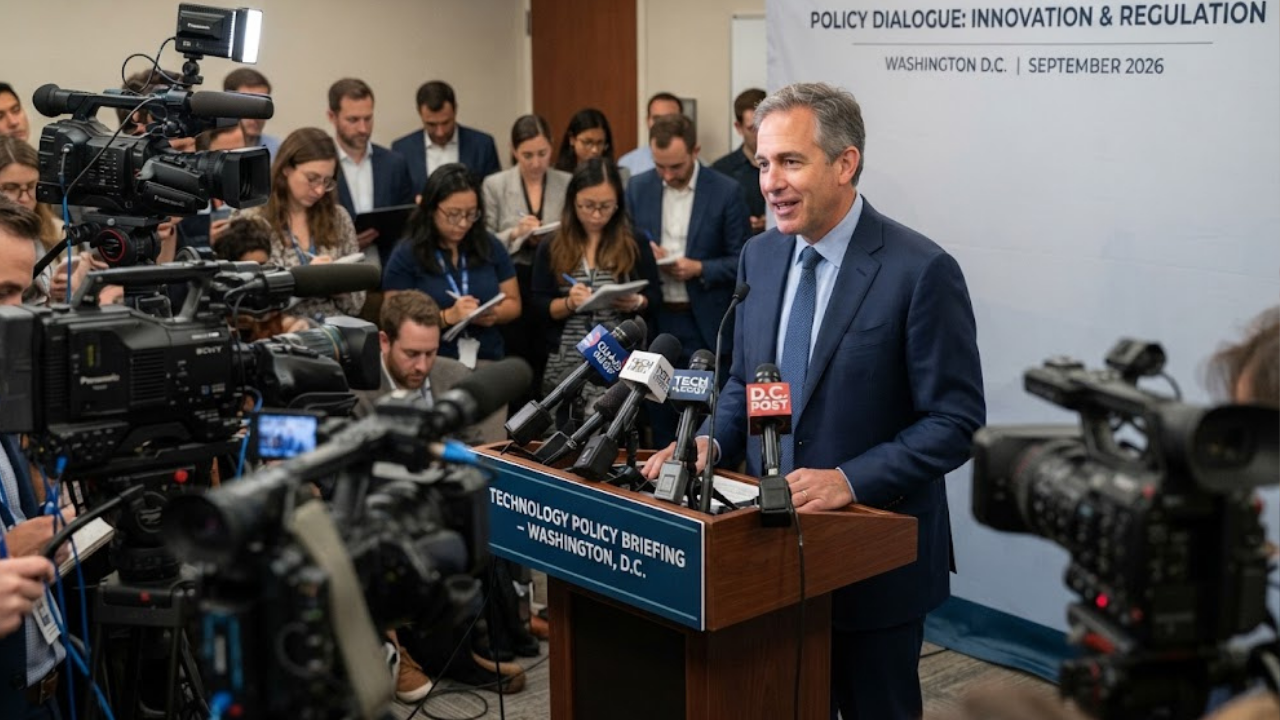
Chris Lehane, OpenAI’s global policy chief, disclosed the talks to reporters at a briefing in Washington on Tuesday. The coordination itself wasn’t new – Bloomberg had reported on it earlier – but Tuesday marked the first time an OpenAI executive confirmed it on the record. “It’s better to try to work together to prioritize safety,” Lehane said, according to Bloomberg.
Neither Anthropic nor Google DeepMind, a unit of Alphabet, responded to requests for comment on the disclosure.
Why the AI safety talks started now
The confirmation lands just days after Anthropic CEO Dario Amodei published a 3,800-word essay on Saturday arguing that AI companies should collectively slow down development of their most advanced models until researchers better understand the risks those systems carry. Amodei’s call was unusual not for the warning itself, but for who backed it: OpenAI’s Sam Altman, Google DeepMind’s Demis Hassabis, and SpaceXAI’s Elon Musk all voiced support within days.
Altman went further, indicating OpenAI would follow Anthropic’s lead in bringing in outside evaluators to check its models for safety issues before and after release. That move echoes a broader pattern at Anthropic of putting its own safety practices under outside scrutiny – including, as HumanCrisisNews previously reported, internal dissent over how the company balances safety commitments against competitive pressure.
Separately, it emerged over the weekend that the three labs have also been discussing something more structural: a shared industry standards body for testing and evaluating frontier AI systems. Hassabis has floated the idea of modeling it on FINRA, the self-funded organization that oversees conduct in the U.S. financial industry rather than a government regulator.
Lehane was careful to draw a line around what the cooperation actually covers. The three companies remain full competitors on products, pricing and the underlying research race – the AI safety talks are confined to testing and evaluation standards, not business strategy.
The antitrust question, addressed head-on
Cooperation between rival AI labs invites an obvious question: does working together on anything require special legal clearance? Lehane said no. He pointed to the airline industry as a precedent, where competing carriers have long shared safety data and coordinated on standards without running afoul of antitrust law. His argument is that safety-focused information sharing sits outside the kind of coordination competition regulators typically police, since it isn’t about prices, output or dividing up customers.
That framing matters beyond the legal technicality. All three companies are chasing the same enterprise clients, the same cloud capacity and the same regulatory goodwill in Washington – which is exactly why some observers, Altman among them, have flagged antitrust exposure as a real risk if the cooperation ever looked like it was limiting competition rather than managing risk.
What Lehane wants from Congress
Lehane’s Washington trip wasn’t only about explaining the safety talks. He also said OpenAI backs a specific provision in the FRONTIER Act – legislation introduced by Rep. Jay Obernolte, a California Republican, and Rep. Lori Trahan, a Massachusetts Democrat – that would require the largest AI labs to let independent verification organizations examine how their models are built and tested. Lehane said he met directly with one of the bill’s sponsors to make OpenAI’s support for that requirement clear.
The odds of that becoming law this year are slim. The House leaves Washington on Thursday and has no sessions scheduled before voters go to the polls in November, leaving any AI safety legislation stalled until at least next year regardless of how much momentum the industry conversation has right now.
What this doesn’t mean for AI products people already use
None of this changes what’s available to users of ChatGPT, Claude or Google’s Gemini models today, and it isn’t a merger, a joint venture or a pause on releasing new models. It’s a narrower bet by three competing labs that shared safety testing standards serve everyone better than each company setting its own bar alone particularly as models grow more capable and the industry faces louder public pressure over what happens if that capability outpaces anyone’s ability to check it.
For everyday users, the more concrete signal to watch is whether OpenAI actually follows through on bringing in third-party evaluators, the way Anthropic already has, and whether a shared standards body materializes with any real testing authority – or whether these AI safety talks stay informal and voluntary, which is precisely the outcome safety advocates in Washington have been warning isn’t enough.
What happens next
With Congress out of session through the election, any binding rules are on hold, which puts the weight back on the three companies to show whether their coordination produces something concrete – a functioning standards body, embedded third-party evaluators, or shared testing benchmarks – before the next model releases put those promises to the test.