
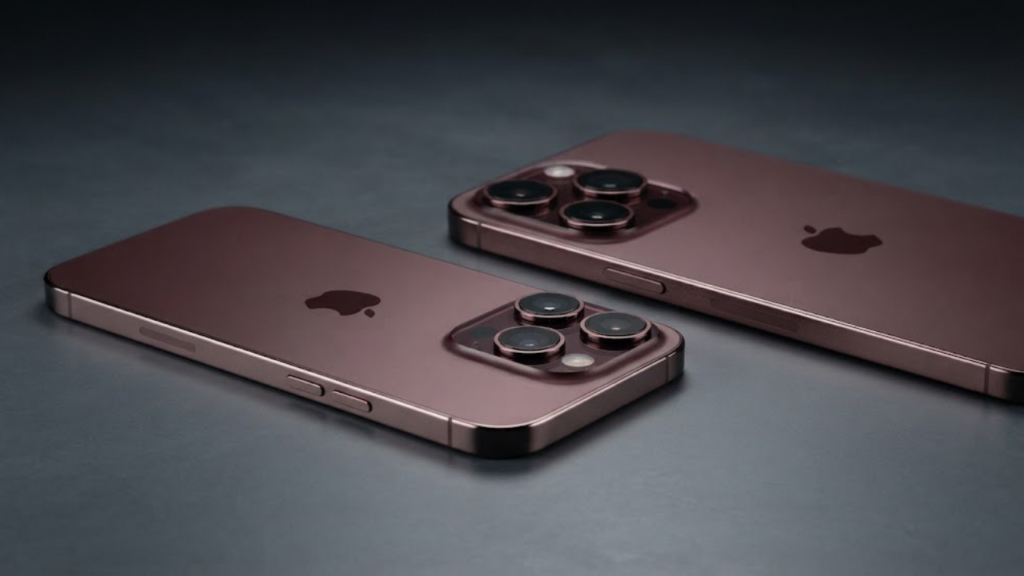
Apple’s iPhone 18 Pro and iPhone 18 Pro Max are now available in the United States and more than 65 other markets, with starting prices of $1,199 and $1,299. The new models introduce a variable-aperture camera, the A20 Pro chip, longer battery life and a beta version of Apple’s next-generation Siri AI.
The launch is also the first major iPhone release under Apple CEO John Ternus, who took over from Tim Cook earlier this month. Apple announced the phones on September 9 and began accepting preorders on September 12, ahead of the retail release on September 18.
iPhone 18 Pro price and storage options
The iPhone 18 Pro price starts at $1,199 in the United States for 256GB of storage. The iPhone 18 Pro Max begins at $1,299 with the same storage capacity.
Both phones are available with:
- 256GB storage.
- 512GB storage.
- 1TB storage.
- 2TB storage.
The new pricing represents a $100 increase over the comparable previous-generation Pro models. Customers can lower the final cost through Apple Trade In or carrier promotions, but the amount depends on the device being exchanged and the customer’s eligibility.
Apple says eligible customers trading in an iPhone 13 or newer can receive between $175 and $885 in credit. Selected carriers are offering credits of up to $1,200 for some customers trading in an iPhone 14 or newer, including devices in any condition.
Apple’s official specifications, availability details and regional restrictions are listed in the company’s iPhone 18 Pro announcement.
New camera gives users manual aperture control
The most notable hardware change is the new 48-megapixel Fusion Main camera. It is the first iPhone camera to include a variable aperture system.
Aperture controls how much light enters the camera and affects the depth of field. The iPhone 18 Pro can automatically adjust this setting, while advanced users can manually select from four aperture levels through the Camera app.
Apple says the new system is designed to improve:
- Low-light photography.
- Detail in group photographs.
- Background blur.
- Exposure control.
- Creative photography and video work.
The Camera app also adds more Pro controls. Users can manually adjust shutter speed, white balance and aperture, while a histogram provides a visual guide to exposure levels.
Apple has also updated Photographic Styles with additional texture and grain controls. Video users can apply certain Cinematic effects after recording, shoot 4K Dolby Vision HDR time-lapse footage and use improved Audio Mix tools to isolate voices or music.
Apple Reference Image targets AI-generated media
The iPhone 18 Pro introduces Apple Reference Image, an optional feature intended to help users examine whether a photograph has been edited.
When the feature is enabled, the camera records signed sensor information alongside the image. Apple describes the resulting reference file as similar to a digital negative that can be compared with the edited version in the Photos app.
The feature could be useful for photographers, news organizations and users who want more information about an image’s history. Apple also says support for SynthID is planned in a later software update for many AI-edited images.
However, the authenticity tools will not work identically in every market. Apple says Reference Image capture will not be available at launch in the European Union, while the feature will also face restrictions in China because of local regulatory requirements.
A20 Pro chip is built for AI workloads
The new phones use Apple’s A20 Pro processor, which is manufactured with a 2-nanometer process. Apple says the chip offers 50% more memory bandwidth than the A19 Pro and includes a redesigned Neural Engine for on-device artificial intelligence.
The chip features:
- A six-core CPU.
- A seven-core GPU.
- A dual 16-core Neural Engine.
- Integrated Neural Accelerators.
- Support for advanced on-device AI processing.
Apple claims the GPU can deliver performance up to 40% faster than the previous generation. The company also says its new vapor-chamber cooling system enables up to 40% higher sustained performance than the iPhone 17 Pro.
These upgrades are aimed at demanding games, video editing, computational photography and AI features that require repeated processing over longer periods.
Siri AI arrives as a beta feature
The iPhone 18 Pro launches with iOS 27 and a beta version of Siri AI. The updated assistant is designed to use personal context from messages, email and photos.
Apple says Siri AI can help users:
- Locate information across personal apps.
- Understand content displayed on the screen.
- Answer questions about objects viewed through the Camera app.
- Take actions based on what users are viewing.
- Rewrite or organize certain types of content.
Apple says its AI system combines on-device processing with Private Cloud Compute. The company is presenting this approach as a way to provide more advanced features while maintaining privacy protections.
Siri AI will initially support English. Apple says French, Japanese, Korean, Portuguese and Spanish support is expected in October. The feature will not initially be available on iPhone in the European Union.
The arrival of Siri AI also places Apple’s smartphone business within the wider competition over consumer artificial intelligence. Readers interested in that broader issue can also see our report on AI safety talks involving OpenAI, Anthropic and Google.
Battery life and connectivity upgrades
Apple says the eSIM-only iPhone 18 Pro can deliver up to 36 hours of video playback, while the iPhone 18 Pro Max can reach up to 45 hours under the company’s testing conditions.
The larger Pro Max battery benefits partly from the removal of the physical SIM tray in eSIM-only markets. Apple says the freed space allows the device to include a larger battery.
The phones also support faster charging. Apple says the iPhone 18 Pro can reach 50% charge in around 15 minutes with compatible wired charging equipment. The Pro Max can provide approximately seven hours of video playback after five minutes of wired charging, based on Apple’s testing.
Both models include Apple’s N1 wireless chip with support for Wi-Fi 7, Bluetooth 6 and Thread. The iPhone 18 Pro also includes the company’s C2 cellular modem, which Apple says improves upload performance and reduces energy use compared with the previous modem system.
Colors, accessories and environmental claims
The iPhone 18 Pro and Pro Max are available in black, silver, glacier and burgundy. Apple has also introduced new Silicone, TechWoven and Clear cases, along with wrist and crossbody straps.
The phones contain 40% recycled material overall, according to Apple. The company says the battery uses 100% recycled cobalt and the aluminum enclosure contains 85% recycled aluminum.
Apple also says the devices are manufactured using renewable energy across the supply chain and use fiber-based paper packaging.
These environmental figures are based on Apple’s stated measurements and definitions. They do not mean that every component of the phone is recycled or that the product has no environmental impact.
What buyers should consider
The iPhone 18 Pro price increase makes the upgrade decision more difficult for owners of recent iPhone models. The new camera system, improved battery and A20 Pro chip offer clear technical changes, but some of Apple’s biggest software promises—especially Siri AI—are still being introduced as beta features.
The 256GB base storage is likely to be sufficient for many users. However, customers who record large amounts of 4K video, store extensive photo libraries or use the phone for professional content creation may prefer the 512GB or 1TB versions, which raise the total purchase price considerably.
Buyers should also check whether their country supports the full set of eSIM, AI and image-authenticity features before ordering. Availability varies by region, language and local regulations.
The first sales period will show whether customers accept Apple’s higher pricing in exchange for stronger cameras, longer battery life and more ambitious AI capabilities. The company’s next major test will come with the October release of the iPhone Duo, Apple’s first foldable smartphone.
[…] now feeding a broader debate about how AI labs decide what the public deserves to know. (Related: why the iPhone 18 Pro’s AI camera upgrades matter for the next wave of on-device AI) Whether Google’s fix satisfies lawmakers already unhappy with how OpenAI and Anthropic […]