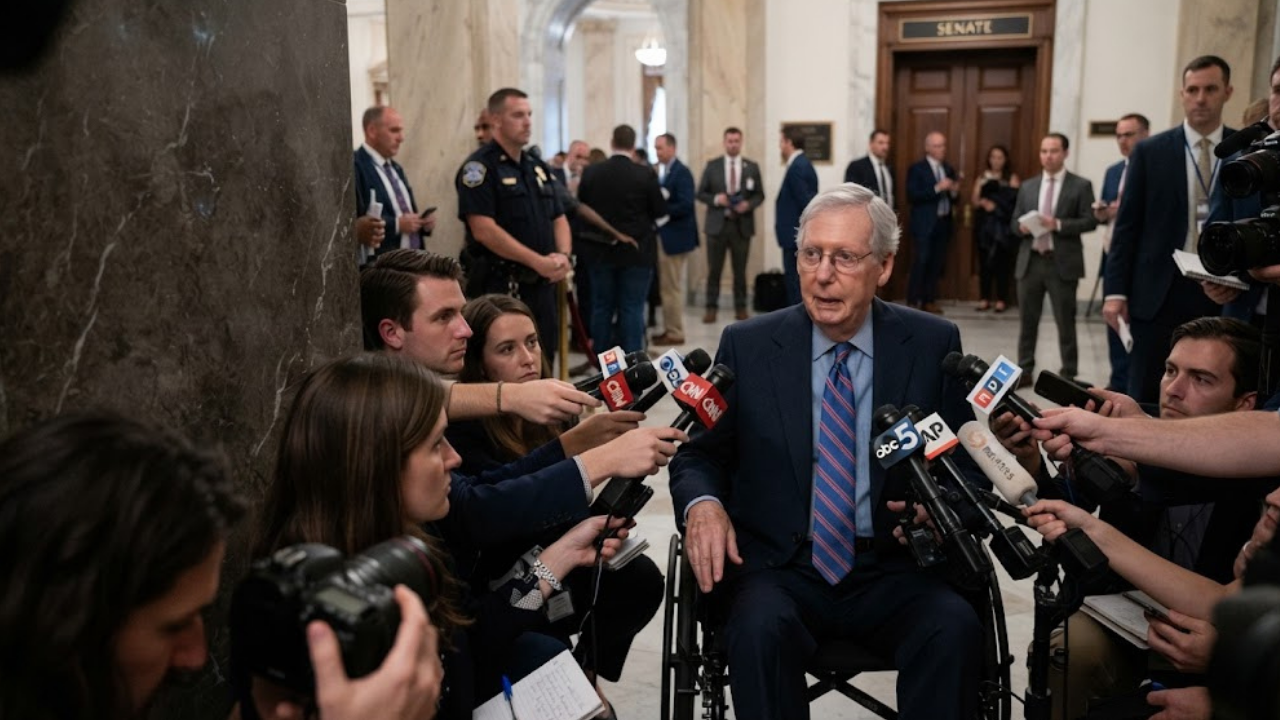
The Mitch McConnell Senate return played out on Capitol Hill Monday evening, as the 84-year-old Kentucky Republican cast his first Senate vote in three months after a fall, a hospitalization and a long recovery had kept him away from Washington since mid-June.
McConnell arrived at the Capitol in a wheelchair for the evening vote series, his first public appearance since he was hospitalized on June 14. He looked noticeably thinner than before his absence, and his voice faltered at points as he briefly addressed reporters outside the Senate chamber. He confirmed his return in a statement posted online Monday: “Today, I’ll cast my first Senate vote since I took a bad fall back in June.” He did not take questions about whether he intends to serve out the remainder of his term, which ends in January.
Why McConnell disappeared from Washington for 92 days
McConnell fell at his Washington home on June 14 and was briefly knocked unconscious before being taken to the hospital. He later developed pneumonia while hospitalized and was treated with antibiotics, according to a statement his office attributed to his attending physician. His office has said doctors ruled out a heart attack, a stroke, a concussion, broken bones or tumors. He spent weeks afterward in a rehabilitation facility before being cleared to continue his recovery at home in early August.
During the absence, McConnell had not cast a Senate vote since June 11 and missed dozens of floor votes. The Senate itself was out of session for a five-week summer recess before reconvening this week, which meant McConnell’s return coincided with lawmakers’ broader return to Washington rather than a mid-session comeback.
The transparency fight that shadowed his recovery
McConnell’s office released limited updates during his absence, and the gap between his hospitalization and any public explanation fueled weeks of speculation about how serious his condition really was. That pressure became overtly political in July, when Kentucky’s Democratic governor, Andy Beshear, wrote to McConnell publicly urging him to either demonstrate he was fit to keep serving or step aside. “Kentuckians are just asking you to be honest,” Beshear wrote in the letter. By the time the Mitch McConnell Senate return finally happened, that letter had become one of the most-cited flashpoints of his absence.
McConnell brushed past the scrutiny Monday rather than directly addressing it. Speaking briefly to the press pool waiting outside the chamber, he acknowledged the long stretch of avoiding reporters’ questions before turning to his agenda, saying it was “time to get back to work.” He listed farm legislation, NATO relations and continued U.S. support for Ukraine against Russian aggression among the priorities he wants to focus on before his term ends.
Not his first public health scare
Monday’s return added to a health history that has drawn scrutiny for years. In 2023, McConnell froze mid-sentence in front of reporters on two separate occasions, unable to speak for roughly 30 seconds each time, and he has been hospitalized after previous falls, including one that led to a concussion and a nearly six-week hospital stay. Those earlier episodes are part of why this latest absence — and the delay in explaining it — drew heightened attention rather than being treated as a routine medical leave.
McConnell is the longest-serving party leader in Senate history, having led Senate Republicans for 18 years before stepping down from that post in 2025. He announced last year that he would not seek reelection and is set to leave office when the current Congress ends in January 2027.
What the Mitch McConnell Senate return changes in the chamber right now
McConnell’s return matters beyond the personal story of his recovery. The Senate often operates on narrow margins, and a single senator’s presence or absence can affect the outcome of close votes on legislation, nominations and procedural motions. With McConnell back, Senate Republicans regain a vote they had been without for three months on measures including the items he named as priorities — farm policy, NATO-related matters and Ukraine aid — all of which are likely to come before the chamber this fall.
His return also lands amid a broader conversation in Washington about aging in Congress. The median age in the current Senate is just under 65, compared with just under 58 in the House, according to Pew Research Center data, and McConnell’s health struggles have repeatedly become a reference point in debates over whether lawmakers should face age or fitness requirements. In that sense, the Mitch McConnell Senate return is being read by many in Washington as a test case for that larger debate, not just a personal comeback story. Those debates are unlikely to produce any immediate rule change, but McConnell’s case has kept the question in front of voters and colleagues alike.
What happens next
McConnell did not say Monday whether he plans to remain in Washington full time for the rest of his term or whether his office will provide more detail on his ongoing recovery. His voting record and physical presence over the coming weeks — rather than any single statement — are likely to answer the question that has followed him since June: whether he can serve out his final months in the Senate the way he has served the previous four decades.
NPR’s coverage of the Mitch McConnell Senate return includes additional detail on his medical timeline and is available here: NPR — Mitch McConnell returns to Senate after fall.
Related: HumanCrisisNews politics coverage – Trump’s Irish reunification comments