
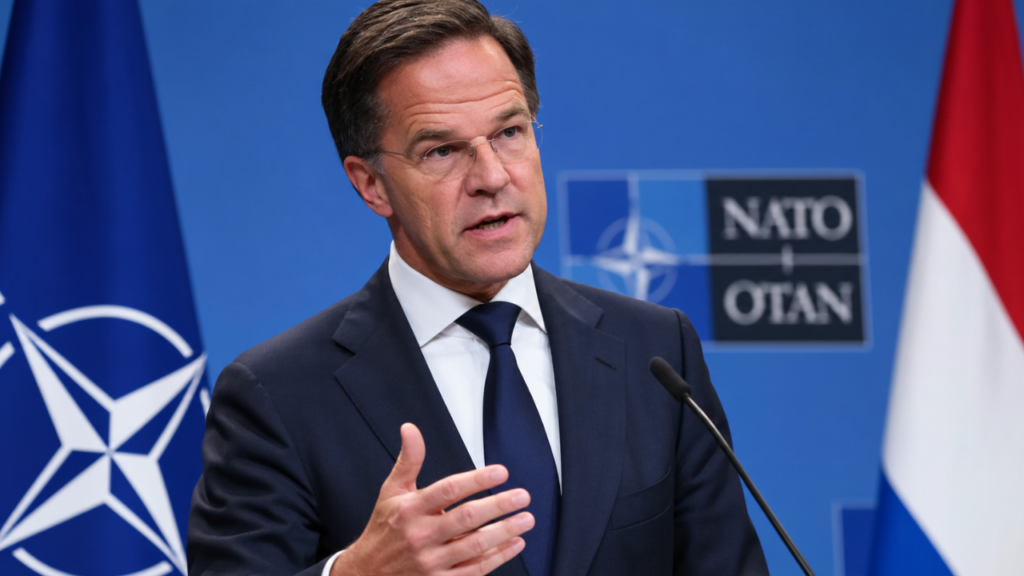
Russian hybrid threats against NATO are likely to increase, Danish intelligence warned Thursday, hours after the alliance’s secretary-general said NATO can handle the sabotage and drone incidents already spreading across Europe. Speaking at a ceremony in New York marking the anniversary of the Sept. 11 attacks, Mark Rutte said the rise in hybrid incidents shows Russian President Vladimir Putin is losing the war in Ukraine, now in its fifth year, and that sending more weapons to Ukraine remains the best response. “All the response options are there, and we will use whatever we need,” he said, adding that citizens of NATO’s 32 member countries can stay calm because “Putin is in a bad place.”
What Danish intelligence found
The Danish Defense Intelligence Service released a new risk assessment on Thursday, warning that Russian hybrid threats are likely to intensify as Moscow grows more willing to take risks against the West. The agency wrote that this could include destructive cyberattacks capable of crippling essential public services, along with sabotage operations that carry a real risk of casualties. It also said Russia has grown more willing to take risks. An Associated Press tracker cited in the report shows the scale of the shift: recorded hybrid incidents across Europe rose from 59 in March 2025 to more than 200 by this month.
Russian Hybrid Threats: A “Low But Growing” Risk of Direct Attack
Beyond hybrid activity, the Danish agency said there is a low but growing risk that Russia could launch a limited military attack against one or more NATO countries that border Russia, and that such an attack could potentially happen within the coming months. It said the purpose would be to pull European resources away from Ukraine and create division inside NATO. The same assessment was careful to add that there are no indications Russia is preparing an outright invasion of any NATO member, and NATO and European Union officials have separately said Russian forces remain too committed in Ukraine for unusual troop movements to have gone unnoticed near Europe’s eastern border.
Poland’s separate warning
Poland’s prime minister, Donald Tusk, issued his own warning last week about Russian hybrid threats, saying Moscow is preparing strikes using drones or rockets against European countries that support Ukraine, Poland included. Tusk said he expects Russia to present any such attacks as accidental, a tactic he said is meant to weaken NATO members’ willingness to come to a fellow member’s defense. His warning adds a national government’s voice to the pattern Danish intelligence described at the alliance level, though the two statements were made separately and are not a joint assessment.
Why officials are urging restraint
Not every allied voice is emphasizing alarm. Matthew Whitaker, the U.S. ambassador to NATO, said this week that the current volume of incidents does not point to an imminent conflict. “I don’t think it’s at a volume that would mean that it’s the beginning,” he said, adding that overreacting to hybrid activity carries its own risks and that “we haven’t reached that threshold.”
His comments frame the current debate inside NATO: how to respond firmly to a rising pattern of sabotage and cyberattacks without escalating a confrontation that Russia’s military, tied down in Ukraine, may not actually be seeking. The caution echoes a broader pattern this week, as leaders navigated rising tensions at the UN over Iran alongside the warnings about Russia.
What remains unresolved
It is not yet established which countries are most exposed to a potential limited attack, since Denmark’s assessment refers broadly to NATO states bordering Russia without naming specific targets. Nor is it clear how NATO’s stated “response options” would apply in practice if a hybrid attack caused casualties, a scenario the Danish agency flagged as a real possibility. The gap between Rutte’s public reassurance and the starker warnings from Copenhagen and Warsaw reflects a genuine disagreement inside the alliance over how urgently to treat Russian hybrid threats, not a settled NATO position.