
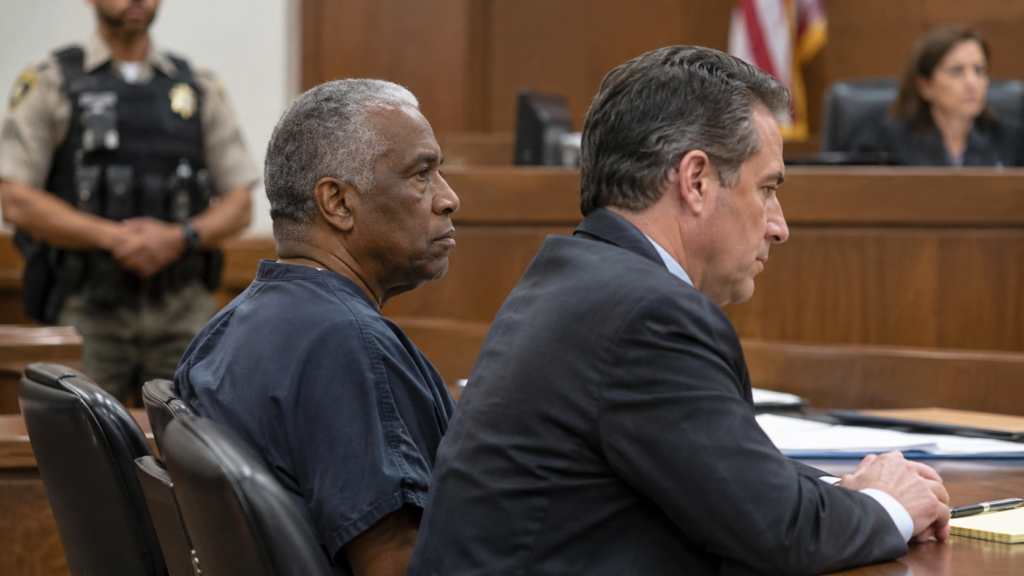
A Las Vegas judge sentenced Duane Davis, the former South Side Compton Crips leader known as “Keffe D,” to 40 years to life in prison on Tuesday for orchestrating the 1996 killing of rapper Tupac Shakur. Davis, 63, is the only person ever charged over the shooting, which went unsolved for almost three decades before a jury convicted him in August 2026.
Clark County District Court Judge Carli Kierny handed down the sentence on October 13, 2026. NBC News reported that it includes a 20-year mandatory enhancement, which the judge explained in court. The jury had found Davis guilty of first-degree murder with use of a deadly weapon. Prosecutor Marc DiGiacomo told the court Davis is “guaranteed to die” behind bars, according to the Associated Press.
Why the court held Davis responsible without proof he fired the gun
Prosecutors never claimed Davis was the shooter. Their case was that he ran the operation. Over a two-week trial, jurors heard evidence that he got hold of the gun, passed it into the back seat of a car and gave his nephew the signal to fire. Prosecutors argued that under Nevada law a murder charge can reach someone who helps carry out a killing, not only the person who pulls the trigger, and the jury accepted that argument.
The verdict came on Monday, August 31, 2026, and it was unanimous. Tupac Shakur’s sister, Sekyiwa “Set” Shakur, was in the courtroom and cried as it was read, NBC News reported. Davis indicated that day that he intended to appeal, and he has repeated that since.
What Judge Kierny said at the sentencing hearing
Much of Tuesday’s hearing turned on Davis’s own words. According to accounts from Rolling Stone and the Guardian, Judge Kierny told him she had spent three years hearing the same line from him: yes, he was involved, but he had changed, left Compton behind and become a grandfather, so he deserved to live out his years in peace. She was not persuaded. Davis has spoken about the killing in a BET interview and in his memoir, and the judge made clear that those admissions did not soften the sentence.
Shakur’s sister also addressed the court. She described her brother not only as an icon but as a protector and a father figure, according to NBC News. Her remarks gave the hearing a more personal tone after weeks of testimony about guns, cars and gang loyalties.
How a memoir became a murder case
Shakur was 25 when he was shot in a drive-by attack on the Las Vegas Strip, the city’s casino boulevard, on September 7, 1996, and he died days later. Prosecutors said the shooting was revenge for a brawl hours earlier at a Strip casino involving Shakur and Davis’s nephew, Orlando “Baby Lane” Anderson. For years nobody was charged, and the case became a fixture of rap folklore and true-crime speculation.
What changed it was Davis himself. In a 2019 memoir he wrote that he was in the car the gunfire came from and named Anderson as one of two men in the back seat. In July 2023, police searched his wife’s home for items “concerning the murder of Tupac Shakur,” according to warrant documents CBS News reported, and they took electronics, photographs and a copy of the book. Davis was arrested that September near his home in Henderson, a city just outside Las Vegas, and indicted on a charge of murder with a deadly weapon with a gang enhancement.
A slow road to trial
At his first court appearance, Clark County District Attorney Steve Wolfson said Davis would be held without bail, and DiGiacomo described him as the commander on the ground who ordered the killing. Davis pleaded not guilty at his arraignment in November 2023. Getting to a jury then took nearly three years. His trial, first set for November, was moved to March 2025, and he asked the Nevada Supreme Court to dismiss the charges before the case reached a jury.
The trial finally took place in August 2026. Tuesday’s sentencing came a little over six weeks after the verdict, closing the trial stage of one of the most closely followed cold cases in American music history.
What happens next
Davis has said he will appeal, but the reporting reviewed for this article does not confirm that a filing has been made or when a court might hear it. The details of parole eligibility under a 40-years-to-life term also depend on how Nevada applies the sentence, and the available sources do not address that question. The next step to watch is whether Davis’s lawyers file the appeal and which grounds they raise.