
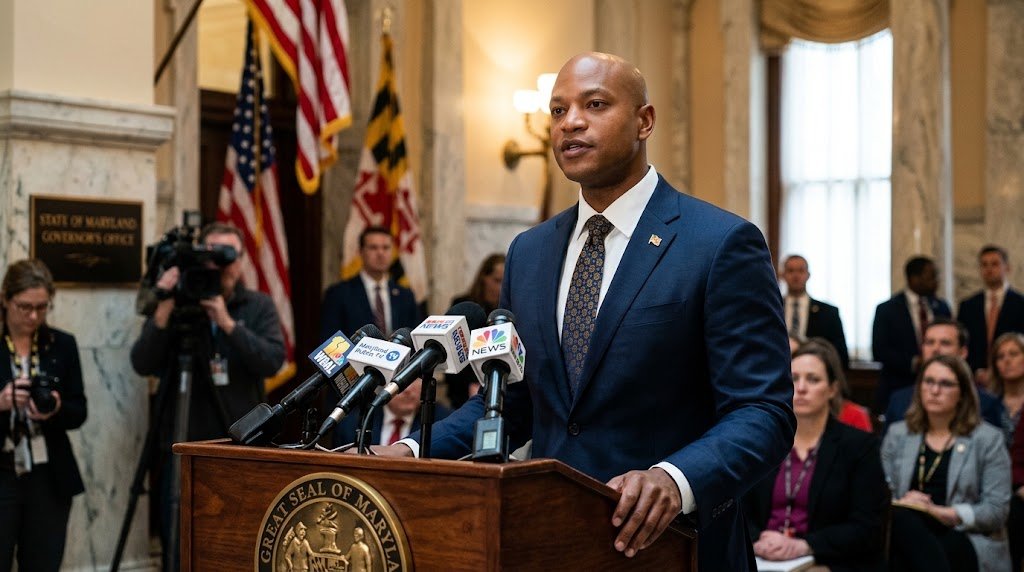
Maryland youth auto theft has become the focus of a new state directive, as Gov. Wes Moore has ordered the state’s Department of Juvenile Services (DJS) to coordinate a multiagency response in Baltimore City and Montgomery County. The directive, released on Tuesday, 13 October 2026, is aimed at children involved in vehicle thefts, including children too young to be prosecuted. It follows two fatal crashes this year in which stolen cars were allegedly driven by young children.
The order is addressed to DJS director Betsy Fox Tolentino and asks her to create a pilot program that can respond quickly when young people are linked to car thefts. Moore said Baltimore and Montgomery County are the two jurisdictions with the biggest increases in stolen cars this year. The governor framed the move as a way to intervene earlier, rather than waiting for a serious crash to become the first point of contact.
Maryland youth auto theft: what the directive requires
Moore said officials in both places need to do a better job of identifying children who steal vehicles, or who are most at risk of doing so. Under the pilot, the child, their family, social service providers and law enforcement would work together on an intervention. The aim is a coordinated response instead of separate agencies acting on their own.
The central element is what the directive calls a “specialized early intervention pathway.” It is aimed mainly at children under 13, who cannot be charged with most crimes in Maryland. The goal is to reach children showing worrying behavior before any charge is possible and to offer them targeted support services.
Moore also told Tolentino to look at a model used in Ramsey County, Minnesota, which includes St. Paul. Officials there launched an auto theft intervention project in 2021 that pairs law enforcement with trusted community members who step into the lives of at-risk young people. The directive does not change who can be prosecuted, and reporting on the two-page order says it does not propose expanding authority to charge children who cannot currently be charged.
The crashes behind the order
About two weeks before the announcement, a 69-year-old motorcyclist, Barry Wright, was killed at the intersection of North Dukeland Street and West North Avenue in West Baltimore. Police say a 12-year-old was driving the stolen car involved, and a teenage passenger was arrested. The case became a focal point in the debate over Maryland youth auto theft because of the driver’s age.
The second case happened in early August in Montgomery County. Police said seven children aged 12 to 15 were in a stolen sedan that crashed, killing another driver, a 58-year-old man on his way to work. Reporting by the Banner says the driver was 13, and police said two of the teenagers were already wearing ankle monitors over earlier robbery and auto theft charges. The victim’s family asked for privacy.
The accountability debate
The crashes have turned Maryland youth auto theft into an argument over how the justice system treats very young offenders. Baltimore State’s Attorney Ivan Bates and Police Commissioner Richard Worley have both said recently that they feel limited in holding child offenders accountable, citing recently passed laws or what they describe as a flawed youth justice system. At a news conference last week, Bates said the 12-year-old allegedly driving the car that killed Wright should have been charged with involuntary manslaughter, but that the legislature had recently barred charges for that offense, among others, against children that age.
Delegate Kathy Szeliga, a Republican critic of the current approach, has separately called for tougher consequences for repeat juvenile offenders. Her comments followed the Montgomery County crash, and she asked state and city leaders to tell young people that the behavior has to stop.
Both Bates and Worley welcomed the governor’s order on Tuesday. Bates pledged to work with the governor’s office and DJS on programs and to help address what he called loopholes in public policy. Worley said the prevalence of repeat offenses shows the need for targeted programming and services, and he pointed to Wright’s death and to that of three-year-old Jordan Bright, who was killed by a 14-year-old driving a stolen car.
What is still unclear
Published reports on the Maryland youth auto theft pilots do not say when they will begin, how they will be funded, how many children they could reach or how success will be measured. It is also unclear how officials will identify at-risk children before an incident occurs. I found no response from Montgomery County officials in the coverage reviewed.
The directive also leaves the charging limits Bates criticised untouched, because those are set by state law, not by DJS. Whether lawmakers revisit them is a separate question that the order does not address.