
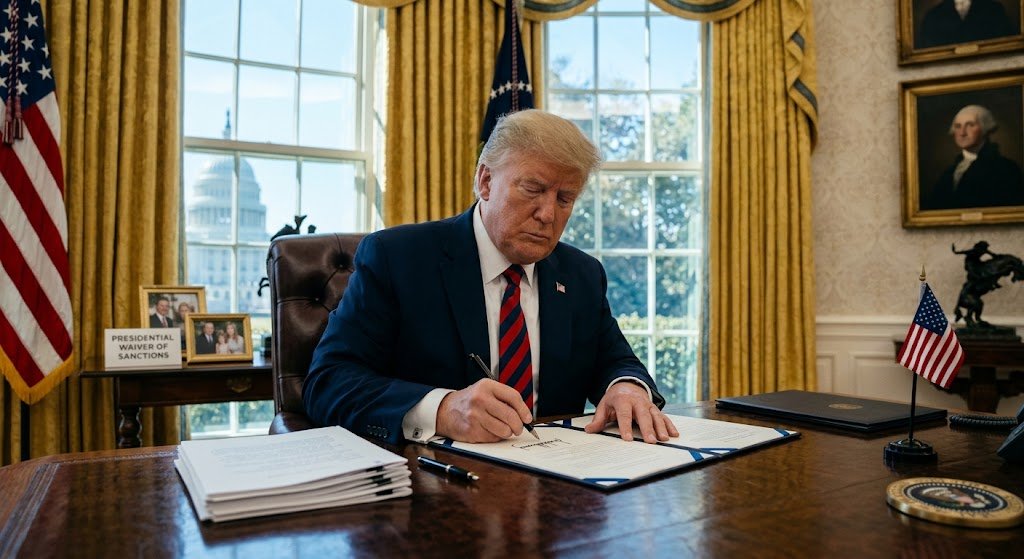
Trump waives Russia sanctions and tariffs in an executive order signed on Friday, October 16, two days before key penalties in a new US law were due to begin. The order sets aside duties on Russian goods and on the countries that buy the most Russian oil and gas. Those measures were due to take effect on Sunday, October 18, a month after Trump signed the law.
What the order actually does
The law is the Lindsey O. Graham Sanctioning Russia and Iran Act of 2026, which Trump signed on September 18. According to the text of the executive order, the act would have raised duties on Russian goods by 500 percent. It would also have added 100 percent on goods from the five largest importers of Russian oil and gas that knowingly made new purchases on or after October 18. A further 100 percent would have applied to the top five facilitators of Russian oil sanctions evasion. Trump waived all of those duties, along with a series of the act’s sanctions provisions against foreign persons.
The waiver rests on Section 115 of the act, which lets the president set aside penalties if he certifies to Congress that doing so serves US national interests. Trump said he submitted that certification, together with a report explaining its basis. The order itself does not say why the move serves the national interest, and the report has not been made public in the material reviewed.
It is also worth being clear about what the order leaves alone. It states that sanctions imposed under earlier executive orders on Russia are not affected. The waivers have no end date, and they stay in force until the president or the Secretary of State decides that further action is appropriate. In practice, that means the waivers can be reversed at any time. The order also directs the US Trade Representative, working with the State, Treasury and Energy departments, to monitor which countries keep buying Russian energy or help others evade sanctions, and to advise the president if changes seem warranted.
Why the White House acted now
The timing follows a week of shifts in US energy diplomacy. About a week earlier, Trump eased sanctions on Russian diesel and announced a deal with Vladimir Putin to bring diesel to the US market. Reuters reported that Americans already face higher costs, largely attributed to the US-Israeli war on Iran, and that analysts said the new tariffs could have pushed oil prices up further. The decision also comes only weeks before the US midterm elections.
CBS News reported that the administration’s aim is to ease prices by tapping Russian energy. The executive order itself gives no such explanation, so that reasoning comes from reporting rather than from the document.
Reaction in Washington and beyond
Congress had backed the law strongly. It passed the Senate 86-11 on August 7 and the House 262-159 on September 16. On October 13, twelve senators, including Republicans, wrote to Trump urging him to use the act against Russia’s main enablers, particularly China. Their letter came before the waiver, which makes the decision a direct break from that request.
Democratic lawmakers criticized the move. Representative Don Beyer said Trump had yielded to Putin, and Senator Elizabeth Warren said he was undermining congressional efforts to pressure Russia. Kremlin envoy Kirill Dmitriev, by contrast, welcomed the decision as an important and historic moment.
India, among the biggest buyers of Russian oil, had raised concerns about the bill before it passed. At the time of writing, no formal response from New Delhi or Beijing to the waiver had been found.
Who is affected
The clearest effect is on the trade penalties themselves. The tariffs that would have begun on October 18 will not apply, so refiners and governments in the major buying countries avoid an immediate US trade penalty. Before the waiver, an analyst at Rystad Energy said Indian and Chinese refiners were likely to seek exemptions, cut spot purchases and press for deeper Russian discounts rather than stop buying outright.
For American consumers, the picture is less certain. Some US lawmakers argue that the diesel deal will do little to lower fuel prices. That is their assessment rather than an established result, and there is not yet reliable evidence on whether the waivers will bring down pump prices for drivers and businesses.
The effect on Ukraine is disputed. Critics say sanctions relief could help fund Russia’s war, and Russia has continued to strike Ukraine’s energy infrastructure this week. How much extra revenue Russia would actually gain from the waivers is not yet known, and it will depend on how much oil and gas it sells and at what price.
What to watch after Trump waives Russia sanctions
Several developments could clarify the picture in the coming days. The Trade Representative’s monitoring reports on Russian energy purchases and sanctions evasion could prompt the president to change or lift the waivers. Secretary of State Marco Rubio is scheduled to visit Mumbai and Jamnagar from October 19 to 22, according to the State Department announcement reported by IANS, which will put India’s position on Russian oil in the spotlight. Lawmakers who backed the act may also press the administration for details of its certification and report.
Human Crisis News will update this story as these developments are confirmed.