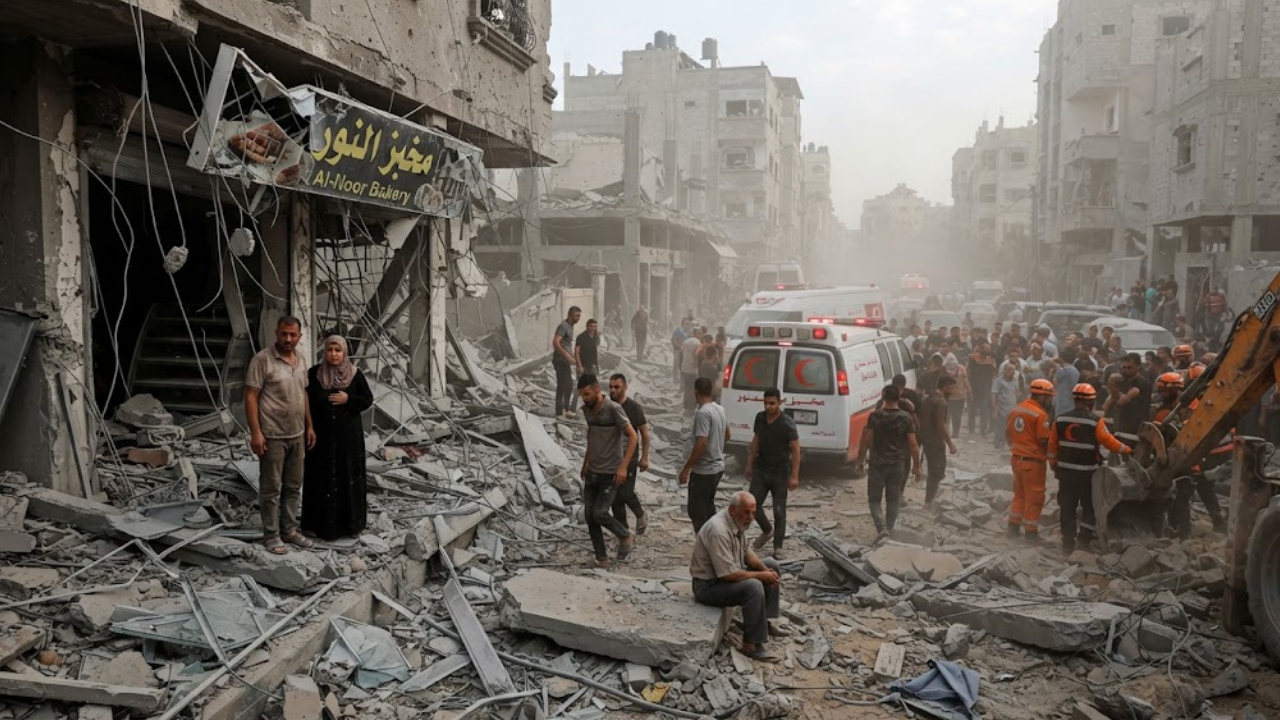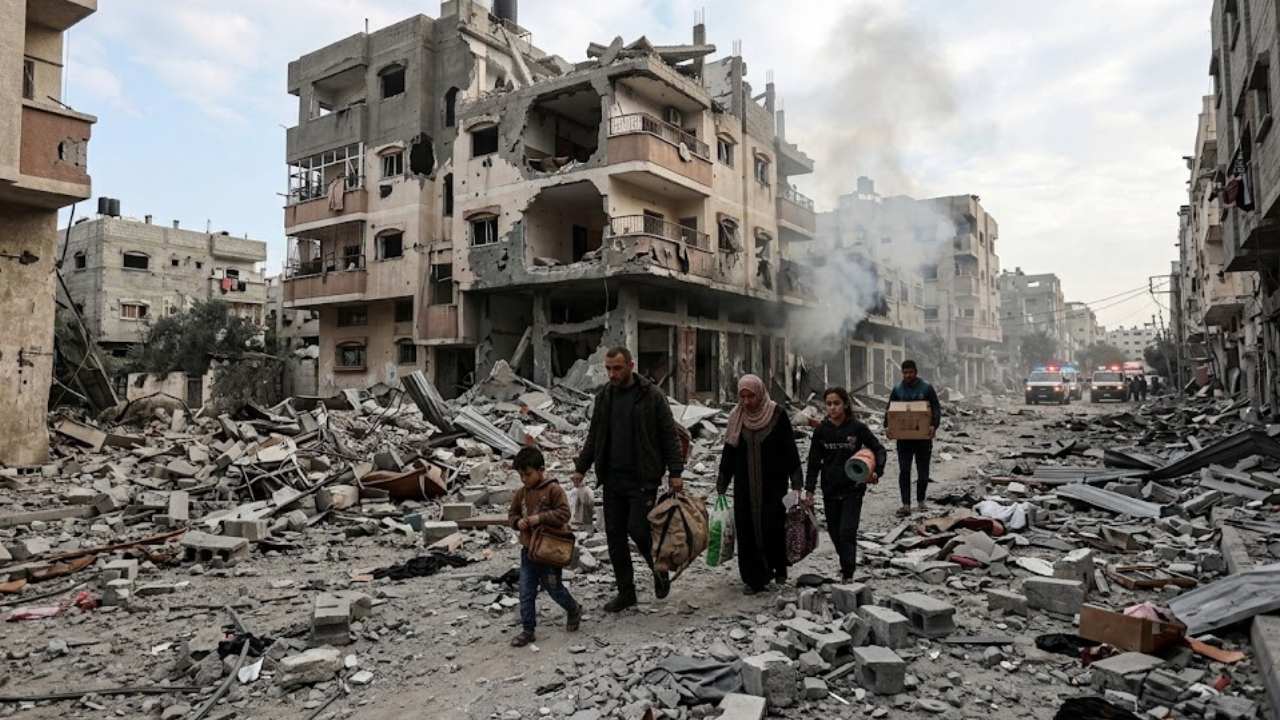
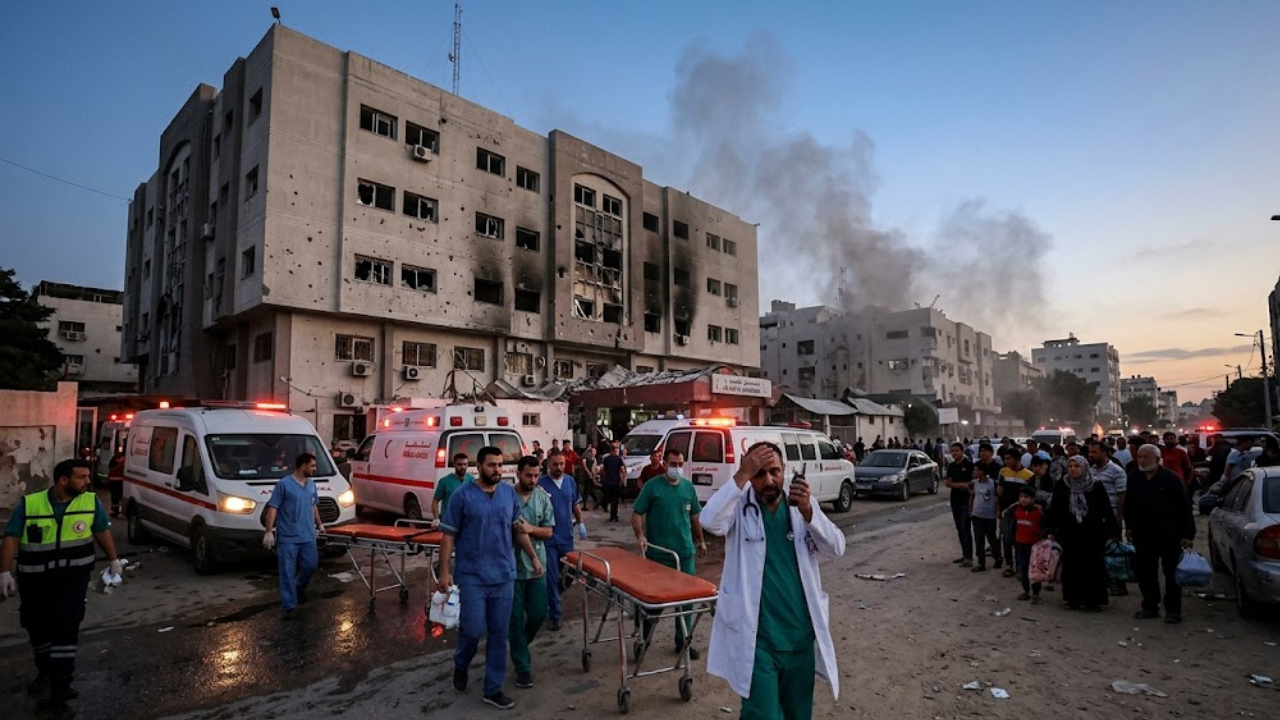
The Al Shifa Hospital strikes that unfolded this week in Gaza City are the latest sign that a formal truce has not stopped the wounded from arriving at the enclave’s largest medical complex. Doctors there spent Tuesday receiving casualties from a burst of Israeli air and ground activity in the nearby Al-Katiba district, a reminder that the hospital remains on the front line of a conflict a ceasefire was supposed to have ended. A woman and two children were killed and eight other people were wounded, according to the hospital’s director, while a separate incident east of Deir al-Balah left another child dead from gunfire, medical sources told the Wafa news agency – details corroborated by The National’s on-the-ground reporting.
The bloodshed unfolded on September 1, roughly eleven months after a US-brokered truce took hold in the enclave on October 10, 2025 – a truce that has curbed, but by no means stopped, the flow of wounded and dead arriving at Gaza’s hospitals.
What Triggered the Al Shifa Hospital Strikes
The violence traces back to an Israeli-backed raid west of Gaza City aimed at Muein Al-Arabid, a man Israeli officials describe as the head of Hamas’s internal security apparatus and someone allegedly involved in hiding hostages and rebuilding the group’s capabilities. According to Gaza’s government media office, the operation went wrong when Israeli special forces were spotted mid-mission; air power was then called in, with more than ten warplanes striking the area in quick succession. Witnesses on the ground counted at least fifteen distinct strikes, while other monitors put the figure closer to eighteen, and drones were reported dropping explosives on top of the air assault.
By the time the operation ended, Al-Arabid had been captured and wounded, according to Gaza’s Interior Ministry, which said his wife was killed and several of his children injured in the process. Two vehicles on nearby streets were also hit, and Palestinian medics worked to pull bodies from the wreckage as families sheltering in homes and shops found themselves trapped by the fighting.
Defence Minister Israel Katz, speaking from a community near the Gaza border, confirmed that “a senior Hamas terrorist was arrested” and added: “We do not wait for threats, but hunt down Hamas terrorists, thwart them and destroy their terror infrastructure.” A military spokesperson later said the IDF had struck “several targets in the Gaza Strip a short time ago in order to eliminate threats to security forces,” and maintained there were “no casualties among our forces” – a claim that contradicted Gaza’s media office, which said several Israeli commandos had been killed or wounded during the raid.
Al Shifa Hospital’s Role in a Ceasefire That Keeps Breaking
Al Shifa, the largest medical complex in the Gaza Strip, has functioned throughout the war as both a treatment center and an informal record-keeper of the conflict’s toll – its director, Mohamed Abu Selmiya, is frequently the first official to confirm casualty figures to international media. That pattern repeated itself this week: the Al Shifa Hospital strikes became known to the outside world largely because the hospital’s own tally formed the basis for reporting on the Al-Katiba violence.
The hospital’s continued exposure to violence is not new. In August 2025, an Israeli strike on a journalists’ tent just outside its main gate killed seven people, including Al Jazeera correspondent Anas Al-Sharif, and damaged part of the hospital’s emergency department – an attack that drew condemnation from press freedom groups even as fighting was meant to be winding down. That such an attack could occur steps from a hospital gate speaks to how porous the line between “ceasefire” and active combat has become in Gaza City, where a truce exists on paper more securely than it does in practice.
Hamas described Tuesday’s raid as a continuation of what it called a campaign against Palestinian civilians that has never genuinely paused, accusing Israeli authorities of disregarding international humanitarian law despite the formal end of hostilities. Israel, for its part, frames such operations as targeted counterterrorism actions distinct from renewed war – a distinction that offers little comfort to the medical staff who treat whoever the strikes leave behind, regardless of how the operation is categorized.
The Human Cost Behind the Casualty Count
What is striking about the current phase of the Gaza war is how routine this kind of episode has become. According to the Palestinian Health Ministry, whose figures the United Nations considers reliable, at least 1,326 Palestinians have been killed by Israeli fire since the October 2025 ceasefire took effect – a toll that stood at roughly 1,288 just a week earlier, according to Al Jazeera’s separate reporting citing the same ministry. The discrepancy reflects how quickly the count moves in either direction depending on the day’s events rather than any dispute over the underlying data.
Among the recent dead are ordinary residents with no apparent connection to the fighting: a four-year-old boy killed in a strike on a house in the Bureij refugee camp in late August, and civilians hit in earlier strikes on a water desalination plant, a mosque, and a warehouse holding humanitarian supplies. These are not front-page casualties in most global coverage, yet they represent the daily reality for families in Gaza City and central Gaza, where a formal end to the war has not translated into an end to the dying.
For the doctors and nurses at Al Shifa, the distinction between “war” and “ceasefire” has practical meaning mainly in the pauses between incidents – the intervals in which supplies can be restocked and the wounded from the last incident can begin to recover before the next one arrives. Tuesday’s casualties, hospital staff indicated, were treated alongside patients still recovering from earlier rounds of violence, in a facility that has rarely had the chance to fully step back from crisis mode since 2023.
What Comes Next
Israel has not said whether it considers the Al-Katiba operation complete or part of a broader campaign against Hamas’s internal security structure. Gaza’s Interior Ministry, meanwhile, said Al-Arabid had simply been carrying out ordinary duties tied to maintaining order in the Strip when he was seized – a characterization Israeli officials dispute.
With the Board of Peace’s phased plan for Gaza’s post-war governance still unresolved and Hamas resisting full disarmament, mediators including the United States face renewed pressure to clarify what activities the ceasefire actually prohibits – a dynamic explored further in our earlier report on the truce heading toward a point of no return. Until that ambiguity is resolved, the Al Shifa Hospital strikes and others like them are likely to remain where Gaza’s ceasefire is tested most directly – not in diplomatic statements, but in emergency wards.