
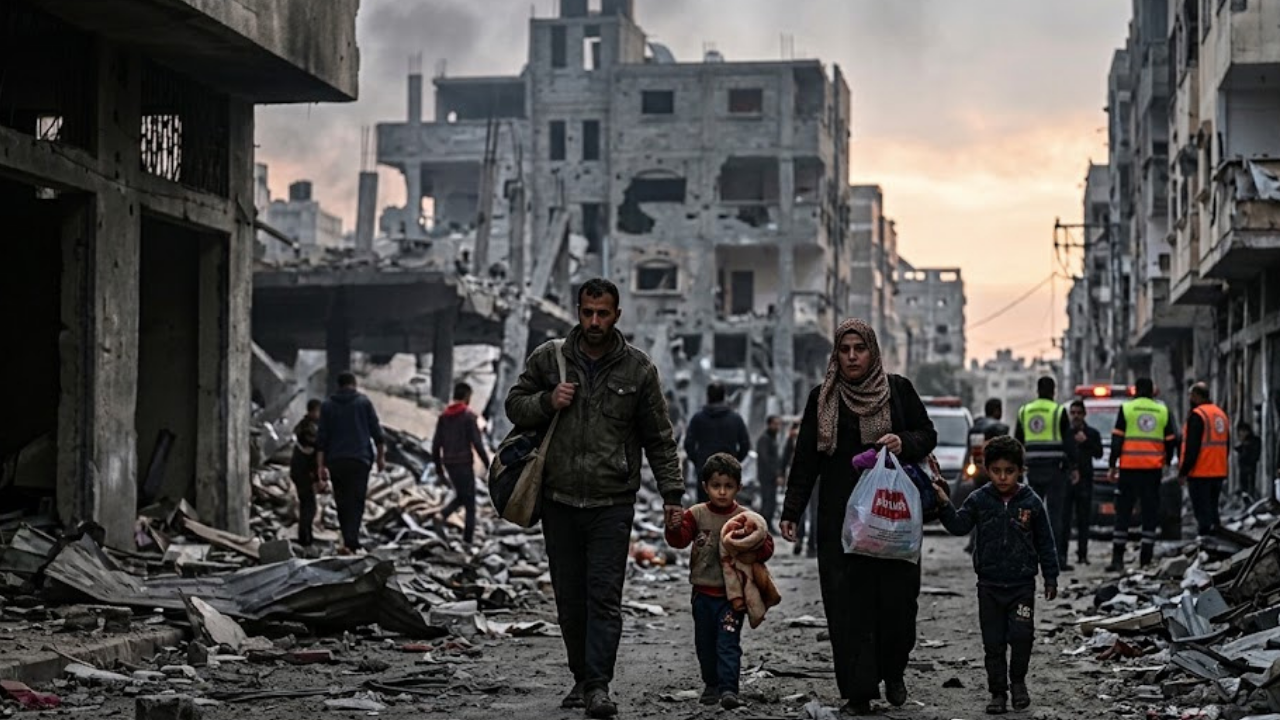
NEW YORK – Ten months after the guns fell silent over Gaza, the official Washington put in charge of preserving that quiet told the UN Security Council on Wednesday that the process is approaching a Gaza ceasefire point of no return. Nickolay Mladenov, high representative for Gaza on President Donald Trump’s Board of Peace, said a full collapse of the truce would not be a stumble the process could recover from – it would be, in his words, “a point of no return for everyone.”
The warning landed against a grim backdrop. Gaza’s Ministry of Health has now tied at least 1,288 deaths and 4,290 injuries to Israeli fire since the ceasefire took hold in October 2025, according to figures cited by Al Jazeera – a toll that has climbed steadily even as the wider war has, on paper, been over for nearly a year.
What a Gaza Ceasefire Point of No Return Would Mean on the Ground
Mladenov’s language was unusually blunt for a diplomat tasked with defending the very peace process he was briefing the Council on. He questioned aloud whether the strikes Israel continues to carry out inside Gaza are even achieving their stated aim, asking the Council, in a formulation reported by the Washington Times, whether hitting a single munitions depot after three years of war and two decades of military operations would really stop Hamas from rearming – and answering, in the same breath, that it would not.
According to reporting from Life News Agency, he went further, arguing the operations do nothing to change the conditions that produced the October 7, 2023, attack in the first place; they simply delay disarmament and stall the handover to civilian rule that the roadmap depends on.
That roadmap, built around a July 30 agreement in which Hamas consented to decommission its weapons under the supervision of the nascent International Stabilization Force, is the mechanism the Board of Peace has been trying to protect.
Mladenov told the Council the plan “has moved from the negotiating table to the engineering table,” a signal that implementation, not negotiation, is now the battleground – even as Israeli Prime Minister Benjamin Netanyahu, contending with a difficult re-election fight, has publicly rejected elements of the broader US plan in recent weeks. Push the process past its breaking point, he suggested, and there is no walking a Gaza ceasefire point of no return back.
Why This Warning Matters Beyond the Headlines
For a population that has already absorbed catastrophic losses – more than 70,000 people killed since the war began in October 2023, according to Gaza health authorities cited by the UN – the difference between “ceasefire” and “peace” has become almost technical. Bodies are still being pulled from under rubble.
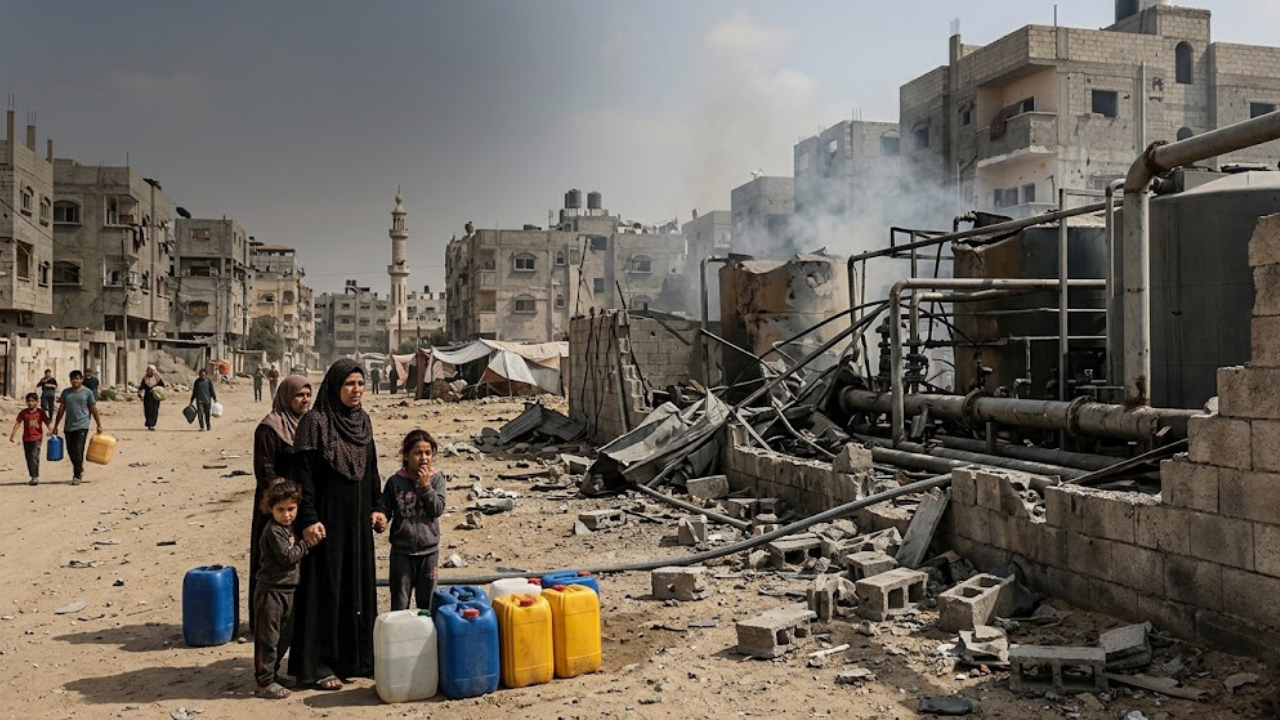
Skin infections tied to overcrowded shelters and scarce water are still spreading among children. The Yellow Line marking the boundary of Israeli military control has, according to satellite analysis reported by Human Rights Watch, crept westward past its agreed position, swallowing water points and clinics as it goes.
What makes Mladenov’s remarks notable is not that Gaza remains dangerous – that has been documented, in granular and repetitive detail, for nearly a year of UN situation reports. It is that the official whose job is to reassure the world the plan is working chose instead to tell the Security Council that his own side’s tactics may be pushing the process toward collapse.
He did not spare Hamas either. The group’s commitment to halt all military activity, he said, “is still to be met in full,” and every weapon its fighters continue to carry, every tunnel still being dug, “sets the process back and hands an argument to those who want to resume war.”
That dual warning – aimed at an armed occupier and an armed non-state actor in the same breath – is what mainstream wire coverage of Gaza often compresses into a single “ceasefire holds, mostly” paragraph. It deserves more attention than that, because a Gaza ceasefire point of no return could be reached from either direction, not just one.
The strain is visible in the pieces of the roadmap that were meant to hold it together. The International Stabilization Force, the multinational unit tasked with overseeing Hamas’s disarmament, has still not deployed at the scale the plan envisioned. And the civilian infrastructure the ceasefire was supposed to protect keeps taking hits: HCN’s earlier reporting on the strike on Gaza’s main desalination plant documented how a single attack can undo months of slow humanitarian progress.
The mounting Palestinian death toll under a ceasefire that was supposed to have ended the killing echoes a pattern HCN has tracked before — including in our coverage of the journalists killed in the Nasser Hospital strike, a reminder that even those documenting the war have not been safe from it.
The Numbers Behind the Warning
The casualty count behind Mladenov’s Gaza ceasefire point of no return warning has moved in fits and starts since October. Six months into the truce, Human Rights Watch documented at least 856 Palestinians killed and 2,463 wounded by continuing Israeli strikes, while the UN’s human rights office separately counted at least 167 people killed near the Yellow Line alone between mid-October and late January, including 26 children.
By this week, that cumulative toll – spanning strikes, gunfire, and shelling across the Strip – had risen past 1,280, according to the Ministry of Health figures relayed to the Security Council.
Humanitarian conditions have improved from the acute famine-level crisis of 2025, Mladenov acknowledged, but he described the gains as “real” and simultaneously “very easily reversible,” a phrase that captures how thin the margin still is. Nearly 1.7 million people remain displaced across the Strip, and funding shortfalls continue to constrain the scale-up of aid that the ceasefire’s own terms promised.
What Comes Next
Mladenov framed the choice ahead in stark, binary terms: a Gaza that is “disarmed, rebuilt and reconnected to the world,” or one that is “rearmed, divided and in rubble,” raising what he called a radicalized generation with the next war already visible on the horizon. He said the Trump plan still offers Palestinians a “credible pathway to a political horizon,” including an eventual two-state solution – an outcome Netanyahu has firmly opposed.
For now, the disarmament timeline triggered by Hamas’s July 30 acceptance remains stalled, the International Stabilization Force has yet to deploy in force, and Israeli strikes inside Gaza continue at a reduced but persistent rate.
Palestinian UN Ambassador Riyad Mansour told the same Council session that continued Israeli annexation moves in the West Bank are separately eroding the prospects for any regional peace. No date has been set for the next formal review of the roadmap’s implementation – leaving open the question of how close a Gaza ceasefire point of no return really is, and who, if anyone, still has the power to pull it back.
One thought on “Gaza Ceasefire Point of No Return: Urgent Alert, 1,280 Dead”