Delegations from Uganda and Burundi traveled to Israel last week for talks on joining the Gaza stabilization force, the multinational mission the Board of Peace hopes will eventually field 20,000 troops across the territory. Uganda’s parliament has already cleared the way for roughly 1,200 personnel. Burundi has sent senior officers to explore participation but has not yet signed on.
The talks come at a moment when the broader coalition behind the Gaza stabilization force is still assembling itself piece by piece, nearly a year after the ceasefire it is meant to protect took hold.
Two African Nations, Two Different Stages of Commitment
The distinction between the two countries matters. Kampala’s process is largely administrative at this point. With legislative approval secured earlier this month, Ugandan officials are now working through logistics rather than politics, according to officials familiar with the discussions.
Bujumbura’s position is less settled. A Burundian military official told the Associated Press that a three-officer delegation had been dispatched specifically to assess the mission. The country’s leadership appeared inclined to move forward, though no formal agreement has been reached. A Board of Peace official, speaking anonymously because they were not cleared to discuss ongoing negotiations, described the Israel meetings as an exchange of operational knowledge. The Burundian side, the official said, signaled genuine interest in eventually joining the mission.
If Bujumbura follows through, it would become the sixth nation to formally commit troops to the force. It would join Morocco, Kosovo, Kazakhstan, Albania and Indonesia – the last of which has pledged as many as 8,000 personnel and taken on the deputy command role. Morocco’s contribution is expected to run to about 500 soldiers. Kosovo, Kazakhstan and Albania together account for roughly 80 more. Egypt and Jordan, meanwhile, are training Palestinian police rather than deploying troops directly.
Against a stated target of 20,000 soldiers plus 12,000 locally recruited police, the Gaza stabilization force remains well short of its intended size a full year after the ceasefire took hold.
A Widening Coalition, Slow Momentum
Uganda and Burundi are not the only recent additions to the roster. Turkish Foreign Minister Hakan Fidan announced at an earlier Board of Peace gathering in Washington that Turkey would also contribute troops, joining the five founding contributors already committed. That same meeting drew representatives from roughly 40 countries and produced pledges of close to $17 billion toward Gaza’s reconstruction and stabilization, underscoring how much of the mission’s early momentum has come through financial commitments rather than boots on the ground.
That gap – between money pledged and troops actually deployed – is precisely what makes the Uganda and Burundi talks notable. Financial pledges are relatively easy to announce at a podium in Washington. Sending soldiers into a still-contested territory is a different kind of commitment, one that requires parliamentary approval, logistics planning, and a government’s willingness to accept the risk to its own personnel.
The Diplomatic Bottleneck
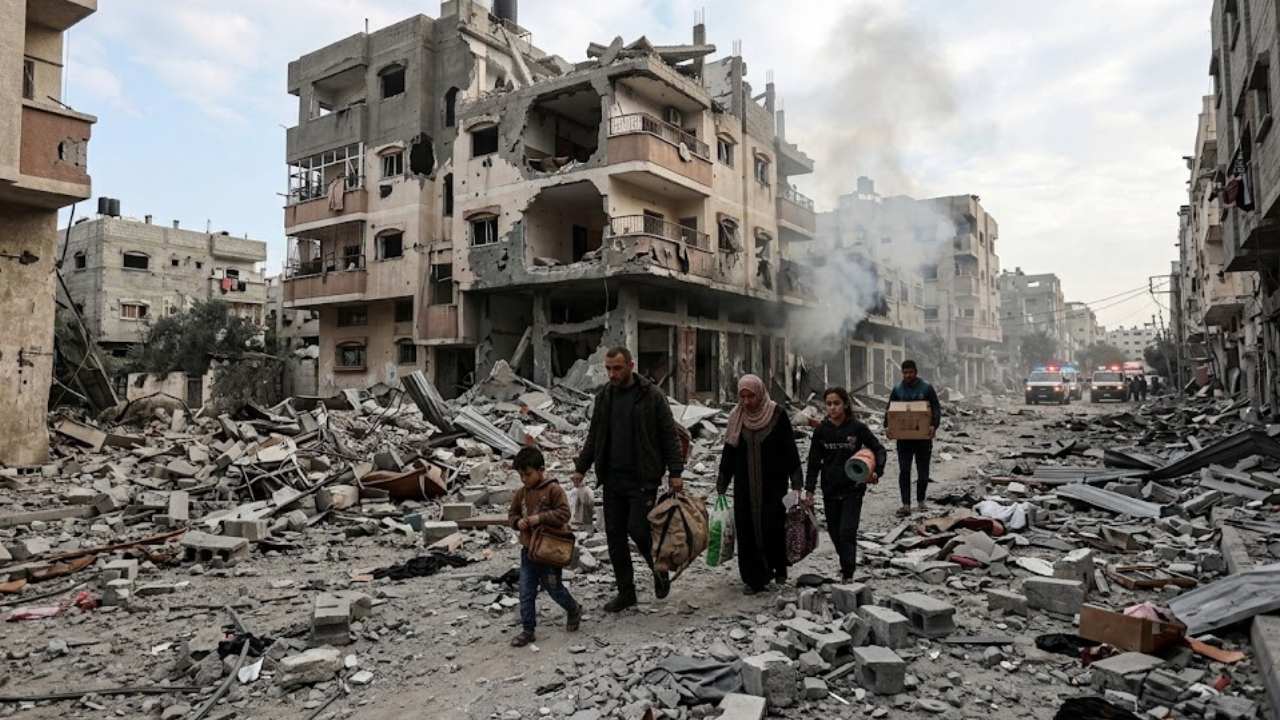
The ceasefire that took hold in October 2025 has been unable to move past its most contentious clause. Israeli Prime Minister Benjamin Netanyahu has refused to withdraw from the roughly 60 percent of Gaza his forces still control until Hamas is fully disarmed. Hamas, meanwhile, has accepted the latest American proposal for a phased handover.
Earlier this month, a US delegation that included negotiator Jared Kushner held extended talks with Hamas’s leadership and then with Netanyahu. Even so, officials came away without a firm Israeli commitment on timing. For potential troop contributors to the Gaza stabilization force, that unresolved standoff is not a minor detail. It defines the security environment their soldiers would be walking into, and it may help explain why some governments, Burundi included, are moving deliberately rather than announcing deployments outright.
The Part of the Story Rarely Told
Coverage of Gaza’s postwar security architecture tends to center on the diplomacy in Washington and Tel Aviv. Troop-contributing nations often get reduced to a list of flags.
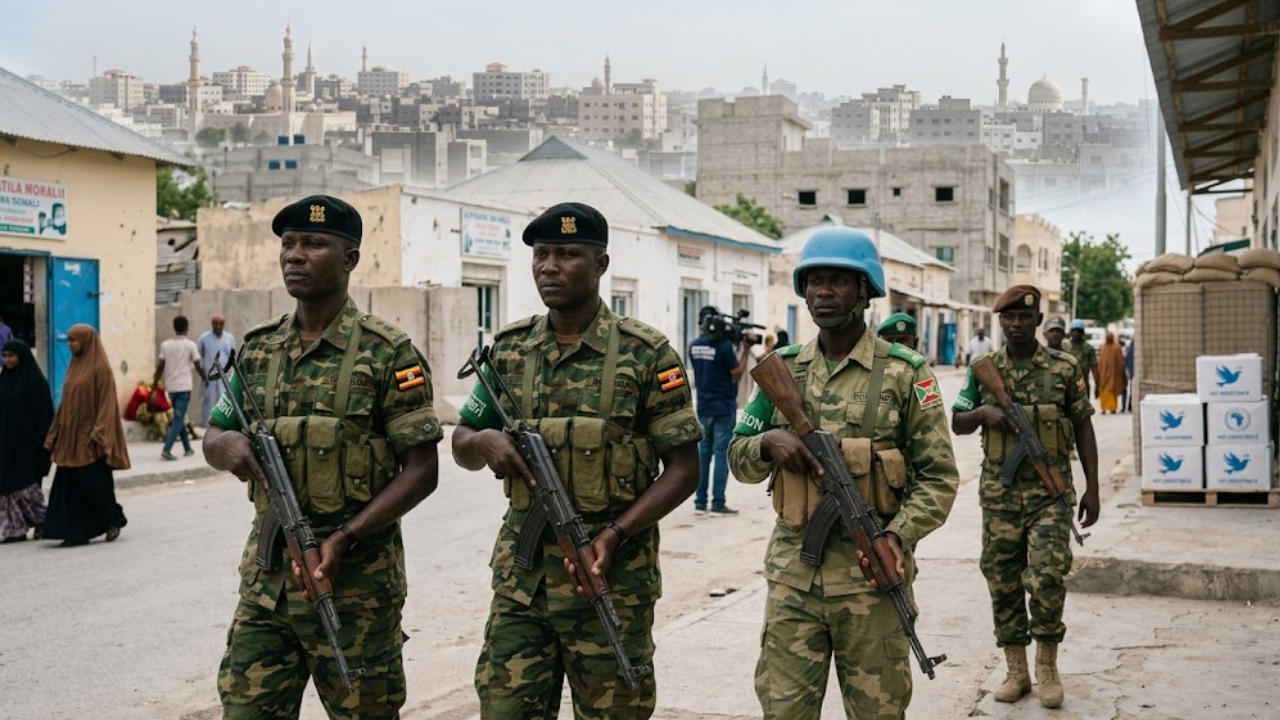
It is worth pausing on what Uganda and Burundi would actually bring to Gaza. Both countries have spent close to two decades embedded in the African Union’s mission against al-Shabab in Somalia. That campaign gets a fraction of the international attention paid to Gaza, despite producing comparable levels of hard-won experience in exactly the kind of urban, faction-heavy security work the mission will require. Paul D. Williams, who directs the security policy studies program at George Washington University, has pointed to that Somalia record as a genuine asset the two governments would carry into any Gaza deployment.
Burundi’s potential involvement carries its own layer of context that rarely makes it into wire copy. It is among the poorest nations in the world, with an economy still built largely around coffee and tea exports. Its modern history has also been shaped by deep intercommunal strain between Hutu and Tutsi communities.
So a country with that domestic backdrop is now positioning itself as a security contributor thousands of kilometers away, following earlier deployments to the Central African Republic and Somalia under the African Union banner. That choice says something about how peacekeeping has become one of the few forms of international engagement available to smaller, resource-constrained states looking to matter on a global stage – even as urgent needs persist at home.
It is a dynamic HumanCrisisNews.com has traced elsewhere this year: in the second-largest Ebola outbreak on record spreading through eastern DRC, unfolding in the same region where Burundi and Uganda have themselves deployed peacekeepers, and in Sudan, where children have been forced out of school by a war that draws a fraction of the global attention paid to Gaza. Global attention is finite, and it rarely lands evenly.
None of that erases the risk calculus involved in Uganda and Burundi’s potential Gaza role. Soldiers from Kampala and Bujumbura would be entering a territory where the underlying political dispute remains unresolved – and where even the first 200-strong contingent has yet to fully deploy more than a month after Israeli cabinet approval.
What Comes Next for the Gaza Stabilization Force
Uganda’s roughly 1,200-strong contribution is expected to move from parliamentary approval to operational planning in the coming weeks, according to officials familiar with the Board of Peace’s internal timeline.
Burundi’s path is less certain. Officials describe the talks as ongoing, with no target date set for a formal decision. Both governments’ final postures will likely hinge on developments elsewhere – chiefly, whether Washington can secure the Israeli commitment on withdrawal that has so far eluded even direct engagement from Kushner’s team, and whether Hamas’s stated acceptance of the latest proposal survives contact with its own implementation.
Whether the Gaza stabilization force reaches anywhere close to its 20,000-troop target may ultimately depend less on how many countries agree in principle, and more on how many are willing to do what Uganda has already done: turn a pledge into a parliamentary vote, and a vote into soldiers on a plane.
Developing: Neither government has issued a public statement confirming a final decision. Details in this article regarding Burundi’s participation should be treated as provisional pending an official announcement.