
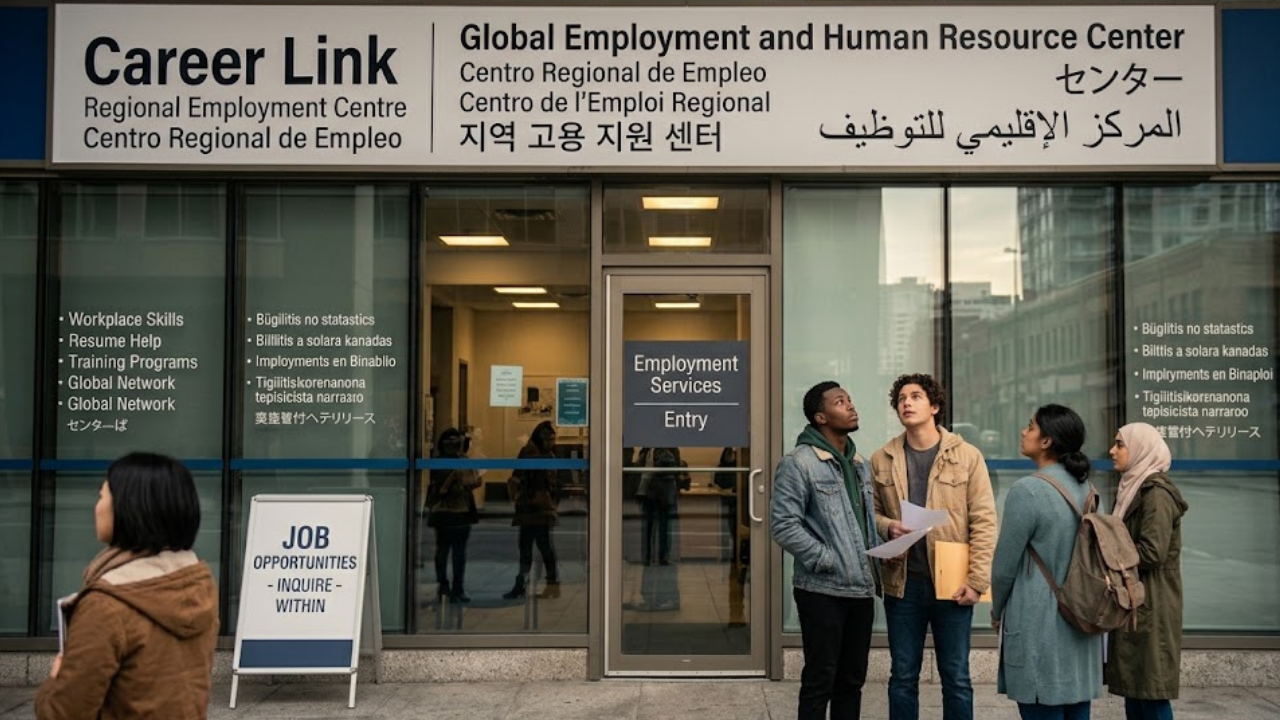
Two years after youth joblessness touched its lowest point in two decades, the trend has reversed. The global youth unemployment crisis now stands at its worst point since 2023: the global youth unemployment rate climbed to 12.4% in 2025, leaving 67 million people between 15 and 24 without work, according to the International Labour Organization. The finding comes from the ILO’s Global Employment Trends for Youth 2026: Back to the Future, released in Geneva on August 11, 2026.
The report’s headline number looks modest – a 0.1 percentage point rise since 2023. But the figures beneath it describe something closer to a structural shift than a blip.
Unemployment among young people worsened or held flat in eight of the world’s eleven subregions between 2023 and 2025. 105 countries recorded a rise in youth joblessness, against just 58 where it fell. It is this breadth, more than the headline number, that has turned this into a genuinely global youth unemployment crisis rather than a regional downturn.
Behind the Global Youth Unemployment Crisis: A Vanishing Middle Rung
For decades, a predictable set of jobs – clerical work, administrative support, retail and sales positions, and manufacturing roles – functioned as the first rung on the career ladder for millions of young people leaving school. The ILO’s report identifies the erosion of exactly these middle-skilled jobs as the central mechanism driving the current downturn. As this rung disappears, the report argues, young workers are left with a much harder jump between education and stable employment.
Artificial intelligence compounds the problem without yet dominating it. The ILO estimates that 6.1% of jobs held by workers aged 15 to 29 sit in occupations highly exposed to AI-driven task automation. Many of these overlap precisely with the clerical and administrative roles already shrinking for other reasons – weak economic growth, cautious hiring, and employers increasingly demanding prior experience even for entry-level postings.
Demand is holding up or growing in technical fields tied to science, health, and engineering. That contrast suggests the global youth unemployment crisis is less a wholesale disappearance of youth jobs than a narrowing of which skills open the door. The scale of disengagement is captured by a second measure: the share of young people not in employment, education or training (NEET), which rose to 20% in 2025 – some 257 million people, nine million more than two years earlier.
That burden falls unevenly by gender. Women make up more than two-thirds of the world’s NEET youth. The NEET rate among young women, at 27.4%, is more than double the 13.1% rate for young men – a gap the ILO links to unpaid care responsibilities, limited childcare access, and outright discrimination in several regions. Geography matters too. The overall adult unemployment rate held steady at 4.9% in 2025 – figures broadly consistent with independent World Bank labor-market data – meaning a young jobseeker is now roughly 3.4 times as likely to be out of work as an older one.
Some of the sharpest deteriorations have shown up not in the world’s poorest economies but in wealthier ones. Youth unemployment in Northern America climbed from 8.3% in 2023 to 9.8% in 2025. Northern, Southern and Western Europe held at a combined 15%, with 20 of 29 countries in that group reporting weaker job prospects for young people than two years earlier.
A Global Youth Unemployment Crisis That Rarely Makes Headlines
A youth jobs crisis rarely produces the kind of image that leads a news bulletin – no single dateline, no visible disaster. It shows up instead in slower, quieter statistics.
Nearly nine in ten young workers in low- and lower-middle-income countries are employed informally, without the social security or labor protections that come with a formal contract, according to the ILO’s analysis. For the majority of the world’s working youth, unemployment is not the only risk – underemployment, insecure income, and total absence of a safety net often coexist alongside whatever work they can find.
It is this quieter half of the story – informality, invisible underemployment, care burdens absorbed disproportionately by young women – that tends to sit outside the headline unemployment figure. Yet the ILO’s own report treats it as central to understanding why 257 million young people are effectively locked out of both the classroom and the workplace at once.
It is the same kind of statistical, slow-moving hardship that HumanCrisisNews has traced elsewhere: in Sudanese children pushed out of school by war, and in communities absorbing disaster and conflict with little global attention, among them Flores after its earthquake, the missile-struck village of Pechenihy, and the Ebola outbreak spreading through the DRC. Like this one, those crises unfold gradually rather than in a single headline moment.
ILO Director-General Gilbert F. Houngbo framed the stakes in direct terms: “When young people are locked out of quality employment, countries lose talent, productivity and social cohesion. Creating decent jobs for young people is not just a social imperative; it is one of the smartest investments a country can make.”
Sukti Dasgupta, the ILO’s Director of the Employment, Skills and Sustainable Enterprises Department, added a note of caution specifically on the role of artificial intelligence in the shift: “There is increasing noise around AI. While the direct impact on jobs is still unclear, we must not be complacent and underestimate the risks.”
What Comes Next
The ILO’s report does not end on the diagnosis. It lays out a policy response built around five pillars: faster job creation targeted at young people, skills development matched to where labor demand is actually growing, modernized public employment services, expanded social protection for those working informally, and human-centered governance of AI in the workplace – an attempt to steer the technology’s disruption of entry-level work rather than simply absorb it.
Whether governments act on those recommendations will determine if the 2025 figures mark a temporary setback or the start of a longer decline in the global youth unemployment crisis. For now, the data leaves little ambiguity about direction: after a brief post-pandemic recovery, more countries are seeing youth unemployment rise than fall, and the pathways that once carried a generation from school into stable work are narrowing faster than new ones are opening.