A trade relationship built over three decades unraveled further this weekend, when Washington and Ottawa let a negotiating deadline pass and instead reached for tariffs. The Canada-US tariff dispute entered a sharper phase on August 22, when a 50% U.S. duty on roughly $20 billion of Canadian goods took hold.
Canada’s own countermeasures are now set to land on September 8. Behind the trade figures sit steelworkers in Ontario, dairy farmers on both sides of the border, and small shop owners recalculating price tags – the people economists agree will ultimately carry the cost of this Canada-US tariff dispute.
How the Latest Escalation Happened
Three days of talks in Washington collapsed late on August 21, just hours before a deadline U.S. President Donald Trump had set for a new trade agreement, according to Al Jazeera. When the clock ran out at 12:01 a.m. Eastern time on August 22, the U.S. followed through on tariffs it had first signed into effect on July 20.
The start date had already been delayed once, moving from August 19 to the 22nd. The duties reach across a wide swath of the Canadian economy – wine, furniture, dairy, cement, clothing, fishing rods and hockey equipment among them – and apply to goods worth about 5.5% of everything Canada sells into the United States.
Unlike earlier rounds of tariffs, these hit even products that meet the rules of the Canada-United States-Mexico free trade agreement, and the White House has set no expiry date on them. This latest Canada-US tariff dispute escalation, the administration says, is a response to what it calls unfair Canadian treatment of American dairy, alcohol and motor vehicle exports.
Canadian Prime Minister Mark Carney announced two days later that his government would respond in kind. “Canada will match Washington’s new tariffs dollar for dollar in order to protect Canadian workers, farmers, families, and businesses,” Carney told reporters in Ottawa.
He said the retaliation, which takes effect September 8, will target American steel, dairy, appliances, agricultural equipment, pulp and paper, and electronics, with further details and industry support measures to follow in the coming days. Carney described the American terms on offer as economically unsound and said they would have limited Canada’s freedom to strike trade deals with other partners – conditions he said Ottawa could not accept.
Trump answered on his Truth Social platform, writing that “Canada wants the benefits of being a State, without being one” and accusing Canada of having overcharged American farmers for years. U.S. Trade Representative Jamieson Greer told Fox News that no further talks with Canada are currently planned.
The Canada-US Tariff Dispute and Its Toll on Canadian Workers
This is not the opening chapter of the Canada-US tariff dispute – it is closer to the second anniversary of it. The conflict traces back to February 2025, when Trump imposed sweeping tariffs on Canadian imports, including a 25% levy on most goods and 10% on energy, prompting Canada to retaliate against tens of billions of dollars in American products.
Steel and aluminum tariffs, and later a 50% rate on those metals, followed within weeks. Manufacturers began cutting staff almost immediately: the United Steelworkers union reported roughly 200 members laid off by the end of March 2025, while Ontario and Quebec-based Canada Metal Processing Group cut 140 positions and Algoma Steel let go of about 20 workers, citing the tariff threat directly.
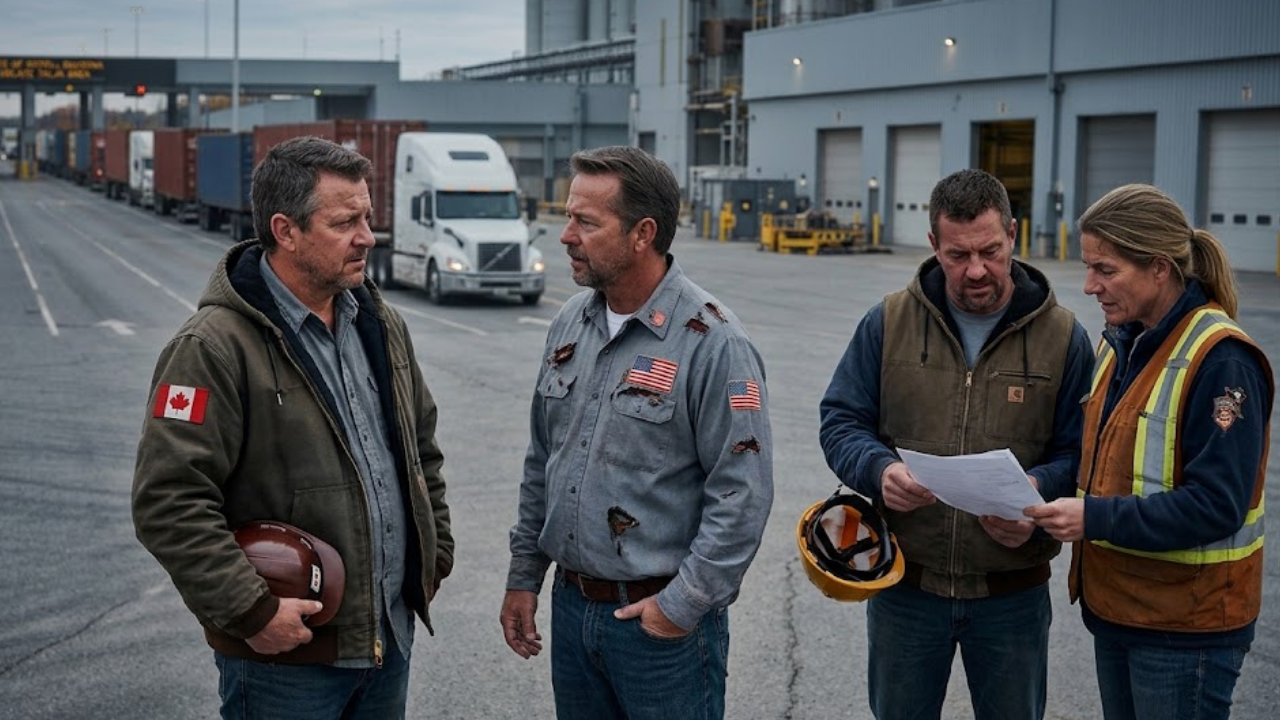
It is a pattern this outlet has traced before in its coverage of the global youth unemployment crisis: trade shocks tend to fall hardest on workers who have the least cushion to absorb them. Those early layoffs carried a human weight that statistics alone don’t capture. At the Ivaco Rolling Mills plant in L’Orignal, Ontario, worker Scott Noseworthy said the tariffs “kind of hit us and brought us to a halt,” describing the uncertainty as especially hard to manage with a young daughter at home.
In the same town, resident Louise Seguin, whose son has worked at the plant for fifteen years, said plainly that without Ivaco, “there’s no more work here.” A year on, the damage had spread well beyond a handful of plants. By April 2026, Canada’s manufacturing sector – the industry most exposed to U.S. steel, aluminum and auto tariffs – had shed 51,800 jobs over the preceding twelve months, more than any other sector, with Ontario absorbing the bulk of the losses.
Now, with the newest 50% duties in force, economist Trevor Tombe’s analysis suggests as many as 90,000 Canadian jobs could ultimately be affected by the Canada-US tariff dispute, concentrated in Ontario, Quebec and British Columbia. Small businesses are being squeezed from a different angle: in Toronto, toy store owner Jill Rochon has been relabeling merchandise imported from the U.S. as her own costs climb, a quieter but no less real version of the same pressure hitting the country’s factory floors.
Who Bears the Cost North and South of the Border
Ottawa is not alone in warning that ordinary households will feel this fight. The Business Roundtable, representing some 200 American chief executives, cautioned that the new tariffs “risk raising costs for American businesses and families,” a sentiment echoed by Democratic governors in border states. New York Governor Kathy Hochul wrote that Trump’s approach amounted to “needlessly picking fights with our allies and raising prices here at home.”
The numbers back up the concern. According to the Yale Budget Lab, the current U.S. tariff regime – which has pushed the average effective tariff rate to roughly 11%, the highest since the 1940s – is adding about 1% to consumer prices in the short run, assuming the costs are passed through to shoppers rather than absorbed by importers.
The U.S. Congress’s Joint Economic Committee, using Treasury and Congressional Budget Office data, projects American households will pay more than $2,500 in tariff-related costs in 2026, up from roughly $1,745 during the previous twelve-month period – a household-level snapshot of what the Canada-US tariff dispute is actually costing people.
American farmers, meanwhile, describe themselves as squeezed from both sides: higher costs for machinery, fertilizer and chemicals on one end, and lower prices for what they sell on the other, according to Kansas grower Nick Levendofsky, who called tariff uncertainty a persistent obstacle to planning. Grocery prices for items such as coffee and beef climbed sharply through 2025, though economists caution tariffs are only one factor among several driving those increases.
What Mainstream Coverage Often Misses
Much of the coverage of this Canada-US tariff dispute tracks headline tariff percentages and diplomatic posturing understandably, since those numbers move markets. What gets less attention is how long the strain has already lasted for the people inside it. Workers like those at the Ivaco plant have now lived through roughly eighteen months of “temporary” layoffs, hiring freezes and short-term contracts rolling off the books, with union leaders warning that another wave of job losses is likely as auto-sector contracts expire later this year.
On the American side, the burden is less visible because it arrives in small increments – a few dollars more per grocery trip, a delayed equipment purchase on a farm – rather than a single layoff notice. But the Joint Economic Committee’s household-cost estimates suggest it is not smaller in total. Both governments describe their tariffs as protecting workers. The available data suggests that, so far, workers on both sides of the border are the ones paying for the standoff, whether through a pink slip in Ontario or a stretched grocery budget in Ohio.
What Comes Next
Canada’s countermeasures are due to take effect September 8, though Ottawa has not yet released the full list of targeted goods. Carney has said support programs for industries hit by the new U.S. duties will be announced in the coming days and could remain in place for years. For now, neither government has scheduled further negotiations, and U.S. officials have signaled they see no urgency to resume them. Economists at the Bank of Canada note that some sectors – copper exporters, for instance – have adapted by redirecting sales to markets outside the U.S., though often at lower profit margins.
That adaptation suggests the current Canada-US tariff dispute may reshape trade patterns even if a settlement eventually arrives.
Related coverage: For more on how economic shocks land hardest on people with the least cushion to absorb them, see HumanCrisisNews’ reporting on the global youth unemployment crisis. For more on small communities that rarely make front-page news despite bearing the brunt of larger forces, see our coverage of the Pechenihy missile strike.