
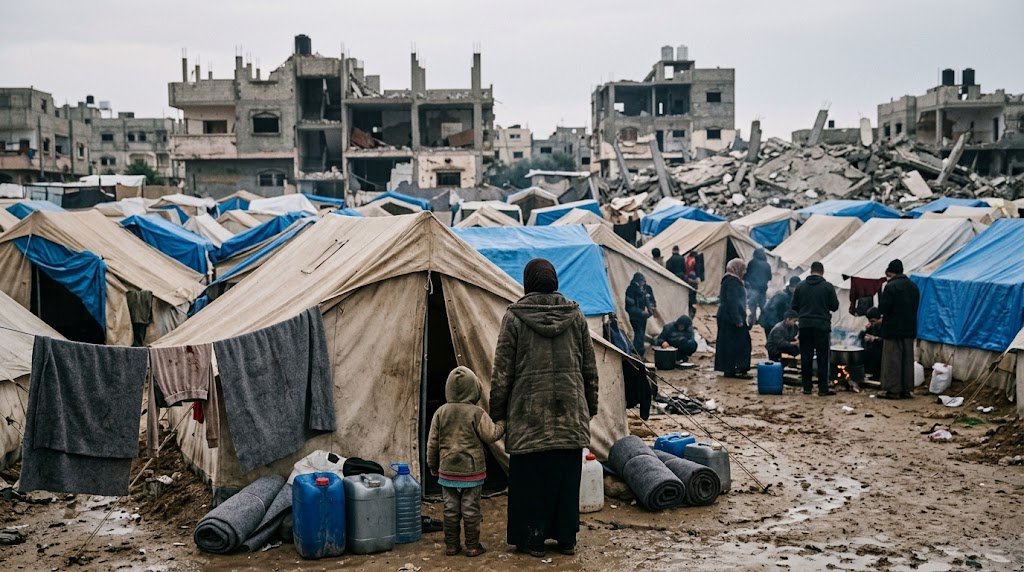
Children reported killed in Gaza since the ceasefire was announced on 10 October 2025 now number more than 340, with hundreds more injured, the UN children’s agency UNICEF said on Friday, 16 October 2026. Speaking at a briefing in Geneva, UNICEF spokesperson Ricardo Pires said the numbers do not amount to a ceasefire “as most would imagine one,” according to UNICEF’s summary of the briefing. The agency also released a new report on the toll of the war on children and warned that roughly 800,000 displaced children now face another winter in tents and damaged buildings.
Children reported killed in Gaza: what the figure means
UNICEF describes the 340 deaths as reported, not independently verified, and says “more than” because the count is still changing. In the past two weeks alone, UNICEF said, five boys and two girls were reported killed and at least 33 children seriously injured in air strikes, drone strikes and gunfire. Two more boys died of injuries sustained earlier. By HCN’s own calculation, the total works out to just under one child a day on average since the ceasefire was announced.
Reliable figures are hard to confirm independently. Journalists have faced limits on access to Gaza, and Gaza’s health ministry operates under Hamas authority. The ministry has reported much higher overall death totals since the truce began, including at least 1,400 people as of 30 September, according to Reuters. Those figures cover all ages, come from a different source and date, and are not directly comparable to UNICEF’s child-specific number.
A ceasefire both sides say the other has broken
Israel and Hamas have accused each other of violating the truce for months. Israel says Hamas has been rearming and attacking, and it has stepped up strikes on the group in recent weeks, according to Reuters. Hamas denies this and accuses Israel of undermining the peace deal. Israeli officials have also said they respond to specific incidents, such as armed men crossing the “yellow line” that marks where Israeli forces pulled back under the agreement.
UNICEF did not assign blame for the deaths of children reported killed in Gaza in the statement HCN reviewed. It called on all parties to uphold the ceasefire, UN Security Council Resolution 2803 and international humanitarian law. HCN had not found a response from Israeli authorities to the UNICEF report at the time of writing.
Displacement, sewage and the approach of winter
Beyond the children reported killed in Gaza, UNICEF described conditions that affect nearly every child. About 800,000 children remain displaced, most in tents or dangerous bombed-out buildings. An estimated 60,000 have lost one or both parents, either during the war or since the ceasefire, and UNICEF says nearly every child needs some form of mental health support.
Sanitation is the most urgent winter risk. All six of Gaza’s wastewater treatment plants are out of service, and most raw sewage is pumped into the sea. The Sheikh Radwan stormwater basin is half full, and UNICEF warns it could overflow into residential areas when heavy rains arrive. The agency says the basin could be drained within two weeks but that Israel has not yet allowed the necessary equipment into Gaza, a claim HCN could not independently verify. Pires recalled that children have drowned in contaminated water before.
What has improved
The ceasefire has changed some conditions. UNICEF says more aid and commercial goods have entered Gaza and that food security has improved. More than 560,000 children have returned to learning since the ceasefire, including at over 200 UNICEF-supported learning centres. The agency has also provided digital cash assistance to more than 380,000 people this year and supplies safe water to 1.2 million people.
Pires cautioned that this work is “far from restoring services as they should be” and that funding falls short of what is needed. He also raised concerns about reports that private traders in Gaza had stopped cooperating with Israeli authorities on bringing in commercial food shipments, as Arab News reported. He recalled that famine was declared in Gaza City before the ceasefire and said children cannot go back to that situation.
What to watch next
UNICEF is asking Israeli authorities to allow in materials, spare parts, generators and fuel at scale so that essential services can be restored. Whether that equipment arrives before the winter rains will determine if the sewage risk can be reduced. The agency also wants donors to provide flexible, predictable funding. The next test for the ceasefire itself is whether the pattern of weekly casualties continues, and UNICEF’s next update on children reported killed in Gaza will show it. Read more in our Conflict coverage.