
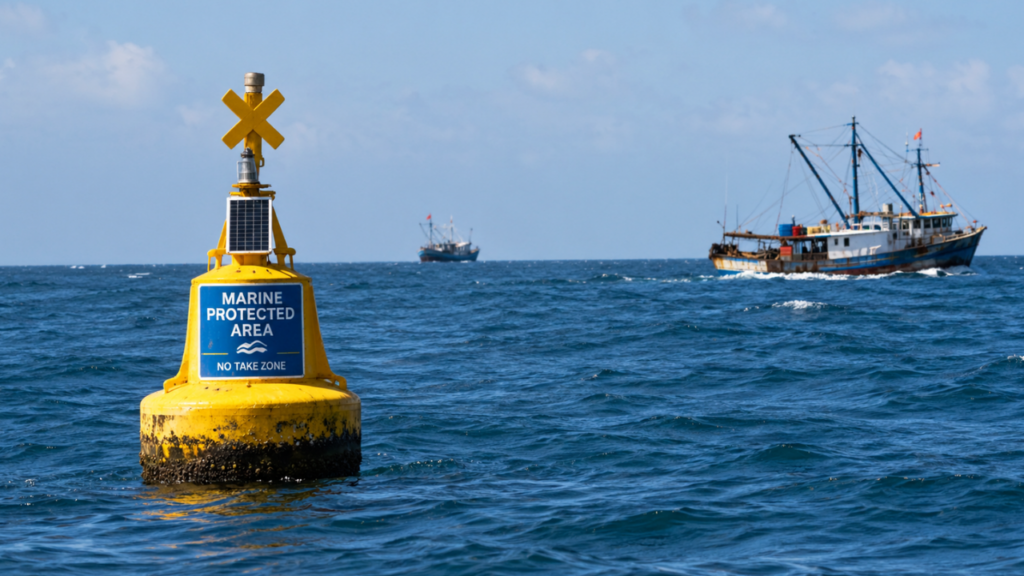
The 30×30 biodiversity target is not going to be met on the current trajectory. That’s the blunt conclusion of new research published Wednesday by a coalition of environmental groups led by the US-based Campaign for Nature, and the numbers behind it are hard to argue with: global land and inland-water protection sits at roughly 20% right now, while marine protection is stuck at around 10%. Both are well short of the goal that nearly 200 countries signed up to just a few years ago, protecting 30% of the world’s land and oceans by 2030.
That goal came out of the Kunming-Montreal Global Biodiversity Framework, adopted in late 2022 under the UN Convention on Biological Diversity. It wasn’t just a land-and-sea commitment, either. Countries also promised to put together at least $200 billion a year to fight the broader loss of species and ecosystems worldwide. As it turns out, that funding piece may end up mattering just as much as the acreage when it comes to whether the 30×30 biodiversity target gets met.
Progress exists, it’s just not fast enough
To be fair to governments, something has happened since 2022. Roughly 1.3 million square kilometers of additional land and 6 million square kilometers of ocean have been brought under some kind of formal protection over the past few years. That’s not nothing. But it’s also nowhere near enough. Even under a best-case scenario, where every single pledge already on the books actually gets delivered by 2030, the report projects land and inland-water protection would still only reach about 26%, with marine protection landing around 13%. Full follow-through on existing promises, in other words, still wouldn’t get the world to 30%.
Why the money isn’t there
A big part of the problem, according to the research, comes down to financing. The annual shortfall in global biodiversity funding is estimated at somewhere between $75 billion and $150 billion, a wide range, admittedly, but one that reflects just how messy and inconsistent conservation-spending data tends to be across different countries and funding channels. The ocean side of the ledger looks particularly bad: about $1.8 billion a year is currently going toward marine protection worldwide, against an estimated $16 billion that researchers say is actually required.
There’s a second issue buried in the numbers that’s arguably just as important as the funding gap. Of the roughly 10% of the ocean that already carries some kind of protection designation, only 3.5% is considered “effectively” protected, meaning there’s actual regulation and enforcement behind it, not just a boundary drawn on a map. Pauli Merriman, senior director for oceans at WWF International, put it plainly: “There’s a significant gap between protection on paper and protection in practice. A line on a map does not mean protection in the water.”
The UN’s own numbers tell a similar story
None of this is happening in isolation. The findings line up closely with an official UN progress report that’s expected to be submitted next month to the Convention on Biological Diversity conference in Yerevan, Armenia. A draft of that UN report, released back in July, warned that none of the framework’s 23 targets are on track to be met by 2030 unless implementation speeds up considerably. And at a briefing earlier this month, Astrid Schomaker, executive secretary of the UN Convention on Biological Diversity, said something along the same lines, that progress is happening, but unevenly, and not at anywhere near the scale the framework actually requires.
Put the two assessments side by side and the picture is fairly consistent. The 30×30 biodiversity target was ambitious from the start, and the gap now isn’t only about how much land and sea carries a protection label, it’s about whether governments back that label up with real enforcement, staffing, and sustained funding. Groups behind the research, including Campaign for Nature, say next month’s Yerevan conference is likely to be the next real test of whether countries are willing to close that gap, or whether the 2030 deadline simply slips by.
[…] The event has become one of the more visible public entry points into North American bear conservation, sitting alongside a wider push by wildlife agencies to track how healthy salmon runs and protected habitat translate into stronger animal populations — the same logic driving international efforts like the one outlined in HCN’s report on which countries are lagging on the 30×30 biodiversity target. […]