
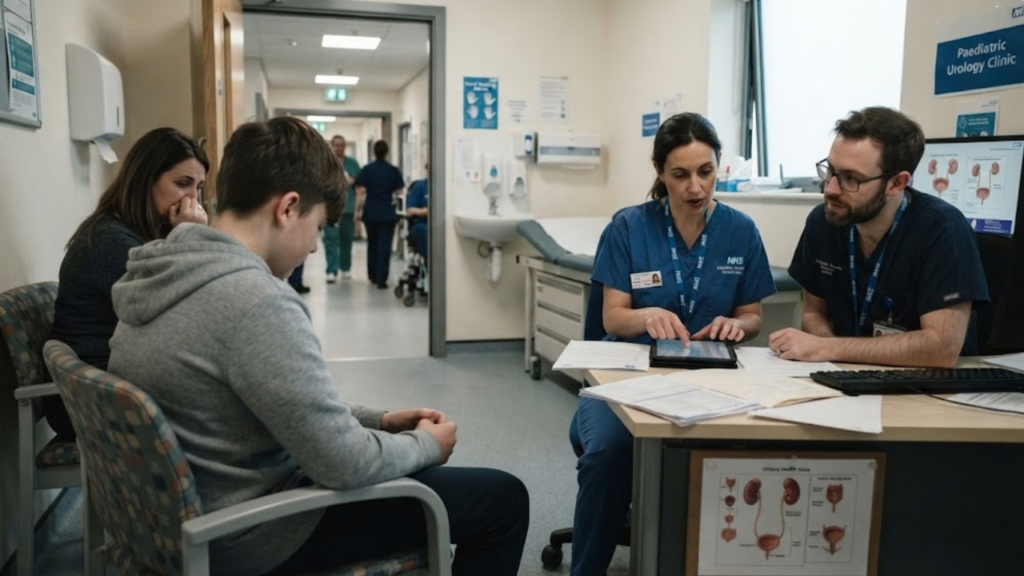
Ketamine bladder damage in children has gone from a rare diagnosis to a weekly occurrence at one Liverpool hospital, and the doctors treating it say the numbers still surprise them. Prof Rachel Isba runs the clinic at Alder Hey Children’s NHS Foundation Trust, the only service in the UK built specifically around this condition. She says most of the children who come through her door didn’t set out looking for medical help, they came because something in their body stopped working the way it used to. Bedwetting that wouldn’t stop. Sudden, painful trips to the bathroom, sometimes too late to make it. Blood in the urine. Some describe passing what feels like a piece of tissue, which turns out to be part of the bladder’s own lining breaking down.
The clinic opened in May last year, but the pattern behind it had been building for a while. Alder Hey treated one child for ketamine-related bladder problems in 2023. By 2024, that number had climbed to nine. Then 2025 arrived, and referrals started coming in fast enough that a general urology slot simply wasn’t enough anymore. Since the dedicated clinic opened, it has taken in more than 100 referrals, and it currently gets roughly one new case a week from GPs and emergency rooms across Cheshire, Merseyside, and nearby areas.
How ketamine bladder damage in children actually develops
A joint study by Alder Hey and Lancaster University, based on the first 60 children treated at the clinic and published in Archives of Disease in Childhood, lays out who these patients are. Their average age was 14. About two-thirds were girls, and a similar share came from some of the more deprived neighbourhoods the researchers tracked. Many had already been using ketamine for a year or two before anyone referred them, which explains why some arrive with damage that’s already advanced. Medically, the condition is called ketamine-induced uropathy. Long-term use scars and inflames the bladder wall, and left unchecked, the damage can spread to the ureters and kidneys. Harriet Corbett, a consultant paediatric urologist at Alder Hey, has said some of this damage doesn’t reverse, in the worst cases, patients end up needing major surgery or dialysis. All of that from a drug that, as Isba points out, sells for pocket-money prices among teenagers.
What makes it particularly hard to break is the loop the drug itself creates. Ketamine is an anaesthetic, so it genuinely numbs pain — including the pain it’s causing. Isba calls this the “K loop”: a child in bladder pain reaches for more ketamine because it’s the one thing that makes the pain stop, and that same dose keeps making the underlying damage worse. It’s not a habit most 13 or 14-year-olds fully understand they’re stuck in. The picture gets more complicated once you look past the drug use itself. Among the first 60 patients, 16 had autism, ADHD, or both. One in five had some history with the care system, and 72% reported serious emotional trauma earlier in childhood. The researchers are careful to say this data describes who’s showing up at the clinic, it doesn’t prove trauma or neurodivergence causes the ketamine use or the damage that follows. But some children have told staff they use it simply to quiet a mind that won’t otherwise settle.
There’s also a gap nobody’s fixed yet. Isba notes that over-16s with a serious dependency can, at least in theory, access inpatient detox care. Children younger than that generally can’t get the same support, even when the addiction and the physical damage are just as severe. Half of the clinic’s patients also report using other drugs alongside ketamine, which makes planning treatment even harder. This isn’t happening in isolation, either. Ketamine use across the UK has roughly doubled over the past decade according to the Office for National Statistics, and the government has been consulting with experts on reclassifying it from a Class B to a Class A drug. ITV News, which has also reported on the Alder Hey findings, noted that researchers see this as part of a broader rise in non-prescribed ketamine use among school-age children, not an isolated spike tied to one city.
Health systems getting caught off guard by a fast-moving, specific crisis isn’t unique to this story, HCN has also covered how Indonesia’s hospitals are straining under a wave of haze-linked respiratory infections, a very different emergency that shows the same basic problem: services built for a slower pace suddenly having to catch up. For now, Alder Hey remains the only UK clinic built specifically for ketamine bladder damage in children. Whether other hospitals open similar services, and whether treatment options finally catch up to the age of the children actually showing up, may come down less to policy and more to how many referrals land next month.
[…] leaves the FDA with an awkward calculation. The test clearly finds some cancers. Whether finding them this way helps people live longer will take years […]