
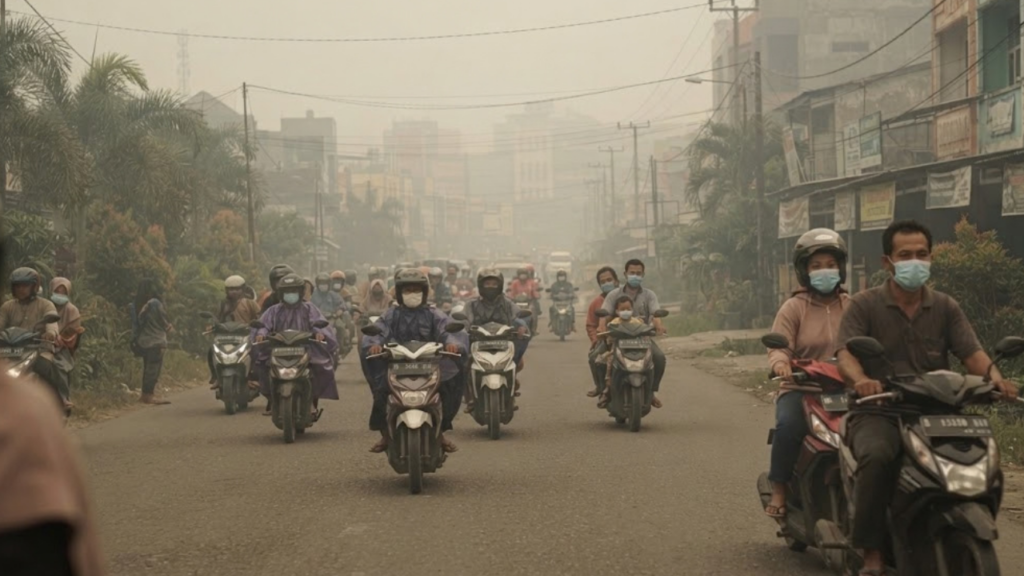
174,694. That’s the latest count of Indonesia haze respiratory infections recorded in the country’s worst-hit provinces since the start of August, and more than 40,000 of them are toddlers. Health ministry official Then Suyanti gave the number at a press conference in Jakarta on Tuesday, covering cases recorded between August 1 and September 21 across seven provinces battered by wildfire smoke. Two weeks earlier, on September 9, the figure stood at just over 113,000. It jumped by more than 60,000 cases in under two weeks.
Fires burning across Borneo, Sumatra and Papua have blanketed huge stretches of the country in smog thick enough to cut visibility and choke air quality readings across the region. Neighboring Malaysia and Singapore are breathing the same haze. Indonesia is home to more than 280 million people, and the smoke doesn’t stop at a provincial border, let alone a national one.
Why the Indonesia Haze Respiratory Infections Count Is Climbing So Fast
Indonesia goes through this every dry season, roughly July to October, when farmers and plantation operators clear land by burning it. Most years the smoke is bad. This year it’s worse, and officials point to the timing: the fires are coinciding with what’s expected to be the strongest El Niño on record in roughly four decades. Drier conditions mean fires spread faster and burn longer before anyone can put them out.
The smoke itself carries PM2.5, fine particulate matter smaller than a human hair, small enough to lodge deep in the lungs. That’s the pollutant behind most of the respiratory cases the ministry is now counting. Children are especially vulnerable. Their lungs are still developing, and they breathe faster than adults relative to their body size, pulling in proportionally more of the polluted air with every breath. That’s part of why toddlers make up nearly a quarter of the total cases recorded so far.
There’s a longer story behind why these fires keep coming back, and it isn’t only about weather. Researchers who study the region point to decades of forest degradation and slash-and-burn land clearing, used to prepare farmland and plantations cheaply and quickly, which has stripped away the natural fire resistance that intact tropical forest once had. Combine that changed landscape with an unusually dry El Niño year, and the same practices that caused only modest smoke in wetter years turn into fires that burn for weeks.
Then said her ministry has already sent oxygen concentrators, face masks and oxygen canisters into the affected regions, according to reporting from AFP carried by Arab News. Her public advice was blunt: cut back on outdoor activity when the air is bad, wear a mask, drink water. Simple instructions, but for families in areas where clinics are hours away and masks aren’t always available, following them isn’t always straightforward.
The Numbers Likely Undercount the Real Toll
The ministry’s tally only reflects people who actually reached a clinic or hospital. In remote parts of Borneo and Papua, that’s a real gap, families dealing with a child’s persistent cough at home, without transport to a health facility, simply don’t show up in these figures.
Some of what looks like a routine respiratory infection today can also turn into pneumonia later, particularly in children under five, which means the current count may understate where this is headed.
How This Compares to Indonesia’s Past Bad Years
Indonesia has been here before, more than once. The 2015 haze crisis, driven by a similarly severe El Niño, left more than 500,000 people with respiratory illnesses nationwide and was linked to 19 deaths from respiratory infections directly, according to figures compiled at the time. A Harvard-led study later tied that year’s smoke to over 100,000 premature deaths across Indonesia, Malaysia and Singapore combined, and the economic damage was estimated at up to $47 billion.
In 2019, a drier-than-normal season again pushed respiratory illness reports past 900,000 nationwide, according to the World Bank, which put that year’s economic losses at $5.2 billion. Measured against those years, this season’s 174,694 cases are still well below the worst points on record. but the current outbreak is only into its second month, and the dry season doesn’t typically break until October.
It’s a reminder that a slow-moving health crisis can spiral just as fast as a sudden one, the same pattern HCN has tracked in the DRC’s Ebola outbreak, now the second-largest on record, where case counts also climbed faster than the initial response could keep pace with.
Whether this year’s smoke approaches those earlier totals depends largely on how much rain arrives before October, and on how quickly the fires still burning in Borneo, Sumatra and Papua can be brought under control. For now, the toddlers filling those clinic waiting rooms are the clearest sign of how much is still at stake.
[…] guard by a fast-moving, specific crisis isn’t unique to this story, HCN has also covered how Indonesia’s hospitals are straining under a wave of haze-linked respiratory infections, a very different emergency that shows the same basic problem: services built for a slower pace […]