
Two Iranian nationals have been charged in Britain over an alleged Manchester terror plot targeting the Jewish community, counter-terrorism police announced on Friday. Salam Ahmadyan, 36, of Liverpool, and Rahman Salehi, 34, of Salford, face a terrorism-preparation charge after what police believe was a plot that has now been disrupted. Officers say the pair were in contact with a third party overseas who may be in Iran, but authorities have not said the Iranian state directed the plan.
What the Manchester terror plot charges allege
Both men were charged with engaging in conduct in preparation for terrorist acts. Counter Terrorism Policing (CTP) alleges they received instructions for making a chlorine bomb and acquired the liquids, components and equipment needed to build an improvised explosive device. A summary of the charges reported by Time News adds that they are accused of obtaining a written guide to building such a device and video instructions, researching potential targets online and carrying out physical reconnaissance. HCN could not confirm those extra details against a primary police document.
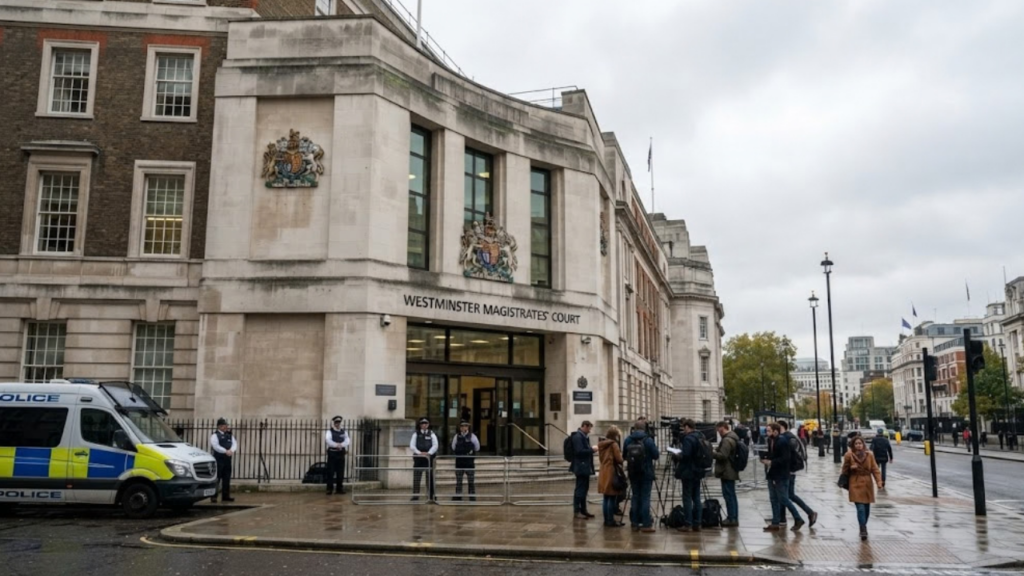
Police arrested the men in Manchester on Sunday 20 September. They were remanded in custody and are due at Westminster Magistrates’ Court on Saturday, 3 October. Neither man’s plea, and no comment from a lawyer for either, had been reported at the time of writing.
The BBC reported that, as it understands, the men reached the UK by small boat in 2020 and 2023, and that one was granted asylum while the other has an asylum claim still pending. That detail describes immigration history, not guilt. Both are charged, not convicted, and under English law each is presumed innocent until a court decides otherwise.
A charge announced on a painful date
The timing is not lost on Manchester’s Jewish community. CNN described the alleged plot as aimed at the eve of Yom Kippur, the holiest day in the Jewish calendar, and the charges were announced on the calendar anniversary of the 2025 attack at the Heaton Park Hebrew Congregation synagogue in north Manchester, where two people died.
Greater Manchester Police Deputy Chief Constable Terry Woods said the news would be especially hard to hear on that anniversary and during the High Holy Days, and that existing policing plans around Jewish communities will stay in place. Greater Manchester’s mayor, Bev Craig, said the charges would bring shock and alarm, and called them a reminder of sustained threats to the community.
This is not the first Manchester-area plot against Jewish residents to reach court this year. In February, two men were jailed for an Islamic State-inspired plan to shoot as many Jews as possible; the judge set minimum terms of 37 and 26 years. That case is unrelated to the new charges and has no known Iranian link, which is a useful reminder that the threat to British Jews comes from more than one direction.
Why Iran is part of the story
Deputy Assistant Commissioner Vicki Evans, who leads counter-terrorism policing nationally, said the week had brought into focus “wider threats being projected into the UK from Iran.” She was careful to add that the Manchester terror plot case and a separate investigation at RAF Fairford, an air base in western England, are not connected in any way.
The Fairford inquiry has dominated security headlines in recent days. Five men were arrested on 27 September on suspicion of terrorism and explosives offences, and a dual UK-Iranian national was detained days later. The government has said there are strong indications of Iranian involvement in events near the base. Tehran has rejected that as baseless, and its London embassy has condemned what it called unfounded speculation. In the sources HCN reviewed, Iran had not yet responded to the Manchester charges.
Wider context points the same way, according to reporting by Iran International: Britain said in January that its services had tracked more than 20 potentially lethal Iran-backed plots over the previous year, aimed at dissidents, journalists and Jewish community members, and in June 24 Western governments accused Iranian intelligence bodies of plotting attacks abroad. Those are government accusations, which Iran has contested in past cases, not findings made by a court.
What is still unknown
Much remains open about the Manchester terror plot. Police have not publicly identified the overseas contact or said what, if any, link that person has to the Iranian state. The sources reviewed do not name a specific venue or date for the planned attack, and nothing yet shows how close the plan came to being carried out. Terrorism cases like this are normally sent on from a magistrates’ court to the Crown Court, where evidence is tested.
HCN will update this report as the court process moves forward and as police or the Iranian government say more.