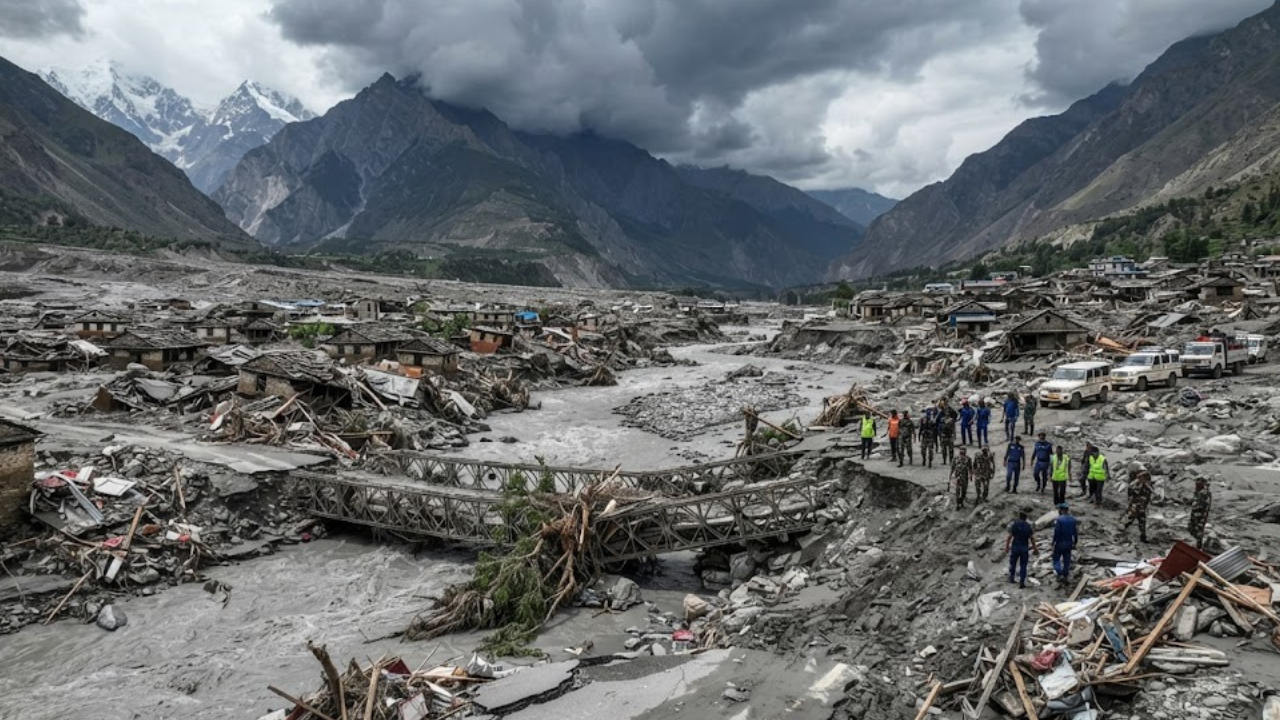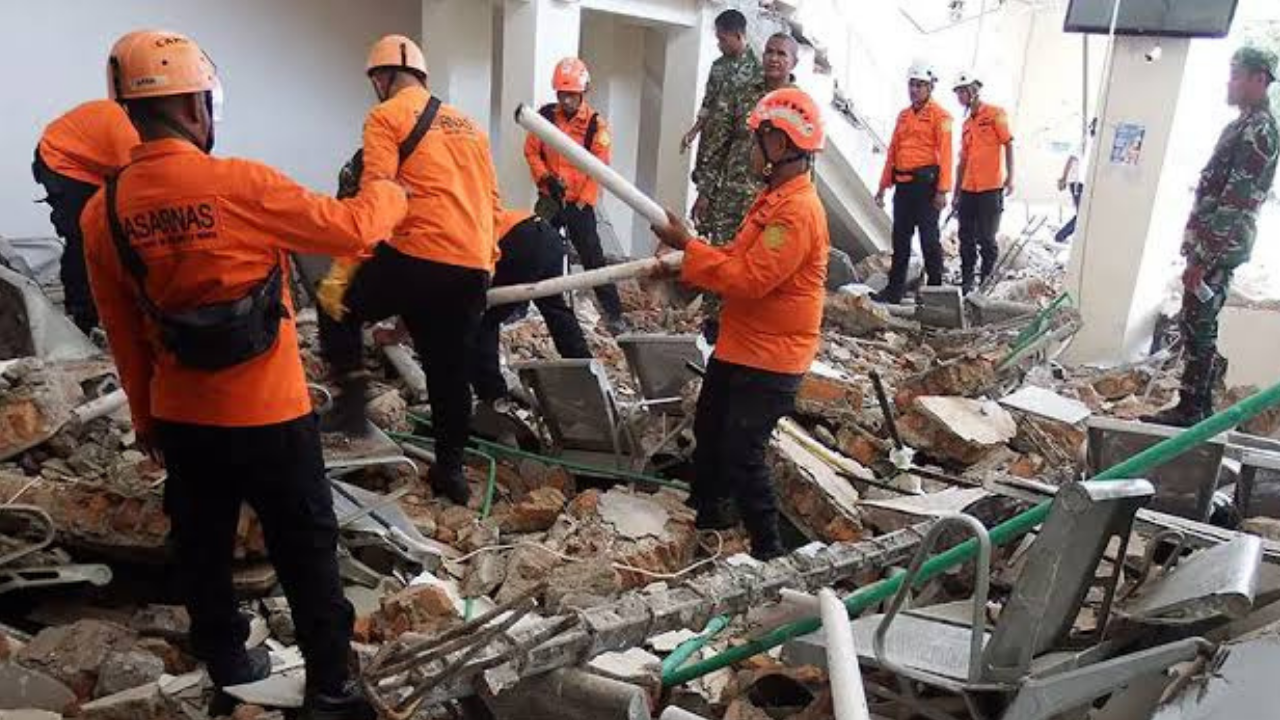
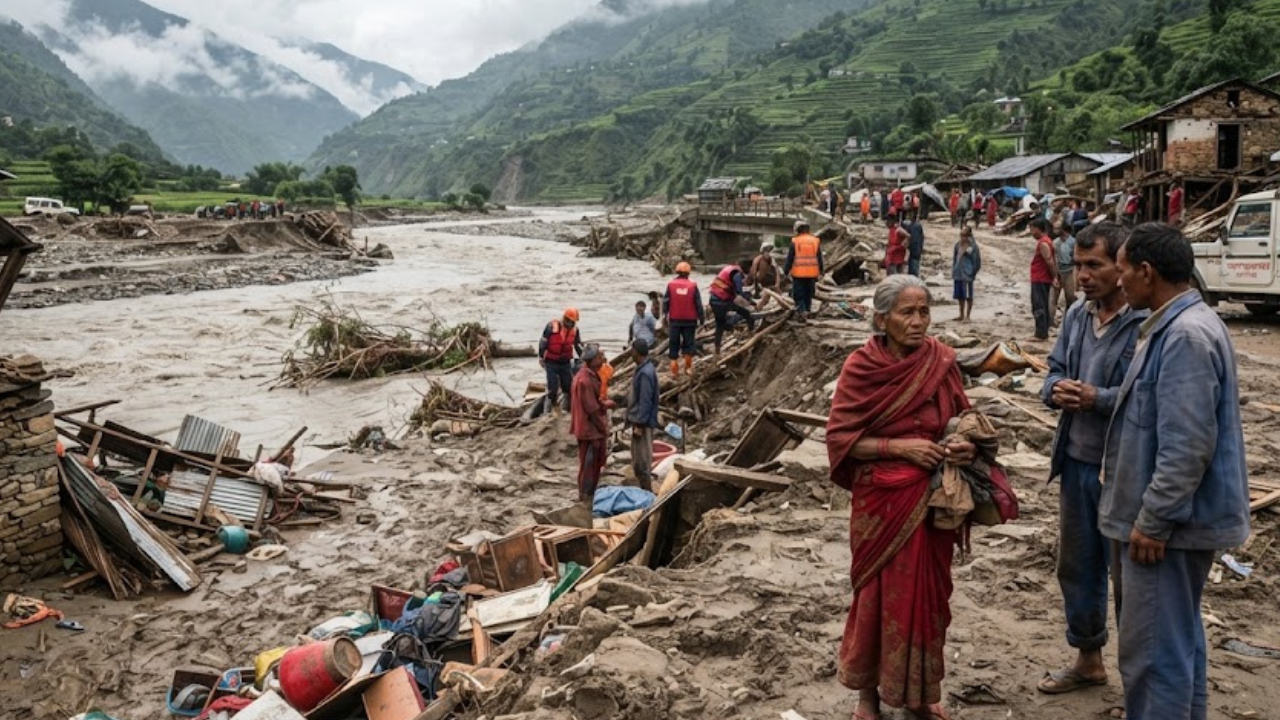
Climate compensation is now Nepal’s official demand of the world’s biggest greenhouse gas emitters, after a flood disaster that has killed more than 1,350 people while families in the hardest-hit valleys are still holding funerals for relatives whose bodies have never been found.
Foreign Minister Shishir Khanal said this week that China, the United States and India bear outsized responsibility for a warming climate that Nepal did almost nothing to create. Nepal’s government has asked the United Nations’ loss and damage fund for financial help, and separately submitted a climate compensation claim to major polluting nations, arguing the disaster is a matter of justice rather than aid. In the same week, Nepal’s disaster authority raised the confirmed death toll to 1,355, with nearly 5,000 people still unaccounted for weeks after the Bhotekoshi River disaster tore through the country’s north-central hills.
The two developments are not separate stories. They are the same crisis, viewed from two directions: a government trying to hold distant polluters accountable, and thousands of families in Rasuwa, Nuwakot, Chitwan and beyond who no longer expect their missing relatives to come home.
How a Mountain of Ice and Rock Triggered a National Catastrophe
The disaster began on August 26, when a mass of glacial ice and bedrock, estimated by geoscientists to have plunged roughly 1,200 meters down a slope near the Nepal-China border, slammed into a tributary of the Bhotekoshi River. The collapse released so much energy that seismic stations recorded it as a magnitude-5.2 event, and some researchers initially mistook it for an earthquake.
Scientists are still reconstructing exactly what happened. Analysis of satellite imagery indicates that bedrock beneath a glacier gave way, sending debris into the Lhende Khola and setting off a chain reaction that scoured downstream valleys. Researchers have told news organizations they suspect the mass of falling ice and rock displaced river water and picked up loose sediment, amplifying the surge as it moved downstream, though the precise mechanics remain under study.
No single event can be attributed to climate change with certainty, but scientists broadly agree that a warming Himalaya made a disaster like this more likely. As permafrost thaws and glaciers retreat, rock once locked in place by ice becomes unstable, and meltwater further weakens mountain slopes. The Hindu Kush Himalaya region, which feeds ten major river basins that some 2.1 billion people depend on for water and food, has already produced a string of similar hazards in recent years, including a glacial lake outburst in the same river system in 2025 and an ice avalanche nearby in 2024.
The flood destroyed homes, roads, bridges and several hydropower plants. Nepal’s prime minister has said at least 48 suspension bridges were damaged, 28 of which will need to be rebuilt entirely. Nepal’s disaster management authority has estimated losses of roughly 400 billion rupees, while some longer-term government projections put total reconstruction costs above $5 billion — a discrepancy that reflects how early officials still are in tallying the damage.
The Families Who Can No Longer Wait for Bodies
In villages along the Bhotekoshi and Trishuli rivers, the disaster has created a second crisis: how to grieve for people who were never found.
In Hindu tradition, cremation is considered essential to freeing a person’s soul, and going without it can leave a family in a kind of spiritual limbo. With search operations winding down and few bodies left to recover, families have begun performing symbolic funerals – cremating effigies made of kush grass in place of a body, at sites including Kathmandu’s Pashupatinath Temple. Relatives have described the ritual as offering some measure of peace, even without a body to bury.
The practical obstacles have compounded the emotional ones. Nepal’s morgues have a combined capacity of only around 350 bodies nationwide, forcing authorities to bury unidentified remains in temporary mass graves while preserving DNA samples, photographs and other identifying details for future matching. In Rasuwa district’s Paharebesi village, local officials said families who had received no word on missing relatives for more than a week began preparing final rites, even though many had lost their own homes and struggled to find priests, cremation grounds or even the cooking gas that mourning rituals require. Some families have said they fear bodies are being buried too quickly for relatives to identify or properly perform last rites.
The scale of loss varies sharply by district. Disaster authorities have recorded hundreds of bodies recovered from Chitwan and both Nawalparasi districts, more than 175 from Nuwakot, and additional deaths across Rasuwa, Gorkha, Dhading and Tanahu. Across the border, Chinese authorities have reported dozens of additional deaths and hundreds missing in Tibet’s Gyirong county, underscoring that the disaster crossed an international boundary that villages, but not floodwaters, respect.
Why Nepal’s Climate Compensation Demand Is a Matter of Justice, Not Charity
Nepal’s climate compensation demand is built on a familiar but rarely resolved argument: the country contributes almost nothing to global carbon emissions, yet ranks among the nations most exposed to the consequences of a warming planet. Khanal has argued that Nepal should not have to take on more debt to protect its people from a crisis he says was “overwhelmingly created elsewhere,” and that the country deserves standing to raise the issue “explicitly and forcefully” at international forums.
Nepal’s finance and environment ministries have sent a formal request to the UN’s Fund for Responding to Loss and Damage, a mechanism created under the Paris climate framework specifically to help vulnerable countries recover from climate-driven disasters, seeking an initial sum of about $20 million. That figure is a fraction of the billions in damage the flood caused, reflecting both the fund’s limited resources and the early stage of Nepal’s broader compensation push. A coalition of roughly 200 international civil society groups, the Global Campaign to Demand Climate Justice, backed Nepal’s position this week, arguing the country cannot protect the Himalayas “through adaptation alone” while major emitters keep burning fossil fuels.
This is not the first time a Nepali leader has made this case. At UN climate talks in 2024, Nepal’s president told world leaders the country was “reeling” from glacial disasters despite negligible emissions, and UN Secretary-General António Guterres has separately warned that the Himalayas’ rapidly melting glaciers demand urgent international action. What is different now is the scale of the disaster driving the demand, and the explicit naming of three specific countries — China, the United States and India — as parties Nepal believes should pay.
What Happens Now
None of the three governments named by Nepal has publicly responded in detail to the climate compensation request. Loss and damage claims of this kind have historically moved slowly: wealthy and heavily industrialized nations have generally resisted framing climate aid in terms of liability, preferring the language of voluntary assistance. Nepal’s own request to the UN fund, for a relatively modest $20 million, illustrates how far current mechanisms fall short of the losses that disasters like this one produce — a gap HumanCrisisNews has documented across other climate disasters hitting countries that did little to cause them.
Inside Nepal, the more immediate task is recovery. Authorities have said they are shifting focus toward rebuilding damaged bridges and roads and relocating communities from riverbanks now considered unsafe, even as search teams continue recovering remains and matching them to missing-persons reports through DNA testing. Scientists say the underlying hazard has not gone away: fresh flood warnings have already been issued for the Bhotekoshi and Trishuli rivers, and researchers monitoring the Tibetan Plateau warn that continued glacier instability could produce further collapses in the same region.
For families still waiting on results from a DNA lab or a missing-persons list posted outside a Kathmandu hospital, Nepal’s diplomatic campaign for compensation and the search for their relatives are, in the end, part of the same unresolved story. The money, if it ever comes, will not bring back the people who are still missing. What it might do, Nepal’s government argues, is force a wealthier world to reckon with a disaster it did not experience, but helped set in motion.