
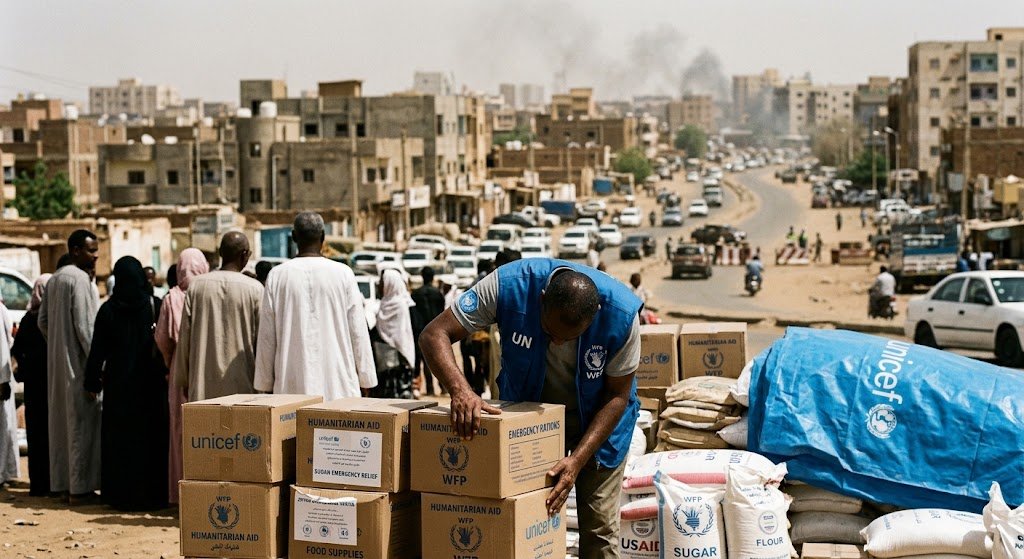
Sudan drone strikes are now the leading cause of civilian casualties in the country’s war, the United Nations told the Security Council on Friday, 16 October 2026, as the risk of famine spreads across Darfur and Greater Kordofan. UN officials described attacks killing civilians from El Obeid in North Kordofan to Blue Nile State on the Ethiopian border, according to The National’s report from the Council. The briefing came after weeks of intensifying fighting in a war that began in April 2023 and has killed tens of thousands of people and displaced millions.
What the UN told the Security Council
Rosemary DiCarlo, the UN’s political affairs chief, said UN data show more than 1,100 people were killed by drone strikes across Sudan in the first half of this year. She urged the warring sides to ban drones, saying a mutual ban could “dramatically improve protection for civilians,” and said that at a minimum they should agree concrete rules limiting drone use. She also condemned a 3 October drone strike on two clearly marked lorries contracted by the World Food Programme, which killed a driver, and said the lorries carried the required travel permits. In her assessment, neither side is moving toward dialogue, because both believe they can win more on the battlefield and keep receiving outside support.
Britain and the United States used the session to press for tougher sanctions. Britain’s deputy ambassador said the drones used in Sudan are bought, financed and moved through networks outside the country, and called for the Council’s sanctions regime to change to reflect how the war is now fought. The US deputy ambassador called for an immediate humanitarian truce and a wider arms embargo, which currently covers only Darfur, according to UN News. Sudan’s government has welcomed a technical extension of the sanctions but rejected expanding them, Sudan Tribune reported.
Sudan drone strikes from El Obeid to Blue Nile
In El Obeid, the capital of North Kordofan, home to more than half a million residents and at least 100,000 displaced people according to a UN statement in July, drone strikes have continued into October. Media reports cited by Security Council Report say strikes on a university dormitory and a shelter for displaced families killed at least ten people in early October. UNICEF said a strike on 1 October killed one child and injured 12. The army says it holds the Khartoum–El Obeid corridor, while the Rapid Support Forces (RSF), a paramilitary group fighting the army, continue to contest it and hit the city with drones.
In Blue Nile State, a strike near a displacement site in Wad al-Mahi last week killed a large number of civilians, mostly women and children according to the UN’s resident coordinator, as Darfur24 reported. The death toll varies by source and timing: she said at least 31, a UN spokesperson cited initial reports of at least 40, and UN News later summarized it as 41. The US ambassador said the strike was reportedly carried out by the RSF, which HCN could not independently verify.
Both sides are accused of harming civilians. A rights group, the Emergency Lawyers, said an air strike killed five children on Thursday in an RSF-held town in North Kordofan and blamed the army. The army chief, Gen Abdel Fattah al-Burhan, says he has assured President Donald Trump of his commitment to peace. A UN fact-finding mission found reasonable grounds to believe RSF drone strikes on El Obeid between July and August may amount to war crimes, according to Security Council Report. It also reported that the mission’s separate inquiry into El Obeid remains outstanding.
Famine risk in Darfur and Kordofan
A UN-backed hunger monitor, the Integrated Food Security Phase Classification (IPC), warned on 12 October of a growing risk of famine in parts of Greater Darfur and Greater Kordofan, where an El Niño drought is compounding the effects of war, according to UN News. The World Food Programme’s acting chief, Carl Skau, said after a September visit that 20 million people face acute hunger, 200,000 of them at the IPC’s highest level, catastrophe. A risk of famine is a warning, not a declaration that famine has taken hold.
Kordofan, described in the alert as the epicentre of the conflict, has seen more than 300,000 people forced from their homes since October 2025. UN News also reported that more than 700,000 displaced people in Tawila, in North Darfur, are short of food, water and healthcare. Aid workers face direct danger, since two WFP-contracted trucks came under fire on 2 and 3 October.
Is the war spilling over?
The evidence for regional spillover is a concern raised by UN observers, not a documented cross-border war. Security Council Report said fighting in Blue Nile has escalated sharply since an RSF-allied group recaptured two towns in mid-August, and that the risk to the state capital, Ed Damazin, has heightened worries about the conflict’s regionalisation. The UN coordinator said clashes were moving closer to Damazin and Roseires. At the Council, Britain’s point about external supply networks adds another regional dimension, because it implies that foreign suppliers are helping sustain the fighting.
HCN found no confirmed report of a new cross-border attack or a measured rise in refugee flows linked to this week’s fighting. Neighbouring countries are already hosting large numbers of Sudanese refugees, but figures for the latest weeks were not available.
What to watch next
The Security Council has extended the Sudan sanctions regime until 11 December, according to UN News, and the debate over widening the arms embargo from Darfur to the whole country is likely to continue. The UN human rights fact-finding mission’s findings on El Obeid are still to come and could shape that debate. On the ground, the next signals will be whether strikes continue in El Obeid and Blue Nile and whether Ed Damazin comes under direct threat. Aid agencies will also be watching whether convoys can reach Kordofan and Darfur before famine conditions deepen. Read more in our Conflict coverage.