
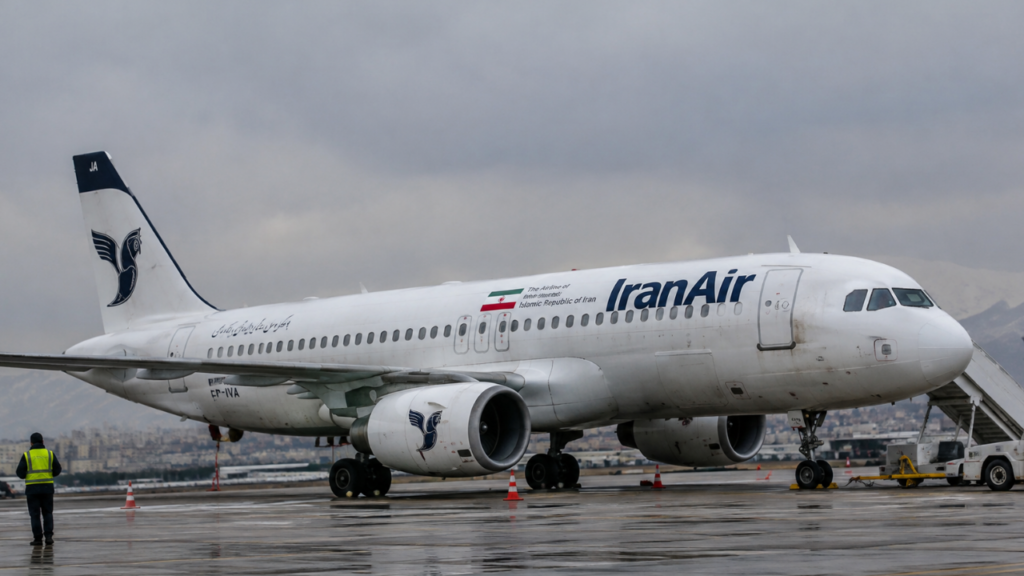
Iran airlines sanctions are entering a new phase as US Treasury Secretary Scott Bessent warned Monday that Iranian carriers could effectively be shut out of international operations from September 23 if foreign companies continue providing them with fuel, landing services or ticket sales.
Speaking to CNBC, Bessent said companies that continue servicing Iranian airlines could risk losing access to the US dollar financial system. The warning does not mean Washington is physically grounding Iranian aircraft. Instead, it relies on pressure against the international businesses and aviation networks that help those carriers operate abroad.
“When Iranian airlines land at an airport, you cannot provide them with fuel, you cannot provide them with landing services, you cannot sell them tickets, or you will be knocked out of the dollar system,” Bessent said. The message is aimed at the companies that make international aviation possible for sanctioned Iranian carriers. Fuel suppliers, airport service providers, ground handlers and ticket agents could all face pressure if they continue doing business with those airlines.
Iran Airlines Sanctions Enter a Second Phase
The latest move follows the US Treasury Department’s September 8 sanctions action against Iran’s aviation sector. Treasury said it designated 27 remaining Iranian airlines along with other aviation-related targets as part of its wider campaign against Iran. The department said the action was designed to cut financial and logistical support linked to the country’s aviation industry. The U.S. Treasury’s September 8 sanctions announcement provides the official details of the earlier action and the companies and airlines affected. What changed Monday is the emphasis on the international service providers around those carriers. Under the new warning, companies outside Iran could face consequences for continuing to provide essential services to Iranian airlines.
That creates a broader sanctions network. A fuel company at an airport in a third country, a ground-handling firm, a ticketing business or another aviation service provider could have to weigh Iranian business against the possibility of losing access to the US financial system. For Iranian airlines, the practical effect could be significant. International flights depend on far more than an aircraft and a pilot. Carriers also need airport slots, fuel, passenger processing, baggage handling, sales networks and financial services. Restricting enough of those connections could make international operations increasingly difficult even if aircraft themselves remain technically capable of flying.
China Becomes a Key Test for the Iran Airlines Sanctions
Bessent made the warning after talks with Chinese Vice Premier He Lifeng and said Chinese officials had been “very engaged” in Washington’s economic pressure campaign against Iran. He also said Washington was holding positive discussions with Chinese financial authorities, including People’s Bank of China Governor Pan Gongsheng, about compliance with US sanctions.
China matters because it has remained an important economic partner for Iran despite years of American sanctions. Beijing’s response to the new aviation pressure could therefore become an important test of how effective the latest Iran airlines sanctions will be outside the United States. If airports, service companies and financial institutions in countries willing to maintain business with Iran continue supporting its airlines, carriers could preserve some international connections. If more companies decide the financial risks are too high, those workarounds could become harder and more expensive.
Iran Airlines Sanctions Add to Wider US Pressure on Tehran
The aviation pressure is arriving alongside a much broader confrontation involving Iran, the United States and the wider region. The latest escalation is also unfolding around the Strait of Hormuz, where a tanker was struck by an unidentified projectile this week, according to reports cited in Monday’s regional coverage. Commercial shipping through the waterway has also been sharply disrupted. Iranian officials have continued warning that a renewed US strike could widen the conflict. At the same time, diplomatic activity is continuing, with Iranian President Masoud Pezeshkian preparing to travel to New York for the United Nations General Assembly.
That timing gives the aviation measures an additional diplomatic dimension. Pezeshkian is expected in New York as Washington increases economic pressure on Iranian institutions, creating a backdrop in which sanctions, diplomacy and military warnings are unfolding simultaneously. The wider security environment is also affecting countries beyond Iran. Human Crisis News recently reported on the Kohat mosque attack, another major conflict-related development involving regional security and militant violence.
What Happens After September 23?
The key question is whether September 23 produces a genuine collapse in Iranian international aviation or mainly makes flights more difficult and expensive.
Iranian carriers have operated under sanctions for years and have relied on alternative routes, foreign partners and other workarounds to maintain service. The new pressure could make those arrangements harder to sustain, but the final outcome will depend on how individual airports, service providers, airlines and financial institutions respond.
The latest Iran airlines sanctions therefore go beyond Iran’s own carriers. Their real impact may depend on how many companies outside Iran decide that serving Iranian airlines is no longer worth the risk of losing access to the US dollar system. Washington is attempting to turn the financial reach of its sanctions into a global pressure mechanism. Tehran, meanwhile, still has to determine how much of its international aviation network can continue operating through countries and companies prepared to keep doing business with its airlines. September 23 will provide an early test of whether that strategy can substantially restrict Iranian aviation worldwide or simply force the industry to find new ways around the pressure.
[…] letting commercial traffic back through, a standoff that has already spilled into aviation, where new sanctions on Iranian carriers took effect this […]