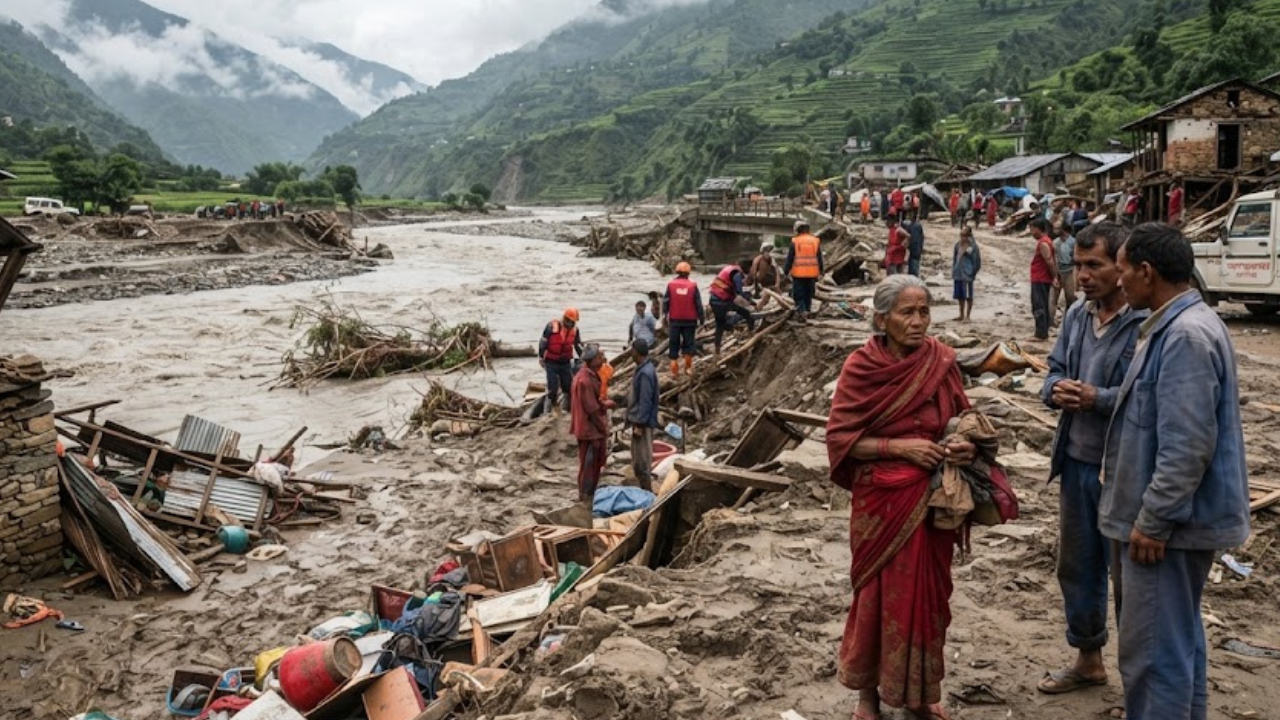
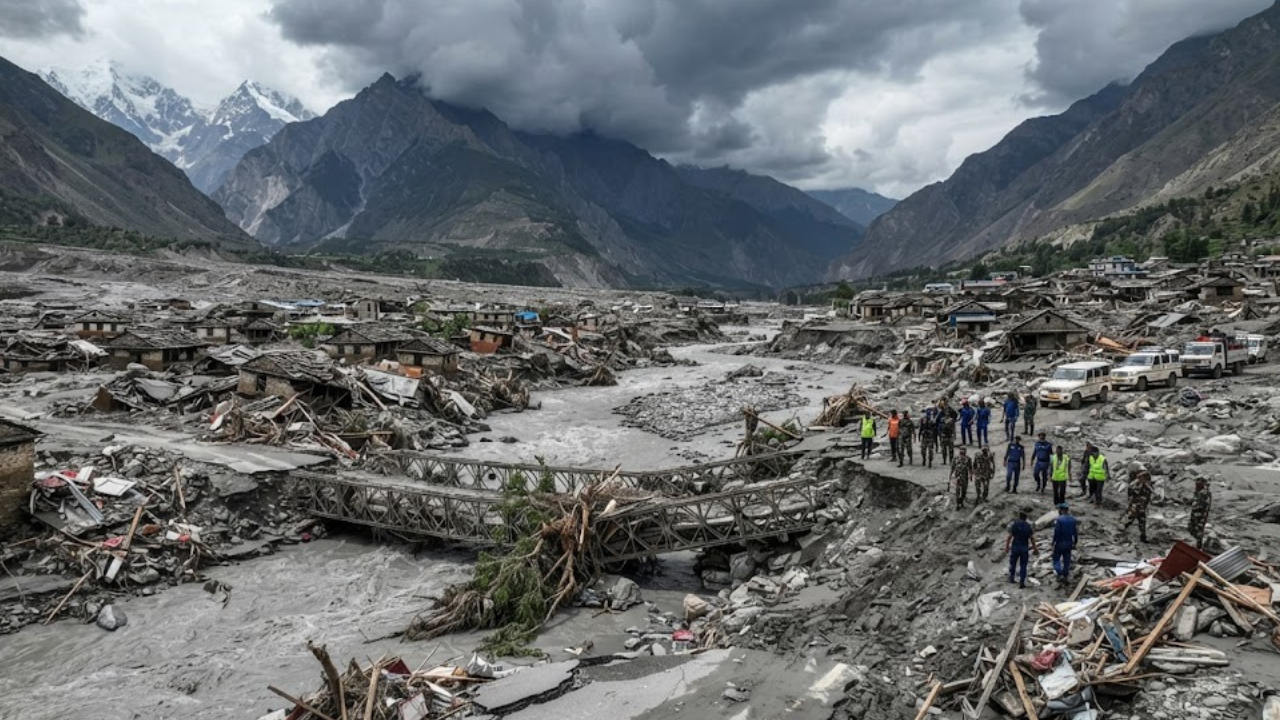
Rasuwa, Nepal – The Nepal-China border flood has now killed more than 750 people, with an additional 3,000 still unaccounted for on both sides of the frontier, ten days after a wall of water and rock tore through the mountains along the frontier, according to figures released Sunday by Nepali police and Chinese state media.
Nepal’s National Disaster Risk Reduction and Management Authority has recorded 734 deaths and 2,498 missing within its borders from the Nepal-China border flood, while officials in the Tibet Autonomous Region of China have confirmed 16 deaths and 546 missing in Gyirong County, on the Chinese side of the crossing. Some victims’ bodies have been recovered as far as 240 kilometers downstream in neighboring India, carried there by the force of the flood.
What Triggered the Nepal-China Border Flood
The disaster began at roughly 8:40 a.m. local time on Wednesday, August 26, when a section of glacier broke away near Langtang Lirung, high in the Himalayas close to the Rasuwagadhi border post. The collapse sent a debris avalanche sliding roughly 6,000 feet down the mountainside, registering as a magnitude-5.2 tremor on seismometers as far away as the United States Geological Survey’s monitoring network, according to ABC News reporting on the disaster. Scientists studying the event have estimated the resulting torrent of water, rock and ice carried a volume equivalent to roughly 500,000 dump-truck loads.
What followed was less a flood than an avalanche of water. The surge tore down the Trishuli and Bhotekoshi river systems, flattening the Gyirong Port complex – the main trade and tourism crossing between the two countries – and burying villages, bridges and roadways across Nepal’s Rasuwa, Nuwakot, Dhading, Gorkha, Tanahun, Nawalparasi and Chitwan districts. A Chinese rescue team that reached the border checkpoint days later found no trace of the structures that had once stood there. HCN’s initial report on the Nepal-Tibet flash flood covered the disaster’s opening hours, when the scale of the destruction was still coming into focus.
Rescue Efforts Race Against a Second Lake
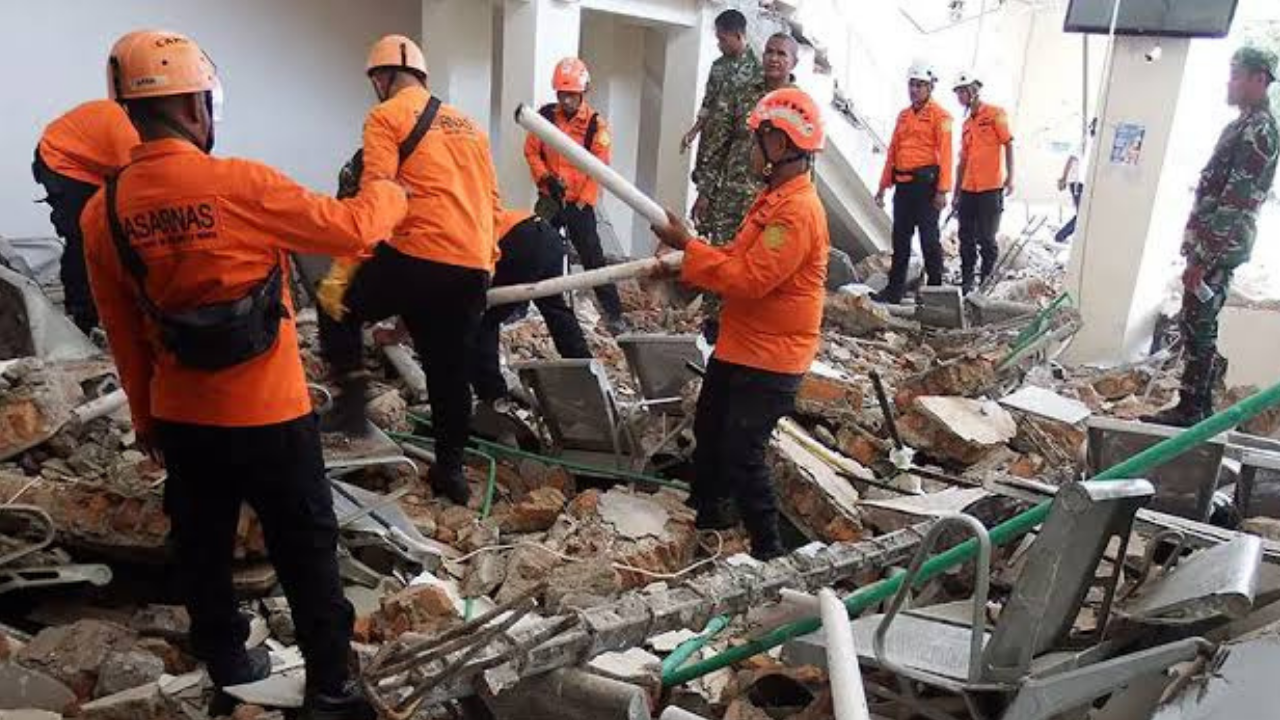
Search teams have spent the past week working against both time and geography in the aftermath of the Nepal-China border flood. Roughly 900 workers at hydropower construction sites in central Nepal remain unaccounted for, and emergency crews have pumped air into at least one flooded tunnel without yet establishing contact with anyone trapped inside. Rescue operations were briefly suspended on Friday after debris from the initial collapse formed a new barrier lake upstream, raising fears of a second flood wave; teams resumed searching once the immediate risk was judged manageable, though monitoring continues, Al Jazeera reported.
Tom Fletcher, the United Nations‘ humanitarian chief, said the international body was tracking the barrier lake using satellite technology and urged authorities not to let their guard down. “I think we should take those warnings very, very seriously,” he said, referring to continued Chinese alerts about the lake’s instability.
The United States has pledged $3.6 million in emergency assistance, including up to three months of food aid for as many as 10,000 flood-affected households, after initially committing a smaller sum. Washington’s embassies in Kathmandu and Beijing said they were assisting the dozens of American citizens believed to be among the missing.
A Disaster Measured in the Missing, Not Just the Dead
Most disaster coverage settles on a single number – the confirmed dead – once the search winds down. What that number leaves out here is the scale of the uncertainty still hanging over roughly 3,000 families who do not yet know whether to grieve or to keep hoping. In Nepal, relatives have taken to gathering daily outside hospitals and makeshift morgues, checking updated lists for names they recognize.
Health officials working near the disaster zone have described entire villages that appear to have simply vanished, communities in “dire need of support” that mainstream international coverage has largely folded into a running casualty count rather than treated as ongoing emergencies in their own right. HCN has covered a similar gap between headline death tolls and lived reality before, including in reporting on the Flores earthquake’s rising death toll.
The geography compounds the difficulty. Rasuwa district sits in remote, high-altitude terrain where road access was already limited before the flood destroyed what infrastructure existed. That isolation, more than any single rescue decision, helps explain why so many people remain missing more than a week after the water receded – and why aid organizations warn the true toll may not be known for weeks.
Data and Evidence
Nepal’s police reported 2,301 people injured and receiving treatment as of the most recent tally, alongside the confirmed fatalities. The flood also knocked out at least 211 megawatts of hydropower capacity feeding Nepal’s national grid, according to earlier damage assessments from the Rasuwa district, though the scale of destruction from this larger event has not yet been fully quantified in electricity terms. Chinese state broadcaster CCTV reported that two villagers were pulled from the wreckage alive over the weekend, among the only survivors found since the initial hours after the collapse.
Current Status
As of Sunday, Nepali and Chinese authorities had not declared the search-and-rescue phase complete, though Chinese officials said no additional survivors had been located at the Gyirong crossing in recent days. The barrier lake formed by flood debris remains under close monitoring, with both governments warning residents downstream to stay alert for further flood advisories. Nepal’s government has not yet announced a timeline for transitioning from search-and-rescue to recovery and rebuilding, and the number of confirmed dead is expected to rise further as search teams reach areas that remain difficult to access.