
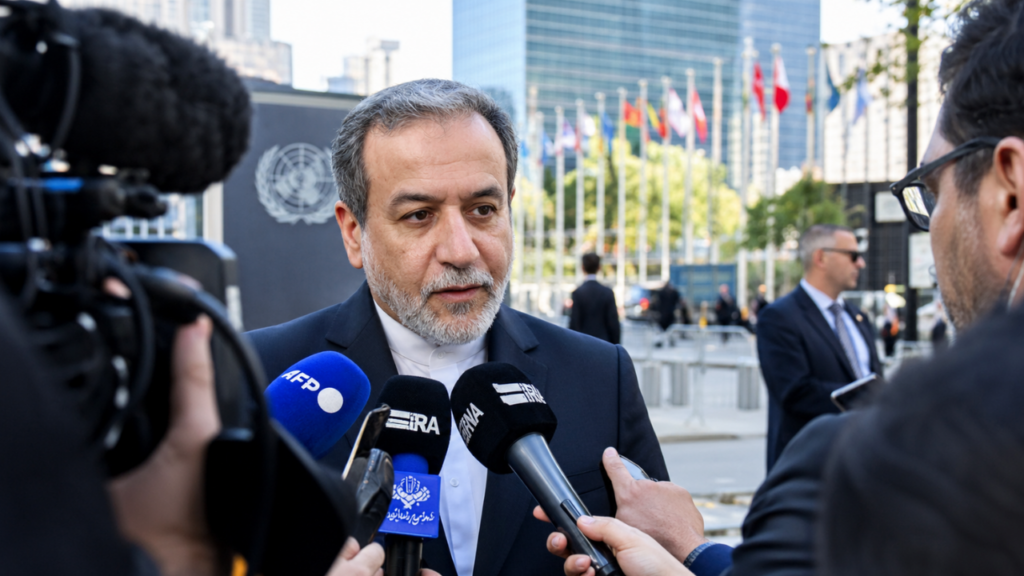
Iran’s foreign minister said late Monday that Qatari mediators would present Washington with new ideas on meeting Tehran’s conditions for reopening the Strait of Hormuz, and that a US response could reach Tehran on Tuesday. He made the comments to Iranian reporters in New York, two days after President Donald Trump publicly rejected the plan. The Strait of Hormuz ceasefire proposal remains the central issue between the two sides. No formal US reply had been made public when this report was written. aaj
Abbas Araghchi said he had met the Qatari mediators again to discuss how Iran’s conditions could be fulfilled, and that the mediators would take those ideas to the US side. He said he would leave New York for Tehran within hours. Communication through Qatari and Pakistani mediators had stayed open but intensified after Iran presented its latest proposal. He also said Tehran had used its New York meetings to tell Washington and the wider world what must happen before the strait reopens.
What Iran’s seven-day plan asks of Washington
Iran presented the plan at the UN General Assembly and conveyed it through Qatari intermediaries. Araghchi said the US steps could be completed within four or five days, clearing the way for the strait to reopen and for talks on a final agreement to begin by the seventh day. The conditions include lifting the US naval blockade of Iranian ports, waiving sanctions on Iranian oil sales, and observing a ceasefire that would include Lebanon. The New York Times reported that the steps also include unfreezing $12 billion in Iranian assets, a figure HCN has not independently confirmed.
Iran is demanding a seven-day ceasefire across the Middle East, including in Lebanon, where its ally Hezbollah has been fighting Israeli forces. One report said the ceasefire would also cover Yemen, a detail the other accounts reviewed did not include. Iran ties the package to a June 17 agreement called the Islamabad Memorandum of Understanding, which stalled. Araghchi insisted late Monday that Tehran had made no changes to the proposal.
Trump’s rejection and the claims behind it
Trump rejected the plan on Saturday outside the White House, saying Iran wanted the strait opened quickly because it was losing badly. He said the US had total control of the waterway and that 29 ships had come out the previous night. Those are the president’s assertions. The reporting reviewed for this article does not independently verify the ship count or the claim of control.
Speaking to Axios on Sunday, Trump said Iran wants a deal but not the one he wants, and that he expects talks to resume this week. A senior Iranian official told Reuters on Friday that Iran will show no flexibility over its nuclear program even if the US accepts its proposal. A US official said the same day that Washington was holding positive, constructive indirect discussions with Iran through mediators. The two governments are therefore talking through third parties while publicly far apart.
Mediators, oil prices and the stakes at sea
Reuters reported that US and Iranian officials spoke separately with mediators on Monday, with further talks expected to focus on an updated version of Iran’s seven-day proposal. That sits awkwardly beside Araghchi’s statement that the terms have not changed. The reporting reviewed does not explain what is being amended. Araghchi said Iran will decide its next step based on the final US position the mediators deliver.
The waterway usually carries about a fifth of the world’s seaborne oil and gas, and flows have not returned to normal since US and Israeli strikes on Iran began on Feb. 28. The Associated Press reported that Brent crude was above $105 a barrel on Monday. Saudi Arabia has separately called on UN members to help defend freedom of navigation in vital Middle East waterways, describing the situation as a threat to global energy security.
What remains unresolved
The main open question is whether Washington will give a formal answer on Tuesday, as Araghchi hoped, and what it will say. The gap between the sides is clear from their public statements. Iran says the strait reopens only after the blockade is lifted, oil sanctions are waived and assets are released. Trump has said that deal would not be acceptable.
The human impact of this development, including effects on shipping crews and civilians in the region, was not verified in the material available to HCN. It is also unclear how a ceasefire covering Lebanon would be monitored, or whether the amended version being discussed differs in substance from the original. HCN will update this story when the US response is made public.