
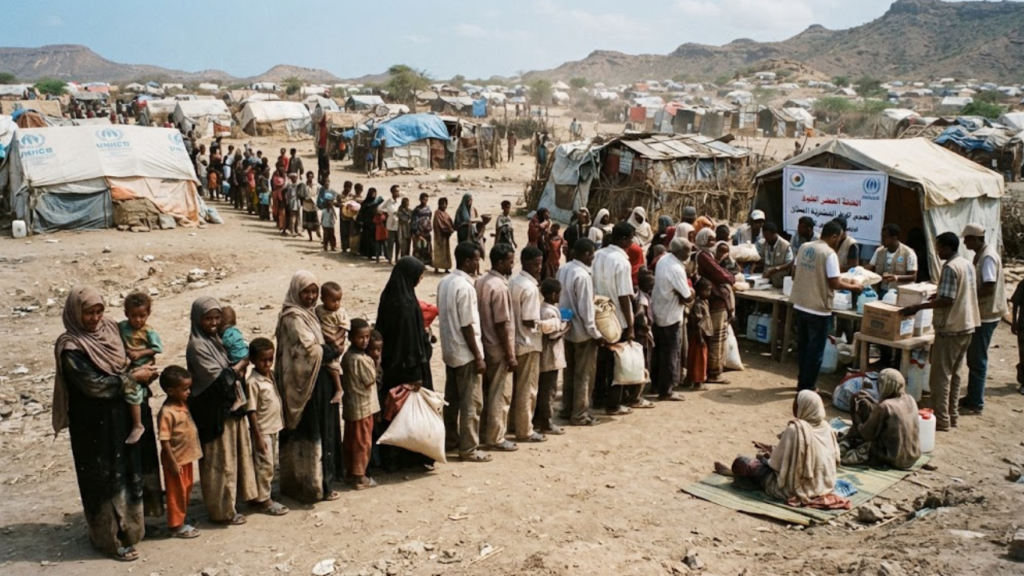
The Yemen displacement crisis crossed 130,000 people this month, and the number that should worry aid planners more is a different one: the UN’s response plan for the country was funded below 20 percent before this latest wave of fighting even began.
UNHCR spokesperson Babar Baloch laid out the trajectory in Geneva on Tuesday. Fighting is intensifying, he said, and “growing numbers of people” are expected to flee both inside Yemen and across borders into Djibouti and Somalia. His agency’s own planning projections point to another 100,000 people displaced over just the next three months, a scale that would make this phase of the Yemen displacement crisis one of the worst in the country’s recent history.
Three days tell the story better than three months of projections do. The International Organization for Migration counted 118,086 displaced people on September 18. By September 21, that number had climbed to nearly 130,000, a jump of 11,352 in 72 hours. “The numbers keep climbing,” IOM’s regional director Othman Belbeisi said, which undersells a rate of displacement that’s closer to a spike than a trend line. Taiz governorate alone now holds 73,494 of the displaced, the largest concentration among the seven governorates affected.
Why the Yemen Displacement Crisis Is Spilling Past the Coastline
Houthi forces have pushed forward this month against Saudi-backed government troops along the Red Sea coast, opening ground that had barely moved in years. That shift toward the coast explains why people aren’t just relocating within Yemen anymore. More than 3,000 have already crossed the Bab al-Mandeb strait by boat to reach Djibouti, and Baloch expects that figure to reach 10,000 next month, once calmer seas make the crossing more survivable. It’s an odd kind of relief: the water gets safer to cross, not the country people are leaving.
The fighting has widened in other directions too. This week, the UN separately condemned continued Houthi strikes against Saudi Arabia, including an attempted attack on Riyadh. Houthi military spokesperson Yahya Sarea claims 760 airstrikes have hit Yemen since the escalation began, attributing recent ones to Saudi F-15 and Typhoon jets flying out of Khamis Mushait and Taif. Saudi Arabia hasn’t responded to that specific figure, and neither side’s operational numbers have been independently confirmed. What’s undisputed is the direction: more fronts, more displacement, in less time than earlier phases of this war produced.
Yemen has cycled through displacement before. The war goes back to 2014, when Houthi forces seized Sanaa and triggered a Saudi-led intervention the following year, and the years since have layered economic collapse and repeated natural disasters on top of the fighting. Aid workers in the region know this pattern well, having lived through several of its earlier chapters already. What they haven’t seen before, at least not at this pace, is a fivefold jump in new arrivals over a single weekend, in a country where the humanitarian system was already stretched thin before this latest escalation began.
Djibouti’s own capacity is limited too. The country has absorbed successive waves of Yemeni arrivals since the war began in 2014, and aid officials there have quietly noted that each new surge puts more strain on a reception system built for a smaller, slower conflict. A crisis of this scale doesn’t just test Yemen’s neighbors, it tests how quickly international donors can move money that was pledged months ago but hasn’t yet arrived.
A funding shortfall doesn’t show up in a displacement count. It shows up later, in camps that run out of shelter kits, in registration lines that grow longer than staff can process, in families who make it across the water only to find the reception capacity was sized for a slower war. Whether this month’s numbers become a footnote or a turning point in how badly this crisis was underfunded from the start depends on decisions being made in donor capitals right now, not in Geneva, and not in Taiz.
Reuters reported that most of those displaced so far remain within Yemen’s own borders, even as the numbers heading toward the coast continue to grow. For now, the Yemen displacement crisis is still primarily an internal one, but Baloch’s own projections suggest that balance could shift within weeks.
[…] and caused billions of dollars in damage along the same coastline. Manasquan issued a voluntary evacuation order for residents in low-lying areas near the beach. “A lot of our newer residents have not […]
[…] strain reaches beyond the countries named in the report. HCN’s coverage of the displacement crisis in Yemen shows the same pressure at work: UNHCR said on 22 September that more than 130,000 people had fled […]