
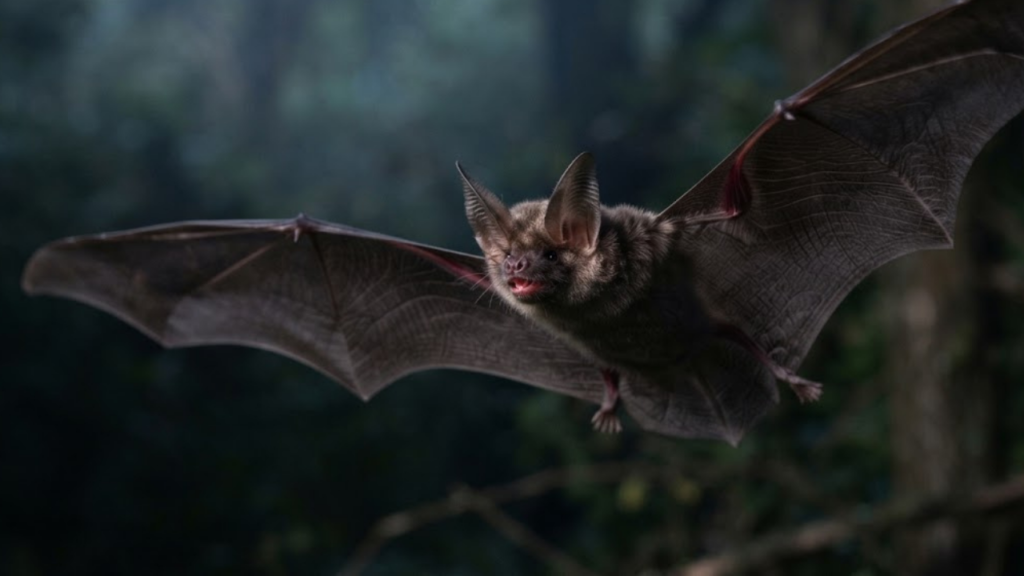
Bats originated in Europe, according to the largest study of bat evolution ever attempted, and they did so about 65 million years ago, not long after the dinosaurs vanished. The paper, published in Nature on Wednesday, comes from 137 researchers in 64 countries working under the Bat1K consortium, and it overturns earlier ideas that pointed to Asia, Africa or North America. The authors say the finding that bats originated in Europe settles a debate that has run for decades. Whether it stays settled will depend on fossils not yet found, but the case is unusually well built.
The evidence that bats originated in Europe
Two kinds of evidence went in. The first was DNA from 103 living bat species, covering all 21 recognised families, with dozens of the genomes assembled from scratch for this project. The second was a set of 44 fossil bats from around the world. The team ran both through one model that treats living and extinct species together, something the authors say earlier methods could not do. Neither source works well alone. Fossils are patchy, and DNA from modern bats cannot say where an ancient lineage lived.
The model rooted the bat family tree in Europe during the late Palaeocene, between 65 and 60 million years ago. Early bats then pushed into Africa, forming what the team calls a Europe-Africa hub, and from there spread into Asia, the Americas and Australia. Suzanne Hand, a palaeontologist at UNSW Sydney and a co-author, says the speed of that spread is striking. Her example is Australonycteris, a 55-million-year-old fossil from Queensland that is only slightly younger than the European bats. Once bats originated in Europe and learned to fly, they did not take long to circle the globe.
Why the bat family tree was such a mess
For years, researchers building bat family trees got answers that clashed. The new genomes show why. Different stretches of bat DNA, even whole chromosomes, support different sets of relationships. The team reads this as a sign of heavy interbreeding between lineages early in bat history, before the groups fully separated. One stretch of the X chromosome held on to the real branching pattern, and that gave the researchers a way through.
The redrawn tree has some surprises in it. Madagascar’s sucker-footed bats, which grip smooth leaves with suction cups on their wrists and ankles, are closer relatives of a worldwide group than of the bats native to New Zealand and South America. And two major lineages long treated as distant cousins turn out to be each other’s closest kin.
Flight and echolocation arrived early
The fossils answer a second old question. Vielasia, a bat from about 50 million years ago in what is now southern France, has skull features consistent with echolocation, and the analysis places it on the oldest branch of the tree. That points to flight and echolocation both being in place close to the start of the group, rather than added much later.
From the genomes, the team also rebuilt the DNA of the last common ancestor of all living bats, right down to 26 chromosomes. The researchers call it a first look at what the genome of a flying mammal may have looked like. Today there are more than 1,500 bat species, roughly one in five of all mammals.
Why it matters that bats originated in Europe
Many bats live far longer than their size would suggest and carry infections that would harm other mammals. To find the genes behind that, scientists needed a reliable family tree, and now they have one. The authors say the work could eventually inform research on human ageing, immunity and disease resistance. “Eventually” is the operative word: this is groundwork, not a therapy.
Working out that bats originated in Europe took samples from far beyond it. Researchers from the Wildlife Conservation Society supplied samples from the hammer-headed bat in Congo, the largest bat in mainland Africa, and Burton Lim of the Royal Ontario Museum provided about a third of all samples, collected mostly in tropical South America and Southeast Asia. For another look at how wildlife science reaches a wide audience, see HCN’s coverage of the Fat Bear Week 2026 bracket at Katmai.
The conclusion is worded as “most likely” for a reason. Fossils survive only in certain places, so a find in an unexpected region could shift the picture, and the claim that bats originated in Europe will be tested against every new discovery. For now the evidence points one way. The next job is to study the reconstructed ancestor’s genome and work out what changed, and when, to turn a small mammal into the first that could fly.
[…] what scientists think they know about the natural world, as with HCN’s report on the Bat1K study of where bats originated. The find in British Columbia is smaller in scale, but the new sea spider species came about the […]
[…] flight question is not limited to dinosaurs. A separate Nature study, published on 23 September, placed the origin of bats in Europe about 65 million years ago; bats are the only mammals capable of powered flight, and that work also […]