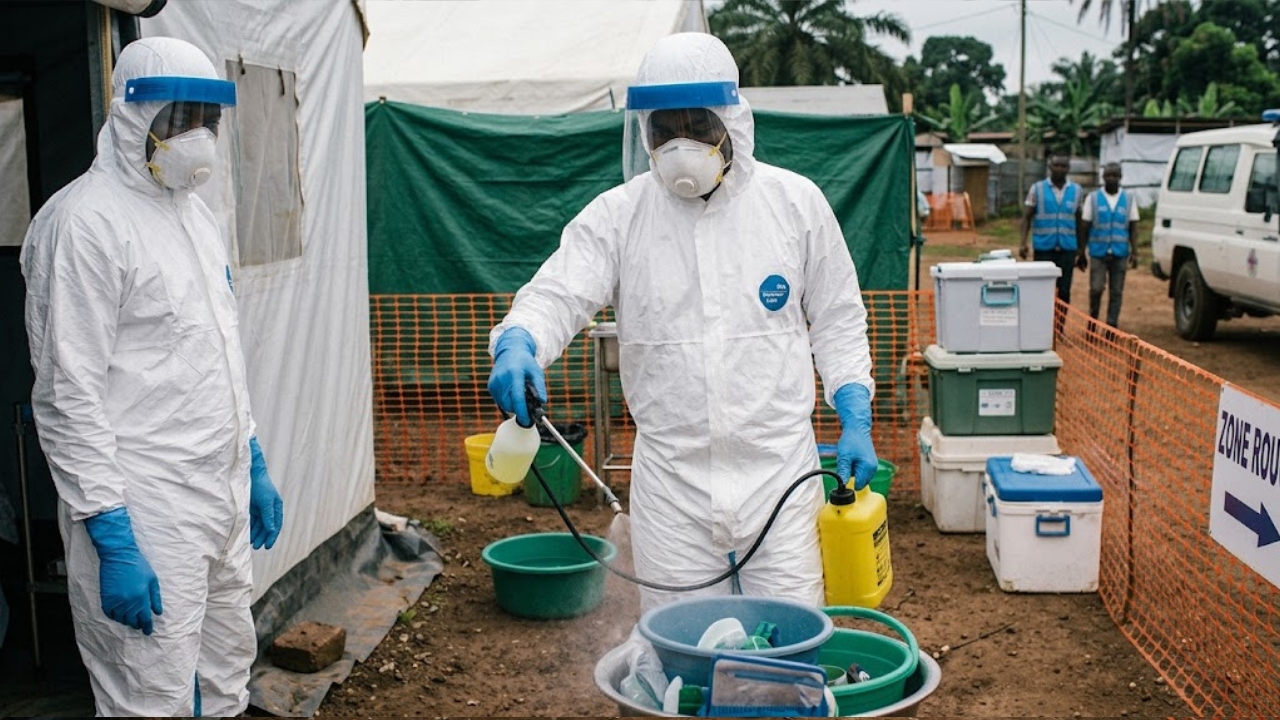
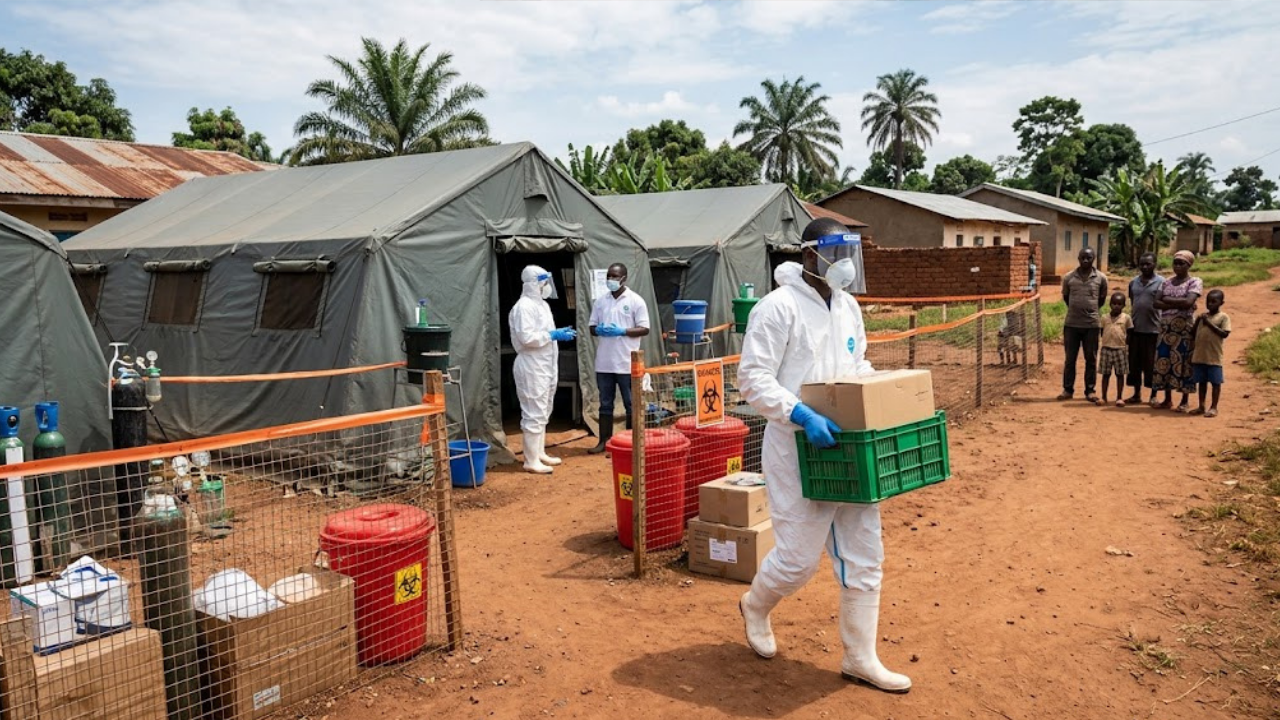
Three months after a surgical team in a small hospital in northeastern Congo began dying one after another, the country is now living through the deadliest Ebola outbreak in DRC’s history. More than 5,500 confirmed infections and upwards of 2,600 deaths have been recorded, with no end yet in sight and no vaccine built for the virus driving it.
The World Health Organization reported 5,514 confirmed cases and 2,642 confirmed deaths as of August 22, with 808 patients still in isolation, according to the European Centre for Disease Prevention and Control’s latest tracking of the crisis. That puts the crude fatality rate near 48 percent – meaning roughly one in two confirmed patients has died, a toll unusually high even by Ebola’s grim standards.
Why This Has Become the Deadliest Ebola Outbreak in DRC
The outbreak is the 17th Ebola event recorded in the Democratic Republic of Congo since 1976, arriving barely five months after the previous one ended. But this one is different in a way that matters enormously: it is caused by the Bundibugyo species of the virus rather than the more familiar Zaire strain, and Bundibugyo has never had a vaccine or approved treatment built specifically for it.
Every licensed Ebola vaccine on the market, including Merck’s Ervebo, was engineered against Zaire ebolavirus – the strain behind the catastrophic 2014–2016 West African epidemic. Whether that tool offers any real protection against this outbreak’s virus in actual patients is still, months in, an open scientific question – a gap that has made the current DRC Ebola outbreak especially hard to bring under control (see the full WHO Disease Outbreak News update for the latest technical assessment).
That gap has not stopped the disease from moving with unusual speed. WHO Director-General Tedros Adhanom Ghebreyesus told reporters in Geneva earlier this month that the epidemic was “already the second-biggest Ebola epidemic on record, and it’s moving faster than any previous Ebola outbreak,” adding that at its current pace it is “on track to eclipse the West African Ebola outbreak of 2014-2016” – the largest ever documented, which killed more than 11,000 people.
As HumanCrisisNews reported earlier this year, this outbreak had already overtaken previous outbreaks to become the second-largest Ebola epidemic in history – a milestone it has since surpassed again. UN agencies have separately calculated that confirmed cases climbed by nearly 90 a day on average across the outbreak’s first three months, a faster clip than the devastating 2018–2020 North Kivu–Ituri outbreak that preceded it.
Genomic work traced the outbreak’s confirmation to mid-May, but the actual chain of transmission began weeks earlier and largely unnoticed. A patient admitted to Mongbwalu General Hospital in Ituri Province for a scheduled operation in early April is now understood to have been among the earliest cases.
Within a month, a surgical assistant, an anaesthetist and a member of the post-operative care team who had treated that patient were all dead. “Almost a month later, we recorded the deaths of the surgical assistant, the anaesthetist, and a member of the post-operative care team,” a hospital official identified only as Lokudu told Al Jazeera, describing how the disease moved through the ward before anyone understood what they were dealing with.
By the time the Congolese government formally declared the outbreak on May 15, chains of infection had already taken root across several health zones – a head start the virus has never fully relinquished.
A Crisis Layered on Top of Conflict
What separates this outbreak from earlier ones is not only the missing vaccine but the ground it is spreading across. Ituri Province, where roughly 85 percent of all cases and 79 percent of deaths have occurred, has spent years absorbed in armed conflict involving dozens of militia groups, alongside displacement, food insecurity and a health system already stretched thin. Humanitarian workers on the ground say that combination – rather than any single failure – explains why containment has proven so difficult.
One health worker described the compounding pressure bluntly: “Coping with insecurity, poor governance, and poverty all at once is difficult, and I fear we will also suffer from this deadly epidemic.” The practical consequences show up in the case data itself. According to the UN, roughly 60 percent of the deaths recorded in recent weeks occurred outside Ebola treatment centers entirely – meaning a majority of the people dying are doing so before they ever reach formal care, whether because facilities are too far away, too dangerous to reach, or because fear and mistrust keep families from bringing the sick forward at all.
Aid groups including Médecins Sans Frontières have also pointed to conflict-related airport closures and flight restrictions that are slowing the movement of staff, diagnostic supplies and lab samples between affected zones.
The outbreak has since spread well beyond its Ituri starting point, with confirmed transmission now recorded across six provinces and 49 separate health zones, including North Kivu, South Kivu, Haut-Uélé and Tshopo. Neighboring Uganda recorded 20 confirmed cases and two deaths tied to travelers from DRC before declaring its own linked outbreak over on July 28, and isolated imported cases were treated in France and Germany. None of that international spread has changed where the real burden sits: inside Congolese communities that had already spent years absorbing shocks the rest of the world rarely notices.
It is that imbalance – a health emergency killing thousands in a region already synonymous with overlooked suffering – that deserves more attention than it has received. Wars generate headlines when front lines move; epidemics generate headlines when they threaten to cross borders. This is far from the only such story slipping under the radar: HumanCrisisNews has also documented how children have been pushed out of school by conflict in Sudan and how survivors are still being counted after the Flores earthquake – crises that, like the deadliest Ebola outbreak in DRC, rarely make front pages abroad.
Vaccines Are Coming, but Slowly
Efforts to build a scientific response have accelerated, even if they remain behind the outbreak’s own pace. The Democratic Republic of Congo received 70,000 doses of the Ervebo vaccine from the UN’s International Coordinating Group on August 20 – 20,000 earmarked for a Phase 3 clinical trial meant to establish whether the shot offers any real-world protection against Bundibugyo virus, and 50,000 set aside for frontline and health workers under existing WHO guidance.
The WHO has been careful not to overstate what is known: laboratory and animal studies suggest Ervebo may generate some immune response against the Bundibugyo virus, but the agency has stressed that “it is not known whether Ervebo may be protective against the Bundibugyo virus in humans.”
Purpose-built alternatives are further behind. A Bundibugyo-specific candidate developed with Moderna’s mRNA platform received its first human dose in a Phase 1 safety trial in Nova Scotia, Canada, on August 3, backed by the Coalition for Epidemic Preparedness Innovations. CEPI chief executive Richard Hatchett called the milestone “a major step forward in the fight against this deadly outbreak,” though Phase 1 trials exist to test safety, not effectiveness, and any deployable vaccine remains months away at best.
A separate UK-based trial for a different candidate began in late July, and a third, from the nonprofit IAVI, is still being manufactured.